







Test the request and representation path
Technical AI Search Optimization


Some of the 500+ brands we've worked with
See all references






































Evidence engineering can use
Pin each failure to a layer, owner, and pass condition
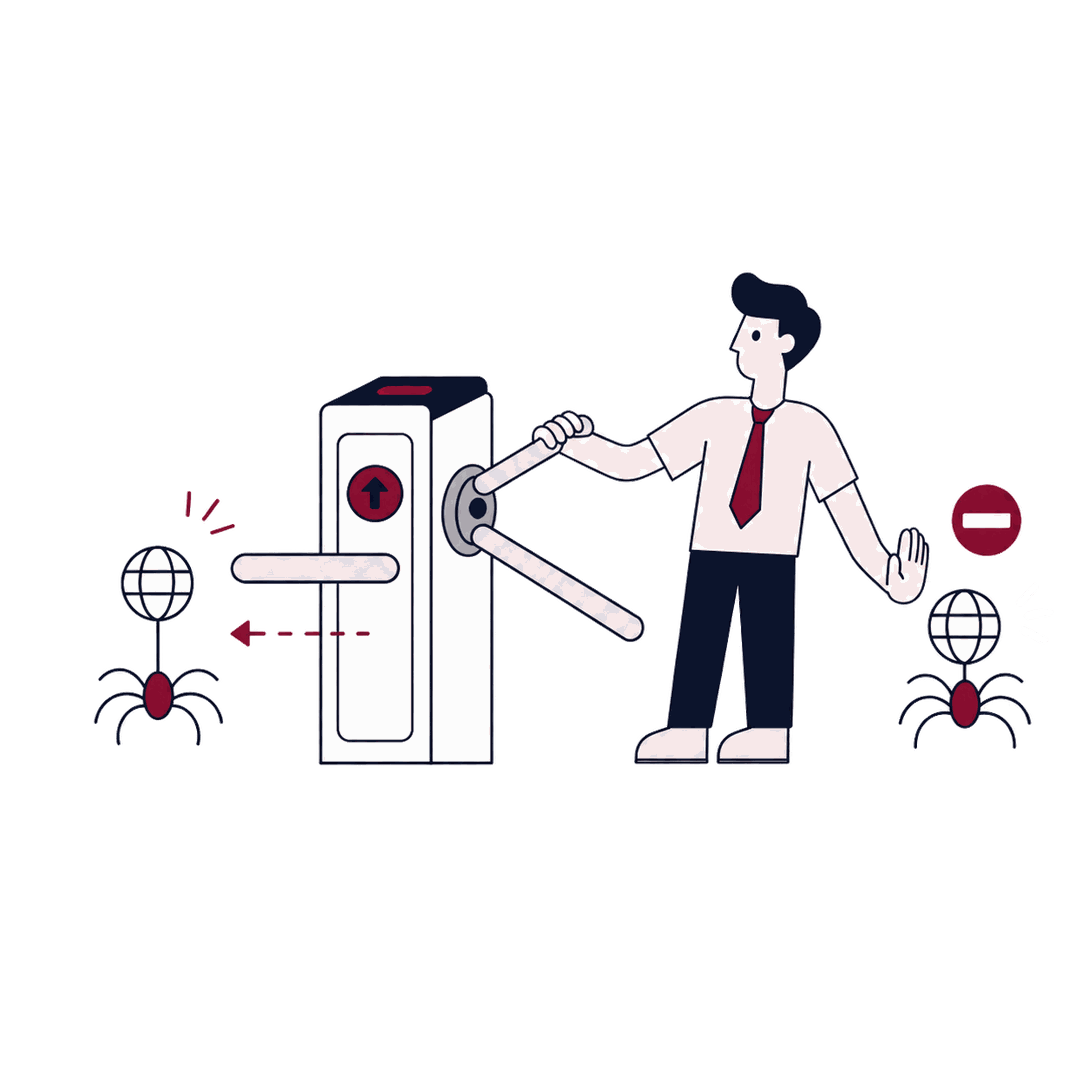
AI Crawler Access & Governance


Rendering & Extracted-Content Parity


LLM-Readable Information Architecture


Structured Data & Visible-Content Validation
The engineering decision
Locate the first technical point where the fact breaks
We test whether answer engines can fetch, render, extract, and reconcile the facts on your site. Once the failure is reproducible, we identify the smallest change that addresses it. Engineering receives the reproduction evidence and a check that the release must pass.
Work owned elsewhere
Adjacent problems keep their existing owners
Data feeds and freshness remain with the parent modules until an ecommerce or local engagement establishes a distinct method. Agent log analysis waits for repeatable bot verification. Content, entity, and measurement teams receive their findings with the technical evidence attached.
Scope and ownership
Specialists produce the evidence; engineering approves and ships the change
Every recommendation arrives with a reproduction of the failure and the check the release has to pass.
We follow one priority URL through production — redirects, CDN behaviour, WAF rules, and the final response — because robots.txt alone cannot establish access, then diff source HTML, rendered DOM, and extracted text field by field to record the exact condition under which a required fact or qualification drops. The smallest fix goes in at the first divergence with its owner's approval, followed by retests on affected templates and holdout URLs. Data feeds and freshness stay with the parent modules until an ecommerce or local engagement establishes a distinct method, and agent log analysis waits for repeatable bot verification; content, entity, and measurement findings are handed on with the technical evidence attached.
Follow the failure from request to release
Follow one priority URL through production
Redirects, CDN behavior, WAF rules, and the final response show what the crawler receives on the live path. robots.txt alone cannot establish access.
Compare every representation
We diff source HTML, rendered DOM and extracted text field by field. The record shows the exact condition under which a required fact or qualification drops.
Change the earliest failing layer
The owner approves the smallest fix at the first divergence, followed by retests on affected templates and holdout URLs.
Replay the case after release
The original failure runs again against its acceptance rule. Citation and referral movement is tracked separately because those outcomes carry different caveats.



Clients on the work
What it is like to work with Zeo
Our clients describe the work in their own words.


We were working with a global supplier on SEO before. Accessibility and process management were a little more difficult with these teams. At the same time, in terms of budget, global suppliers were more costly for us due to exchange rate differences and man-hours. When we started working with Zeo, we first went through an audit, fixing the results and problems. After these processes, we placed SEO in a strategic place for digital marketing and created an always-on SEO strategy for our brands and implemented it step by step.

As MediaMarkt, we have been working with Zeo for 6 years in a very tight and coordinated way to manage our SEO processes. We receive the highest level of feedback from Zeo on increasing and improving our organic traffic. It is very enjoyable to get fast support on all our issues 24/7 and to work with Zeo to better embrace and continuously improve our brand, and we recommend it to everyone.


We strictly follow the regulations and algorithms that can change at any time; We need to act quickly. At this point, Zeo has become a partner that meets all our expectations with its professional, innovative and solution-oriented approach. The Zeo team has become a stakeholder in success by looking at our optimization processes and our brand as their own value. As the Acıbadem Healthcare Group family, we would like to thank all the Zeo team, who work tirelessly, constantly improve, and do not compromise on keeping their energy high under all circumstances!

Besides increasing our website's visibility in the UK with Zeo, the experienced team that closely follows its work and has extensive experience in its field has always made us feel like we are in the right place for SEO. We are on the right track with Zeo in a country and industry where competition is high.


We talked to a number of agencies while we were planning our website's infrastructure migration, and we ended up with Zeo. They start by understanding the problem, then bring fresh approaches to solving it better. Communication is strong, and they support you at whatever point you turn out to need it. Every minute we spend working with them convinces us further that we made the right call. If you're looking for someone to sort out the digital side, you're in the right place.
Adjacent search evidence
Case Studies
Organic search engagements establishing the indexation, content depth, and domain authority that AI answer engines draw from.





People who watch how AI cites a brand
GEO work starts with recording what AI answers actually say about a brand today, then moves to the parts you can influence. The consultants below work on the specific capability this page covers.

Can Mutioğlu
Senior SEO Executive

Elif Naz Akan Karakoç
Senior SEO Executive

Samet Özsüleyman
SEO Manager

Sinem Bakır Yavaş
Senior SEO Executive

Sena Önder
Senior SEO Executive

Ruhan Tiryaki
Senior SEO Analyst

Ali Özgün Öz
SEO Executive

Bensu Tınastepe
Senior SEO Analyst

Yağmur Bayram
Sr. SEO Analyst

Emir Kağan Kahveci
SEO Analyst

Zafer Yıldız
Web Analytics Manager

Ataberk Yüzat
SEO Executive

Deniz İmre Temiztürk
Content Specialist
Content we've produced on this topic
Tools we use
What we watch AI answers with
Generative search leaves less to read than a rankings report does, so most of this work is assembling evidence from tools that were never built for it.
Entity and structured data
- Screaming FrogThis page's own process, follow one priority URL through production and compare every representation, starts with a Screaming Frog crawl run under the target crawler's user-agent, which is the first representation the raw HTML gets diffed against before rendering or reconciliation enters the picture.
- SitebulbThis page hands engineering a reproducible failure, not a score. Sitebulb crawls with rendering on and explains each finding against the rule that raised it, which is closer to a ticket than to a dashboard number. On a mid-sized site it is the crawler we reach for first, since a specialist can hand the hint text straight to the developer who owns the template.
- Schema AppThis page's FAQ is explicit that a technical engagement is not just pasting llms.txt or adding more schema; Schema App is where markup that already exists gets checked for parity with the approved entity model on an ongoing basis, which is the maintenance half of that answer, distinct from the one-time markup authoring Entity & Knowledge Graph Optimization owns.
- Google Search ConsoleThe comparison step needs more than one rendering engine's opinion; Search Console's URL Inspection tool renders the live URL with Google's own infrastructure, which is the reference render this page's audits check a client's own build against when a divergence is suspected.
Crawl and rendering for AI agents
- Cloudflare AI Crawl ControlWhere a client's own logs are inconclusive about whether a specific AI crawler was ever blocked at the edge, Cloudflare's AI Crawl Control gives a per-bot allow/deny and hit record, which is what turns a suspected access problem into a confirmed one before the engineering handoff names it as the earliest failing layer.
- Prerender.ioWhen this page's own audit traces a fact's loss specifically to the rendering layer, not the route or the answer-module boundary, Prerender.io is the mechanism engineering gets handed to close that gap: it serves a pre-rendered snapshot to a recognized crawler instead of the client-side bundle the crawler otherwise can't execute.
- Bing Webmaster ToolsBecause Copilot's answers are grounded in the Bing index rather than Google's, this page's technical checks pull Bing Webmaster Tools' crawl stats and index coverage as a distinct data point from Search Console, not a redundant one, whenever a client's priority answers need Copilot-specific verification.
- BotifyThe distinctive claim on this page is that access is tested from the live request rather than inferred. Botify joins server log data to its own crawl at enterprise scale, which is how we show that a declared crawler reached a template, at what frequency, and what status it received. On large sites that log join is the only evidence that separates a crawler being allowed from a crawler actually arriving.
- LumarThis page's acceptance rule includes a retest after release, and a technical fix that passes once can regress on the next deploy. Lumar runs scheduled rendered crawls across template cohorts and reports movement between runs, which turns that retest into a standing check rather than a one-off. We use it where a client has enough templates that a per-page check would miss the cohort a change actually broke.
- OncrawlA finding on this page has to name the template that broke, not just the symptom. Oncrawl segments a site and joins crawl state with log and Search Console data in the same view, so an access or rendering failure resolves to a cohort with a shared cause rather than a list of unrelated URLs. That segmentation is what makes the fix release-sized instead of open-ended.
- BrowserStackThis page separates an observed extraction failure from a JavaScript assumption. When content is missing under one client but present under another, BrowserStack reproduces the condition on a real device and browser rather than an emulator's approximation, which decides whether the failure belongs in the backlog at all. A break that only appears in a simulated environment is not the reproducible failure engineering was promised.
- WebPageTestThis page treats performance evidence as a supporting signal, never a promise of selection. WebPagetest is where that signal gets measured honestly: a repeatable run from a fixed location and connection, with a waterfall and filmstrip showing when a material fact actually appeared. Its third-party blocking test also answers whether a script the client does not control is what delays the content a crawler needs.
- RyteA reproducible failure is only useful if someone notices it. Ryte, now part of Semrush, monitors website quality continuously and alerts on an indexability drop, which is how a regression between scheduled audits reaches an owner while it is still small. It is a monitoring layer rather than a diagnostic one, so the alert opens the investigation this page describes rather than concluding it.
Start with the technical path
Put a reproducible failure in front of engineering
Questions engineering teams raise