





Start with a reproducible baseline
GEO Strategy & AI Search Audit
Some of the 500+ brands we've worked with
See all references









































Diagnose before implementation
Work out what is happening before choosing a fix


AI Search VisibilityAudit & Baseline


GEO Roadmap& Measurement Design
What the audit can answer
A visibility score only records what happened
We start with what the platforms visibly return. Your teams can then check crawl access, rendered content, entity facts, claim support, cited sources, and first-party outcomes. The surrounding evidence tells us whether the observation supports a diagnosis.
After the diagnosis
The evidence travels with the finding
Once reproduced, technical, content, entity, authority, and measurement findings move to the relevant GEO capability. Strategy keeps the priority, owner, acceptance rule, and original evidence connected so the delivery team does not have to repeat the investigation.
Scope and ownership
The evidence travels with the finding, so delivery never repeats the investigation
The sample is agreed before collection, which keeps prompt selection tied to real decisions rather than flattering ones.
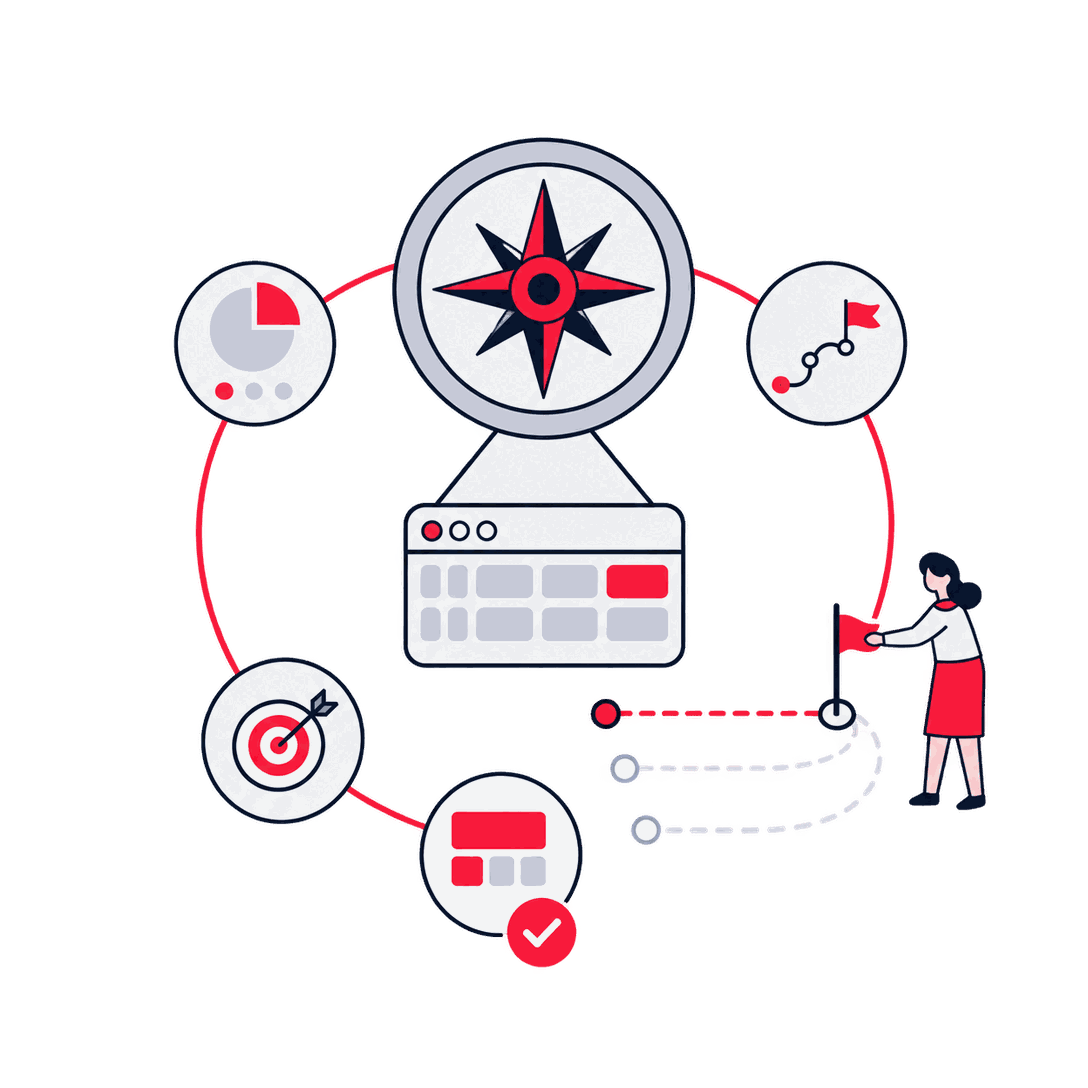
Your audiences, markets, journey stages, platforms, and run conditions define the panel before anything is collected, and raw responses stay stored with their citations while specialists inspect crawl access, rendered text, entity facts, page support, recurring sources, and any first-party outcomes available for comparison. Observations, proxies, hypotheses, and constraints are labelled separately, and unresolved platform behaviour stays an explicit unknown rather than a soft conclusion. Strategy keeps the priority, owner, acceptance rule, and original evidence connected; technical, content, entity, authority, and measurement findings move to the relevant GEO capability with that record attached.
Build the plan from evidence your team can replay
Agree the sample before collection
Your audiences, markets, journey stages, platforms, and run conditions define the panel. Agreeing them first keeps prompt selection tied to actual decisions, including results that present the brand unfavorably.
Save the answers with their sources
Raw responses and citations stay together. Specialists inspect crawl access, rendered text, entity facts, page support, recurring sources, and any first-party outcomes available for comparison. The record remains versioned.
Mark the limits of the evidence
Observations, proxies, hypotheses, and constraints receive separate labels, while unresolved platform behavior remains an explicit unknown.
Make the funding decision
A validated finding may be fixed, tested, monitored, deferred, or rejected. Its dependencies, owner, measure, review window, and stop rule remain part of that decision.




Clients on the work
What it is like to work with Zeo
Our clients describe the work in their own words.


We were working with a global supplier on SEO before. Accessibility and process management were a little more difficult with these teams. At the same time, in terms of budget, global suppliers were more costly for us due to exchange rate differences and man-hours. When we started working with Zeo, we first went through an audit, fixing the results and problems. After these processes, we placed SEO in a strategic place for digital marketing and created an always-on SEO strategy for our brands and implemented it step by step.


As MediaMarkt, we have been working with Zeo for 6 years in a very tight and coordinated way to manage our SEO processes. We receive the highest level of feedback from Zeo on increasing and improving our organic traffic. It is very enjoyable to get fast support on all our issues 24/7 and to work with Zeo to better embrace and continuously improve our brand, and we recommend it to everyone.


We strictly follow the regulations and algorithms that can change at any time; We need to act quickly. At this point, Zeo has become a partner that meets all our expectations with its professional, innovative and solution-oriented approach. The Zeo team has become a stakeholder in success by looking at our optimization processes and our brand as their own value. As the Acıbadem Healthcare Group family, we would like to thank all the Zeo team, who work tirelessly, constantly improve, and do not compromise on keeping their energy high under all circumstances!


Besides increasing our website's visibility in the UK with Zeo, the experienced team that closely follows its work and has extensive experience in its field has always made us feel like we are in the right place for SEO. We are on the right track with Zeo in a country and industry where competition is high.


We talked to a number of agencies while we were planning our website's infrastructure migration, and we ended up with Zeo. They start by understanding the problem, then bring fresh approaches to solving it better. Communication is strong, and they support you at whatever point you turn out to need it. Every minute we spend working with them convinces us further that we made the right call. If you're looking for someone to sort out the digital side, you're in the right place.
Adjacent search evidence
Case Studies
Organic search engagements establishing the indexation, content depth, and domain authority that AI answer engines draw from.





People who watch how AI cites a brand
GEO work starts with recording what AI answers actually say about a brand today, then moves to the parts you can influence. The consultants below work on the specific capability this page covers.

Aybüke Göktuna
Senior SEO Analyst

Can Mutioğlu
Senior SEO Executive

Gülşah Şahin Özkan
Senior SEO Analyst

Ezgi Gülsen Yaylı
SEO Manager

Samet Özsüleyman
SEO Manager

Elif Naz Akan Karakoç
Senior SEO Executive

Ozan Ketenci
VP of Consulting & Strategy

Burak Pehlivan
Co-founder & CEO

Mehmet Aktuğ
Co-Founder & COO

Metehan Urhan
New Business & Partnership Manager

Zafer Yıldız
Web Analytics Manager

Ataberk Yüzat
SEO Executive

Didem Himmetli
Marketing Executive
Tools we use
What we watch AI answers with
Generative search leaves less to read than a rankings report does, so most of this work is assembling evidence from tools that were never built for it.
AI answer and citation tracking
- ProfoundThis page's own first step, agreeing the sample before collection, is what Profound's panel-based tracking exists to do: the same question set runs repeatedly across the platforms and markets in scope, and every answer is retained with its date, model, and mode, which is the raw material the roadmap's baseline gets built from.
- Peec AIWhere the audit needs to separate a branded question's result from a non-branded category question, Peec AI's prompt-level tags are what keep that distinction visible instead of collapsing everything into one score, which matters directly to this page's own point that a single visibility number cannot explain a pattern.
- Otterly.AIThis page treats evidence that cannot separate two explanations as an explicit unknown. Running the agreed panel through Otterly.AI as well as the primary tracker is how that rule gets applied to the tooling itself: when one platform reports a mention the other missed, the disagreement is recorded rather than resolved by preferring whichever vendor the account happens to run. A single tracker's silence is not the same as a brand being absent from an answer.
- SemrushThe constraint map this page produces has to separate an AI-visibility problem from an ordinary search problem, and that needs the conventional picture beside the AI one. Semrush supplies the demand, ranking, and competitor baseline the audit reads against, so a brand missing from an answer about a topic it never ranked for gets diagnosed as coverage rather than as an AI-specific constraint.
- AhrefsWhen the audit finds a competitor cited where the client is not, this page requires testing the observable explanations before calling it unexplained. Source strength is one of them. Ahrefs gives the referring-domain and page-level comparison that says whether the cited page is simply better established, which either accounts for the gap or removes authority from the list and points the diagnosis at access, entity, or content support instead.
- OpenAIThis page insists the sample is versioned and reported by platform, and that unflattering questions stay in the panel. ChatGPT is one of those platforms, and running the panel against it directly is what produces the raw answer the audit retains. We log whether browsing was active on each run, because a grounded and an ungrounded answer to the same question are not the same observation and cannot share a series.
- Google GeminiThe audit reports by platform rather than blending, so Gemini runs as its own series against the same versioned question set. Keeping it separate is what makes a platform-specific constraint visible: a brand that appears in Gemini and not in ChatGPT points the diagnosis somewhere different from a brand missing in both. Merging the two would hide exactly the difference the constraint map exists to find.
Entity and structured data
- Screaming FrogOnce a material pattern is confirmed in the panel data, this page's diagnosis step inspects technical access alongside entity facts, content support, and source exposure; Screaming Frog is the crawl that answers the technical-access half of that question before the roadmap assigns the finding to a specific method.
- Google Search ConsoleBefore concluding that an AI engine is choosing not to cite a page, the audit checks Search Console to confirm the page is indexed and served at all, since an indexing problem and a selection problem call for different roadmap items entirely.
Content evidence and sourcing
- NotionThe audit's final handoff, a roadmap that names the owner, measure, and stop rule for each decision, gets written and shared as a Notion document, since a roadmap only funds work if every team it assigns work to can open and reference the same record.
Measurement and reporting
- Google AnalyticsThis page's deliverable is a decision, including the option to defer the work. That decision needs the AI-visibility sample reconciled against what the business already sees, and GA4 is where the referral and conversion side of that reconciliation lives. A visibility gap on a question that drives no measurable behavior is a legitimate reason to defer, and this is the record that lets the audit say so.
Establish the baseline
Find out whether GEO work is justified
Before the first sample