







A GEO roadmap that knows when to say no
GEO Roadmap & Measurement Design
A sequenced portfolio that connects each validated finding to a business decision, an accountable owner, a measurable learning goal and a clear stopping point.
Audit evidence becomes a set of fix, test, monitor, defer, or reject options. We weigh each one against business value, effort, dependencies, capacity, and risk, producing a roadmap that teams can deliver and learn from. You leave with a sequenced portfolio. Every initiative has an owner, a measure, and a defined point for stopping or scaling. Strategy and delivery leads who have audit findings but no agreed way to decide what gets built first.


Some of the 500+ brands we've worked with
See all references















































From finding to funded slice
How a finding moves from evidence to a scheduled slice
A finding enters the roadmap only after it has been framed as a decision option. Declared criteria expose its evidence, value, dependencies, and risk. Business and delivery owners then approve the smallest reversible slice they are prepared to support.
How we hold ourselves to it
- Evidence before priority
- Every item has an owner
- Stop rules built in
- Sequenced without a promise
Translate findings into decision options
Each validated finding is reframed as a fix, test, monitor, defer, or reject option tied to an audience decision and the affected GEO layer. Strategy and client owners approve only options that address a material problem and reject fashionable tactics without one.
Opportunity register linking finding, audience need, option, evidence label and decision owner.


Score evidence, impact, effort and risk
Declared scales keep the scoring rationale visible. Evidence strength and expected business value frame the opportunity, while effort, reversibility, risk, and cost of delay determine whether it is practical now. Business, domain and delivery owners approve assumptions and may return an option to validation.
Evidence-weighted opportunity matrix with score rationale and uncertainty kept visible.


Identify dependencies and reversible slices
Prerequisites, shared assets, and approval paths reveal the smallest reversible slice that can test the option. Technical, content, legal and analytics owners confirm dependency order and feasible release slices.
Dependency and ownership map with readiness state, blockers and responsible teams.


Define owners, gates and success measures
Every approved slice receives an accountable owner, human gates, a controllable acceptance measure, and a separate external observation. The named owners approve authority, capacity, metric definitions and escalation boundaries.
Initiative brief with owner, human gates, what counts as done, a review window and a stop condition.


Sequence implementation and experiments
Only ready, evidence-backed slices enter now. Dependency work follows, while unsupported options remain explicitly deferred or rejected. The steering group approves trade-offs and protects capacity for validation.
Now-next-later-reject portfolio with release order, rationale and reserved validation work.


Approve review and stopping cadence
Monthly learning reviews and quarterly portfolio reviews can scale, revise, pause, or stop work while preserving the original evidence record. An independent strategy reviewer checks that weak results do not produce weaker thresholds or endless continuation.
Governance calendar and decision log with review questions, escalation and stopping authority.


A portfolio that can move, pause or stop
A portfolio that delivery owners can challenge and use
Approved initiatives carry their rationale, evidence, owner, prerequisites, measure, review window, and stop rule. Deferred and rejected options remain in the record, which keeps old ideas from returning without new evidence.


GEO strategy narrative
A focused explanation of the audience problems, business choices and evidence principles governing the portfolio.
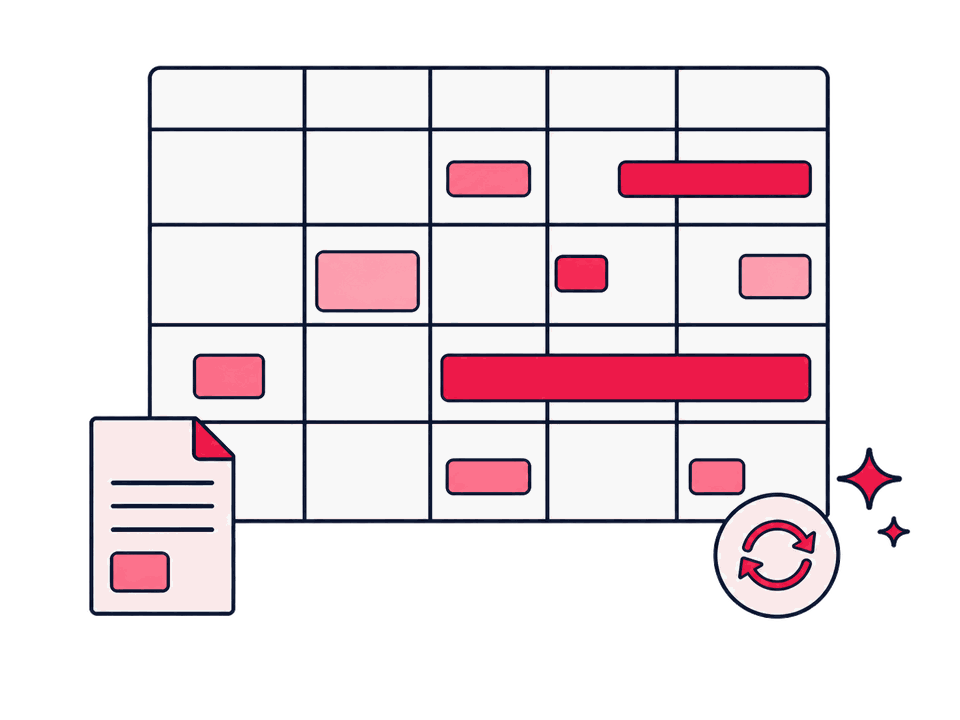
Sequenced implementation roadmap
Executable initiatives sequenced by dependency and capacity, each with its owner, its gate, what counts as done, and the release slice it ships in.


Experiment and measurement briefs
Bounded tests with the original evidence, the intervention, an untouched comparison group where that's feasible, the learning question, the window and the stop rule.
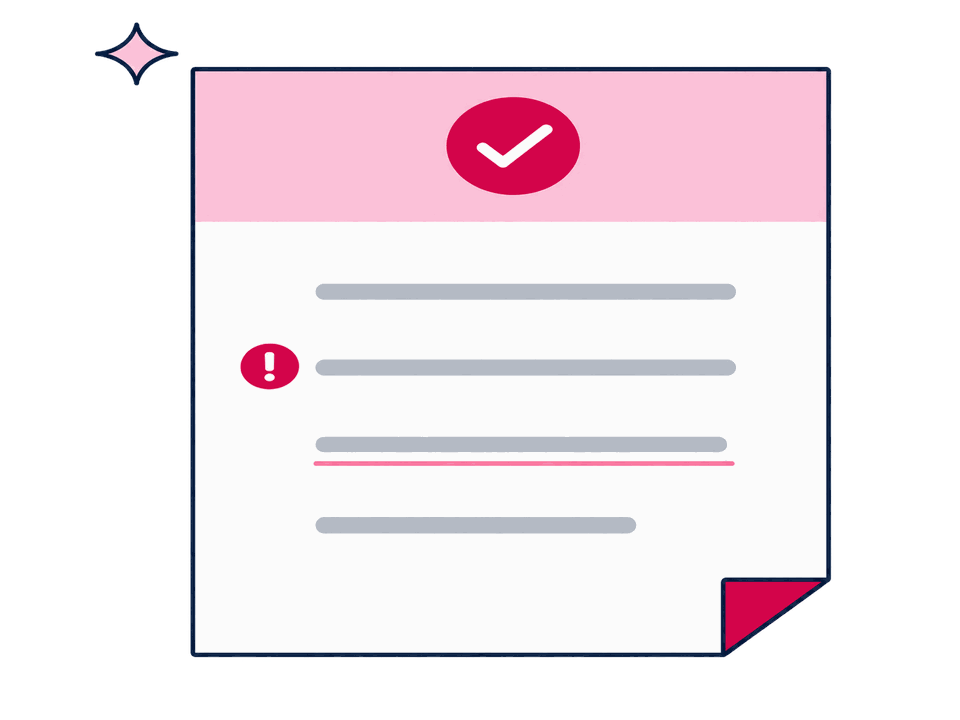

Governance and quarterly review system
A repeatable monthly and quarterly forum with evidence updates, portfolio decisions, escalation and named stopping authority.
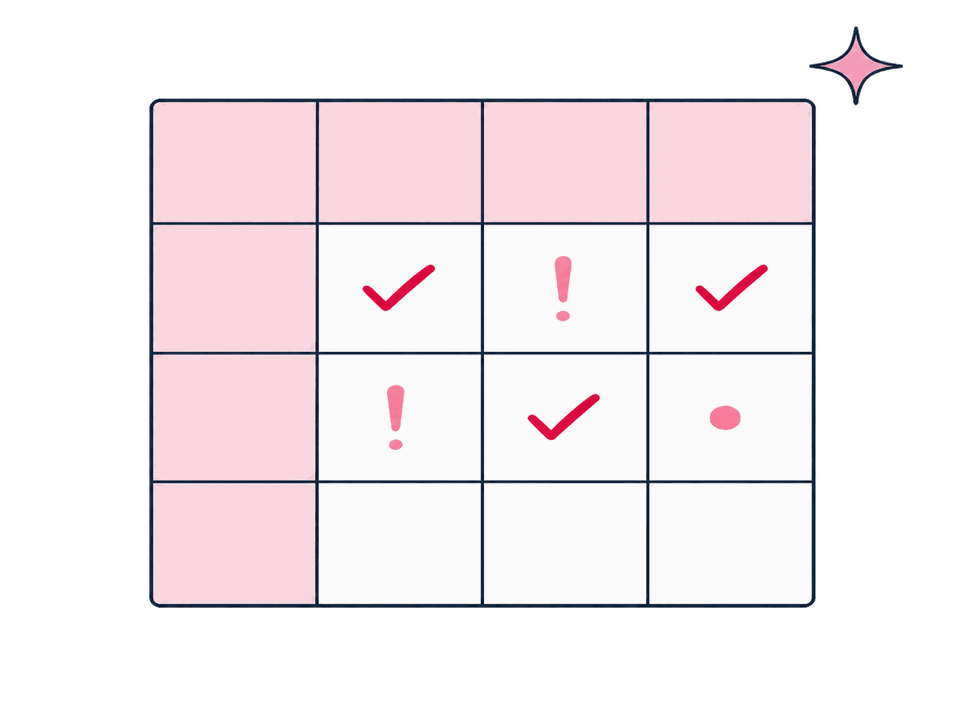
Explicit evidence status
Raw audit and first-party records stay Observed, sampled comparisons stay Proxy, proposed interventions stay Hypothesis, and capacity, legal and platform rules stay Constraint.
The scheduling bar every initiative had to clear
Nothing gets scheduled without an explicit rationale, an owner, a human gate, a measurement plan and a stop condition. Rankings, recommendations, citations, referrals and conversions are measured separately, so the roadmap never quietly promises them.
Before another tactic enters the backlog
Use this roadmap when good ideas are competing for the same teams
A credible baseline must already exist. From there, the roadmap helps an organization decide which GEO work belongs now, which uncertainty deserves a test, and which ideas should wait for better evidence.
A good fit when
- Validated GEO audit findings are in hand — They carry raw evidence, labels, and unresolved unknowns, while an unexplained vendor score stays out.
- Business, audience, and market priorities exist — They say which problems matter commercially and which audience, market, or journey decisions the portfolio serves.
- The delivery order depends on real prerequisites — Technical, editorial, and source dependencies decide when access, entity, content, and measurement work can land.
- Capacity, owners, and risk limits are known — An attractive roadmap otherwise assigns work to teams without time, authority, or acceptable risk.
- Not every visibility gap deserves the same priority — Each initiative connects to one audience decision, business objective, and affected market.
- Evidence strength decides what gets scored — We separate reproduced findings, sampled proxies, hypotheses, and external constraints before scoring urgency.
- Prerequisites arrive with their owners — We map technical, editorial, legal, source, and analytics prerequisites beside named capacity and approvers.
- Every initiative carries a stopping rule — It also gets a controllable measure, a review window, and the condition that would prove it wrong.
Better handled as other work when
- The roadmap is expected to guarantee outcomes — It sequences work and sets the measurement rules, so the commitment covers the sequence and not a citation result.
- You want promised rankings or citations — A roadmap is a decision system, so an uncertain initiative stays labeled an experiment.
- You read the sequenced plan as approval — A sequenced plan is not an approval. Each item still needs its named owner to accept the scope before work starts.
People who watch how AI cites a brand
GEO work starts with recording what AI answers actually say about a brand today, then moves to the parts you can influence. The consultants below work on the specific capability this page covers.

Aybüke Göktuna
Senior SEO Analyst

Samet Özsüleyman
SEO Manager

Ezgi Gülsen Yaylı
SEO Manager

Hande Parmaksız
SEO Manager

Elif Naz Akan Karakoç
Senior SEO Executive

Ali Özgün Öz
SEO Executive

Bensu Tınastepe
Senior SEO Analyst

Gülşah Şahin Özkan
Senior SEO Analyst

Emir Kağan Kahveci
SEO Analyst

Metehan Urhan
New Business & Partnership Manager

Zafer Yıldız
Web Analytics Manager

Ataberk Yüzat
SEO Executive

Didem Himmetli
Marketing Executive
Tools we use
Tools behind this work
 Profound
holds the validated baseline this roadmap refuses to start without
 Notion
the roadmap itself, with every item's value, effort, dependencies, and risk in one place
 Airtable
the sortable working view behind the roadmap, filterable as capacity shifts
 Looker Studio
the portfolio view the quarterly review re-scores against, with each stop rule visible
 Jupyter
keeps the scoring rubric as code, so a weight cannot be quietly changed to favor a tactic
Nearby methods and services
Parent capability
GEO Strategy & AI Search Audit
See the full strategy engagement that connects baseline, prioritization and measurement design.


Required evidence input
AI Search Visibility Audit & Baseline
Build the platform-separated baseline and constraint map used to frame roadmap options.
Delivery capability
AI Citation Content Optimization
Route approved content and proof initiatives to the capability that owns implementation.
Order is a decision, not a list
Your audit found the work. Now decide its order