



The first place content quietly breaks
Rendering & Extracted-Content Parity
A representation-diff record showing whether material page content survives fetch, render, and extraction under documented technical conditions.
Zeo fixes the URL, release, and runtime matrix before capture. The comparison then identifies the first critical field or qualification that changes. The page your team ships is proven to say the same thing to a browser, a crawler and an extractor. Engineers and technical SEO owners who need to know exactly where a release broke content delivery.

Some of the 500+ brands we've worked with
See all references























Tracing the first divergence
Tracing a divergence from capture to release
We collect and compare the representations. Engineering and content owners decide severity, approve the fix, and accept the release.
How we hold ourselves to it
- Compare exact states only
- Find the first divergence
- Raw evidence stays replayable
- No ranking claims implied
Freeze the comparison matrix
Representative cells and the ones we hold back are agreed before any capture begins. Nothing is captured until the scope and the required fields are frozen and signed by engineering and content owners.
A frozen matrix of URLs, releases, and runtime conditions.
Capture the source response
Status, headers, redirects, and returned content are recorded for every approved cell. A source capture counts only when the conditions were authorized and the response came back complete.
A response bundle kept exactly as captured, with body hash and field markers.

Capture the settled render
The approved browser execution and wait policy produces a settled state that can be preserved and inspected. A render is accepted only when the settled state matches behavior a supported user could actually produce.
DOM, visible-text and browser-error bundle.
Run named extraction methods
Each named extraction method runs at a recorded version, and gaps remain visible in the output. The extraction results are used only after the method's relevance and its stated limitations are approved.
Extracted text and field inventory per method.


Diff material fields, release and replay
We compare exact fields and the qualifications attached to them. After the approved fix ships, the frozen matrix runs again. The domain owner confirms materiality and engineering confirms routing, and an independent reviewer applies the original acceptance rule.
First-divergence ledger, then a before/after parity report covering the URLs we held back.
Capture and classification record
Every conclusion points to a captured byte or DOM state, a named extraction method, and the visible-content truth boundary. Equivalent states are compared, raw representations remain available for challenge, and the first changed layer is located before a fix owner is assigned. A vendor score alone can't support the finding. The technical SEO lead approves the classification and keeps any conclusion the captures cannot carry out of the brief.
How strongly each finding is evidenced, tied to the captured byte, DOM state or extraction method behind it.

A brief engineering can act on
What replays after the release ships
The handoff is reproducible by another specialist and separates observed divergence from remediation hypotheses.
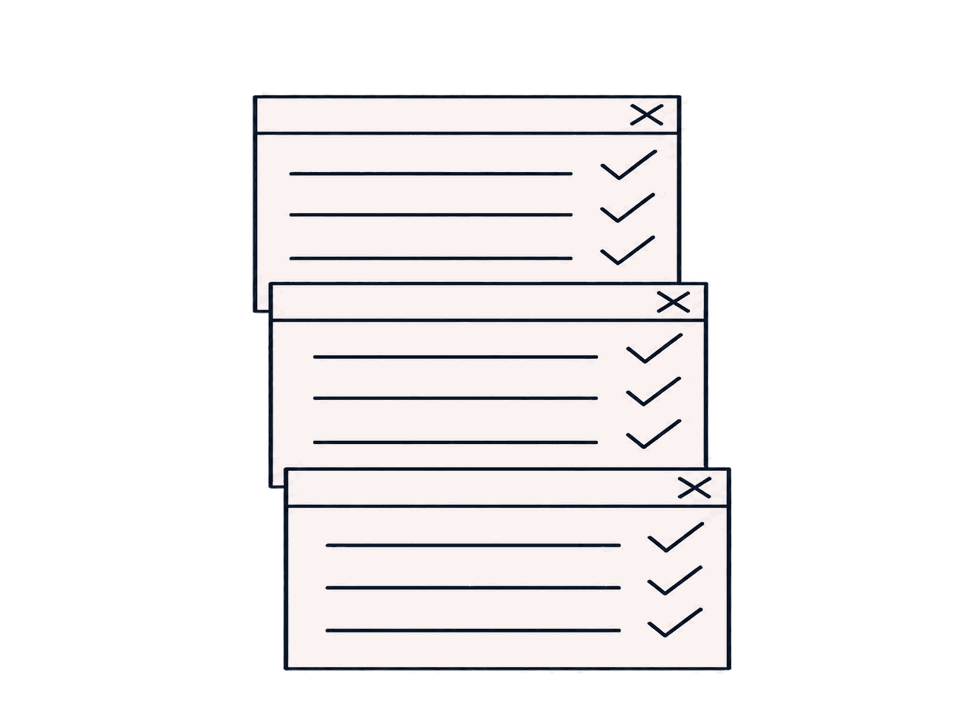
Representation bundle
Raw evidence can be replayed without the summary.
Field-level divergence ledger
Separates observation from root-cause hypothesis.
Bounded remediation brief
The implementation owner remains explicit.
Release validation report
Non-results and remaining exceptions stay visible.
Release parity threshold
The same valid matrix cell must yield materially equivalent representations across representative, dynamic and held-back URLs. Disclaimers, units, dates and exceptions must survive. Whoever checks the result never designs or approves the remediation they are checking.
Parity scorecard by template
Representation parity, critical-field loss, qualification retention, visible-data agreement and replay stability, reported by template and condition and kept separate from AI-visibility KPIs. You get a fresh scorecard after every material release, on a quarterly bounded sample, and after any relevant template, rendering, content-delivery, structured-data or extraction change.
When representations disagree
When what you publish and what gets extracted diverge
The check belongs here when a delivery layer may have lost or changed material information. Answer monitoring and ranking questions go to their existing owners.
A good fit when
- Material content depends on rendering — The task needs representative URLs and supported runtime conditions.
- Crawler or extractor evidence conflicts — A vendor score without inspectable representations is insufficient.
- A release decision is blocked — The output is a bounded remediation brief. An open technical audit sits outside this task.
- Comparison inputs are fixed — Bring the route/template inventory, approved fields, runtime matrix and the release log routing the first divergence to an owner.
- Source response ownership — Establishes what the delivery layer actually returned before browser execution.
- Rendered DOM ownership — Separates client-rendered content from the response under the documented render and wait policy.
- Extracted-content ownership — Shows whether meaningful content survives beyond the browser view.
- Visible-data agreement — Compares structured assertions with visible facts and qualifications, while entity strategy and answer monitoring stay separate.
Better handled as other work when
- Answer visibility or ranking changed — Parity can test delivery integrity but cannot explain a third party's selection logic.
- No cloaking or hidden-content fix — Required information must remain available to the intended user, and a machine-only assertion fails the visible-truth rule.
- No access-control bypass — Only approved public or explicitly authorized test states are captured. Blocked or private states don't count as missing content.
People who watch how AI cites a brand
GEO work starts with recording what AI answers actually say about a brand today, then moves to the parts you can influence. The consultants below work on the specific capability this page covers.

Can Mutioğlu
Senior SEO Executive

Samet Özsüleyman
SEO Manager

Hande Parmaksız
SEO Manager

Sena Önder
Senior SEO Executive

Sinem Bakır Yavaş
Senior SEO Executive

Ruhan Tiryaki
Senior SEO Analyst

Ali Özgün Öz
SEO Executive

Bensu Tınastepe
Senior SEO Analyst

Gülşah Şahin Özkan
Senior SEO Analyst

Yağmur Bayram
Sr. SEO Analyst

Emir Kağan Kahveci
SEO Analyst

Metehan Urhan
New Business & Partnership Manager

Zafer Yıldız
Web Analytics Manager
Tools we use
Tools behind this work
 Screaming Frog
captures the same URL two ways, raw and rendered, so the two can be diffed directly
 Sitebulb
diffs the raw response against the rendered DOM, which is this page's first two states
 Google Search Console
the rendered screenshot and DOM Google itself produced, for the replay step
 Prerender.io
the fully-rendered snapshot a bot actually receives, made inspectable on its own
 BrowserStack
captures the settled render on a real device, so a runtime cell is not an emulator's guess
 WebPageTest
establishes when the render has settled, which decides what counts as a fair capture
Nearby methods and services
Previous in sequence
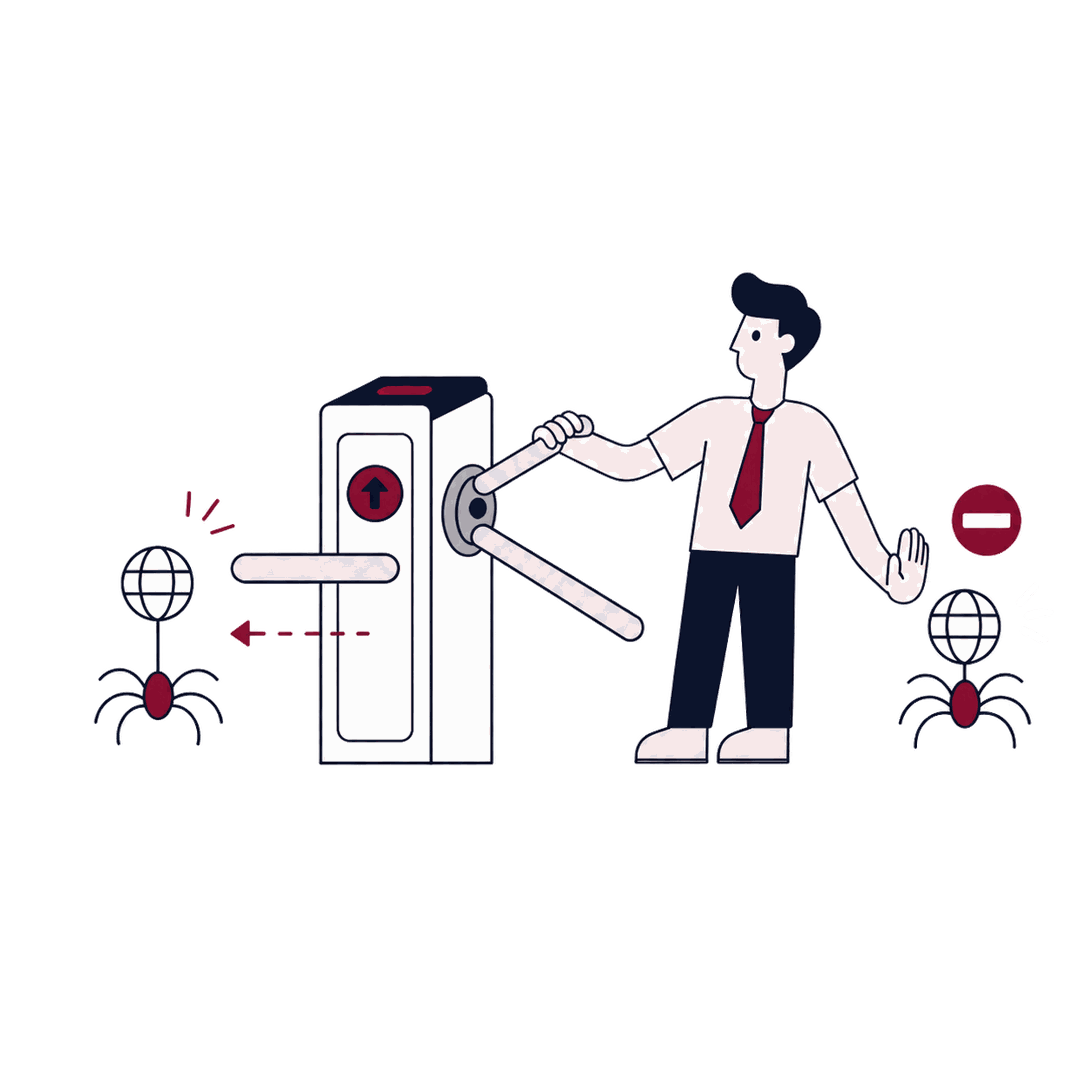
AI Crawler Access & Governance
Access has to clear before parity matters. This upstream method establishes whether a crawler can reach the page at all.
Next in sequence
LLM-Readable Information Architecture
Once representations agree, this method checks whether the page is discoverable and coherently structured in the first place.
Canonical capability
Technical AI Search Optimization
The capability page covers broader technical readiness. Representation parity is the one piece this method owns.
The first divergence is the one that matters
Locate where one URL loses content