


Findable is a testable property
LLM-Readable Information Architecture
A crawlable, internally coherent architecture in which important facts survive source, rendered and extracted representations.
The audit follows a priority answer through navigation, canonical identity, source HTML, rendered content, and extracted text. That trail shows whether the break belongs to the route, template, rendering path, or answer-module boundary. Your priority answers get a route, a clear owner and a structure a crawler can follow to the page that answers the question. Content leads and information architects who own pages that answer real questions but sit orphaned or buried behind competing routes.
Some of the 500+ brands we've worked with
See all references




































From orphan page to owned route
The path from a missing route to a validated fix
We gather the route, link and representation evidence. Named specialists approve what counts as a discovery, which correction to make, and whether the result passes.
How we hold ourselves to it
- Map knowledge before markup
- One page, one clear owner
- Extraction over aesthetics
- No universal HTML rule
Map priority knowledge to routes
The priority inventory connects each question and fact with its current route, intended canonical owner, and decision value. Content and business owners approve priority, intended owner routes and explicit non-answers.
Knowledge-to-route inventory with conflicts, gaps and accountable owners.
Capture each page representation
Source, rendered, and extracted captures preserve what each representative template exposes in each tested state. A technical specialist validates capture conditions and removes test or consent artifacts.
Representation parity matrix linked to exact pages and missing facts.

Trace crawl and navigation paths
Navigation, contextual links, redirects, sitemaps, and orphan paths reveal how a crawler can reach each owner route. The web owner confirms intentional isolation, route dependencies and crawl-path findings.
Crawl and internal-link graph with broken or competing paths.

Diagnose template and canonical conflicts
Competing explanations for template, canonical, rendering, and content-order failures are tested against evidence that could disprove them. Technical and content owners approve the diagnosis or require another discriminating test.
Failure register with direct evidence and falsifying checks.


Specify and validate architecture changes
The specification names the smallest route, link, template, or module change and its rollback criteria. After release, the same representations are captured again on the pages we changed, on pages built from a different template, and on cases we held back from the design. Engineering, content and brand owners approve the change, and an independent reviewer applies the original acceptance rule.
Architecture correction specification with examples and acceptance tests, then a post-change extraction and discovery report.


Evidence sourcing rule
What we saw directly stays labeled observed, which covers the source, rendered and extracted representations, the crawl and internal-link graph, and the canonical and template diagnostics. A repeated retrieval and answer sample is only a proxy. It does not represent complete model knowledge. Crawler and access limits are recorded as constraints. An architecture change stays a hypothesis until it holds up on questions held back from the design. The audit lead approves the label on every diagnosis and downgrades anything reported above the evidence behind it.
A log that marks every diagnosis as observed, a proxy, a platform constraint or still a hypothesis.

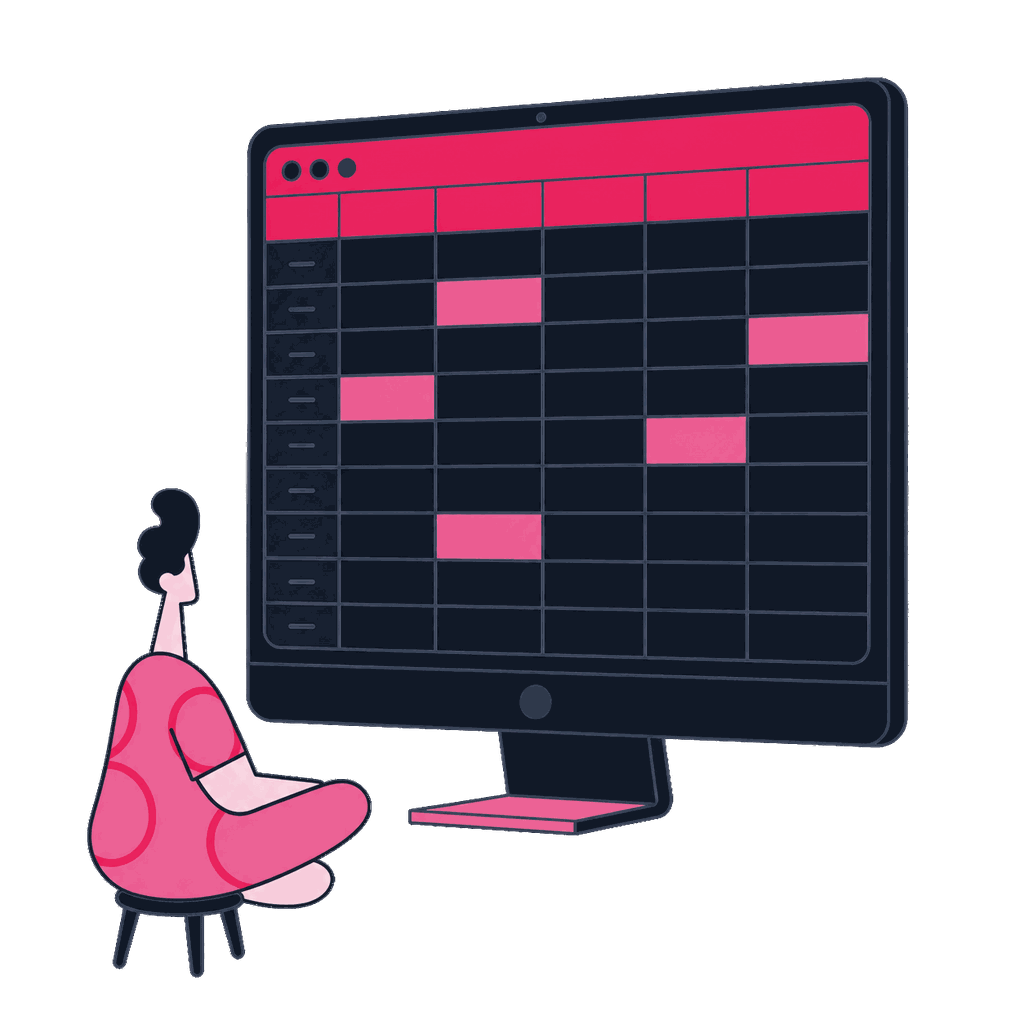
What the audit hands over
What ships once the audit closes
Each artifact names an owner, the decision it supports and enough of the reasoning trail that another specialist could reproduce or challenge it.
LLM-readability architecture audit
A page- and template-level diagnosis of where priority knowledge fails discovery, identity, rendering or extraction.
Route and template correction specification
Exact route, navigation, canonical, rendering and template corrections with dependencies and rollback.
Answer-module design system
Reusable boundaries for concise answers, proof and context that survive the tested extraction path.
Post-change extraction validation
Before and after evidence from the pages we changed, from pages built on a different template, and from cases we held back while designing the fix.
Architecture acceptance
Observed site states, proxy answer appearances, platform constraints and architecture hypotheses each keep their label through prioritization and reporting, and acceptance never rests on a causal or outcome overclaim.
Extraction and discovery scorecard
Each number is counted against its own set of pages, so they never get blended into a single score. The launch baseline covers representative templates, the monthly pass rechecks changed templates and orphans, and the quarterly review refreshes priority questions and owner routes.
When knowledge is hard to find
When priority answers get lost in the structure
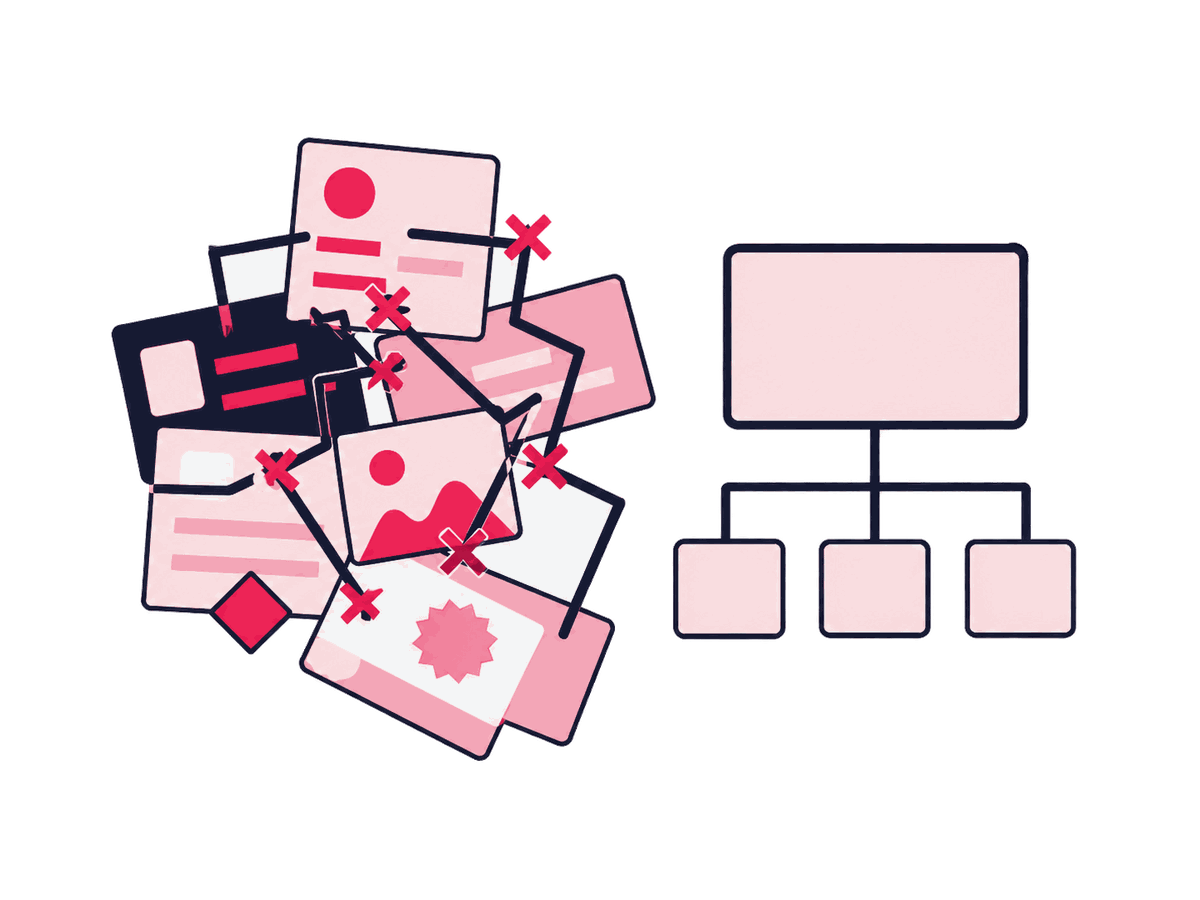
This work fits when owned knowledge is difficult to reach or changes between representations. It tests site architecture, while retrieval, ranking, and citation remain external outcomes.
A good fit when
- Important knowledge is hard to reach — Priority pages may be orphaned, buried behind weak navigation, or divided among competing routes.
- Rendered and extracted content disagree — Facts arrive late, require interaction, fragment across components or vanish from extraction.
- Templates obscure page purpose — Multiple headings, boilerplate, duplicate modules or conflicting canonicals make the intended answer and owner unclear.
- Mapping inputs are ready — Bring the priority question inventory, route/template/navigation map, approved first-party crawl and canonical evidence, plus captures.
- Critical knowledge routes and crawl paths — We map every priority question and fact to its intended canonical route and the links that make it discoverable.
- URL, canonical and navigation consistency — Canonicals, language alternates, navigation, sitemaps and redirects are compared for conflicting page identity.
- Page hierarchy and answer-module boundaries — Heading hierarchy, content order and answer-module boundaries are reviewed for coherent passage extraction.
- Source, rendered and extracted parity — We compare HTML, DOM and extracted text so important facts, links and context survive each representation.
Better handled as other work when
- Universal HTML recipes are out of scope — We don't promise that a particular word count, FAQ shell, schema type or content order forces selection by public models.
- External selection is not guaranteed — Readable architecture aids access and interpretation, but cannot prove a model ingested the site or will select the page.
- Clean visuals don't prove machine access — A tidy hierarchy fails if machine-readable paths break. Direct observations and labeled proxies stay separate.
People who watch how AI cites a brand
GEO work starts with recording what AI answers actually say about a brand today, then moves to the parts you can influence. The consultants below work on the specific capability this page covers.

Can Mutioğlu
Senior SEO Executive

Samet Özsüleyman
SEO Manager

Hande Parmaksız
SEO Manager

Sena Önder
Senior SEO Executive

Sinem Bakır Yavaş
Senior SEO Executive

Ali Özgün Öz
SEO Executive

Bensu Tınastepe
Senior SEO Analyst

Gülşah Şahin Özkan
Senior SEO Analyst

Yağmur Bayram
Sr. SEO Analyst

Emir Kağan Kahveci
SEO Analyst

Metehan Urhan
New Business & Partnership Manager

Zafer Yıldız
Web Analytics Manager

Deniz İmre Temiztürk
Content Specialist
Tools we use
Tools behind this work
 Screaming Frog
maps the click-depth and internal-link path a priority answer sits behind
 Sitebulb
draws the crawl as a map, which is how an orphaned route becomes visible rather than inferred
 Diffbot
previews what a retrieval pipeline actually extracts, at the far end of the same trail
 Google Search Console
confirms whether canonical identity actually resolved the way the site declared it should
 Slickplan
the visual sitemap the owners actually review before a route change is specified
 Prerender.io
closes a rendering gap on a client-rendered route without waiting for a rebuild
Nearby methods and services

Previous in sequence
Rendering & Extracted-Content Parity
This method assumes source, render and extraction already agree. That parity gets established upstream.


Next in sequence
Structured Data & Visible-Content Validation
Once knowledge is discoverable and coherently structured, this method validates the machine-readable markup that describes it.
Canonical capability
Technical AI Search Optimization
For broader technical readiness, see the capability page. This method's scope stops at discoverability and extraction of owned knowledge.
An orphan answer has no route to be found on
Follow a buried answer through the site