







Visible facts, rendered markup
Structured Data & Visible-Content Validation
The structured-data layer should represent the facts and relationships on the page with the smallest valid graph the evidence supports.
Our specialists inspect the rendered JSON-LD beside the page, trace mismatches to the template that produced them and check the approved graph again after deployment. Your structured data contains only facts a visitor can verify on the page. Unsupported claims stay out of the graph. Content and engineering owners who need valid markup to remain aligned with the page through the next deployment.


Some of the 500+ brands we've worked with
See all references











































Five gates before release
Five gates, and a named owner at each one
Named specialists interpret the page, own implementation and accept the final result. The collecting, comparing and drafting all happen beneath those decision gates.
How we hold ourselves to it
- Markup mirrors the page
- Remove unsupported claims
- Production is the real test
- No rich-result promises
Map page purpose to eligible markup
Content and technical SEO specialists inventory the templates, define each page's purpose and map it to schema types and properties allowed by current official guidance. Content, product and technical SEO owners decide the page purpose, eligible types and explicit exclusions.
Page-to-schema eligibility matrix with explicit excluded types and reasons.


Compare visible facts with current JSON-LD
A specialist checks rendered JSON-LD on representative URLs against visible names, dates, authors, offers, identifiers and relationships. The accountable content or entity owner confirms the authoritative value for every material mismatch.
Visible-fact parity register with missing, conflicting and unverifiable properties.


Remove unsupported and duplicate claims
Engineering owners get an exact map of duplicate nodes and unsupported claims across the CMS, components, plugins and integrations before anything is removed. Technical SEO, content and engineering owners sign off on each removal and the templates it affects.
Markup ownership and defect map with safe removal boundaries.


Specify minimal entity relationships
We write the smallest connected entity graph that carries the approved page facts, using only supported relationships and eligibility. Entity, privacy, content and engineering owners set the facts, publication boundary and implementation contract.
Minimal template-level JSON-LD specification with identifier and nesting rules.


Validate, release and monitor
A specialist checks syntax, required properties, canonical identifiers and visible parity on rendered fixtures. After release, the deployed graph is inspected again, with fresh checks after template, content-model or entity changes. A technical SEO specialist and engineer decide whether production is ready. The web owner triages regressions, and an independent reviewer verifies closure.
Pre-release validation pack, then a production parity and regression ledger with accountable remediation owners.


Finding classifications and source limits
The audience-question map and visible-content parity checks are Observed, along with classic snippet and AI answer captures kept as downstream context only. Sampled template-parity coverage counts as a Proxy. Official schema eligibility guidance is a Constraint. A markup change stays a Hypothesis until production parity gets replayed. The technical SEO specialist approves each classification and rejects any rich-result claim the validation cannot support.
How strongly each markup finding is evidenced, and the constraint its source puts on it.


The release record
A graph another specialist can reproduce
Each handoff names its owner, the decision it supports and the provenance another specialist would need to challenge the result.

Structured-data audit
A rendered-page audit of invalid syntax, unsupported properties, duplicate identities and visible-content mismatches.

Minimal markup implementation specification
A template-specific graph contract defining eligible types, properties, identifiers, nesting and visible evidence requirements.

Template-level validation fixtures
Executable representative and edge-case fixtures for syntax, identifier and parity validation in the release flow.
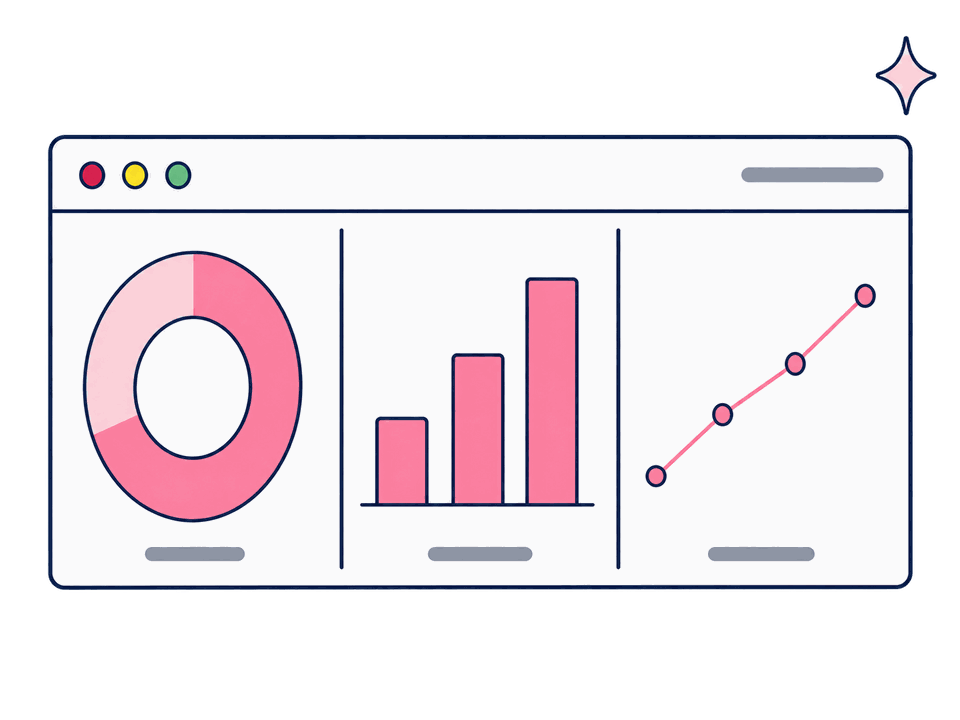

Production parity monitoring report
A deployed-page report showing current validity, parity, duplicate-node and regression status by template.


Release sign-off rule
Production markup must validate and remain aligned with visible approved facts. Rankings, recommendations, referrals and conversions are measured separately, so this rule makes no ranking or citation promise.
Markup health scorecard
Markup validity, visible-fact parity, duplicate entity rate, eligible page coverage and production regression rate, each reported against the pages it applies to. Every metric fixes its scope, the pages counted, the exclusions and the period watched before any comparison runs. A fresh scorecard lands at every affected release, the monthly review covers unresolved variance, and the quarterly one refreshes samples and owners.
Before the graph changes
Start with the page, its owner and the release path
Content, technical SEO and engineering owners first settle the page facts, schema boundary and evidence required to approve a release.
A good fit when
- Markup is missing, invalid or duplicated — Use this when markup is missing, invalid, duplicated across templates or inconsistent with the content a user can see.
- The team needs an approved schema boundary — Nobody has settled which schemas and relationships fit the page, what stays out of markup, or how parity is monitored.
- Templates disagree on ownership and parity — Content and markup exist, but ownership, eligibility and visible parity vary by template or environment.
- Deployment inputs are ready — Bring the page/template inventory, approved facts and entities, JSON-LD results, plus CMS, render and deployment constraints.
- Page purpose and eligible schema types — Each page template is matched to its actual purpose and to schema types supported by visible, policy-eligible facts.
- Visible facts, entities and relationships — The graph includes only visitor-verifiable entities and properties, with explicit identifiers and relationship direction.
- Template ownership and duplication — Before markup changes, we find every CMS, component and plugin layer that emits, merges or duplicates the JSON-LD.
- Production validation and parity monitoring — Approval uses rendered production JSON-LD, visible parity and regression behavior. Source code alone isn't enough.
Better handled as other work when
- Markup is expected to force rich results — Validation makes markup accurate and machine-readable. An external system still decides whether to render it.
- External results are not promised — Valid structured data helps parsers, but cannot guarantee rich results, answer selection, ranking or citation.
- Validity cannot replace page truth — Valid markup still fails if it overstates the visible offer. Proxies stay labeled and compared with direct observations.
People who watch how AI cites a brand
GEO work starts with recording what AI answers actually say about a brand today, then moves to the parts you can influence. The consultants below work on the specific capability this page covers.

Elif Naz Akan Karakoç
Senior SEO Executive

Samet Özsüleyman
SEO Manager

Ezgi Gülsen Yaylı
SEO Manager

Hande Parmaksız
SEO Manager

Sinem Bakır Yavaş
Senior SEO Executive

Sena Önder
Senior SEO Executive

Can Mutioğlu
Senior SEO Executive

Ali Özgün Öz
SEO Executive

Bensu Tınastepe
Senior SEO Analyst

Ruhan Tiryaki
Senior SEO Analyst

Yağmur Bayram
Sr. SEO Analyst

Emir Kağan Kahveci
SEO Analyst

Mehmet Aktuğ
Co-Founder & COO
Tools we use
Tools behind this work
 Schema App
the recurring check that JSON-LD in production still matches the approved graph
 Google Rich Results Test
checks eligibility for a rich result, a separate claim from simply valid markup
 Schema.org Validator
checks pure syntax and vocabulary conformance, independent of any one engine's rules
 Screaming Frog
traces a markup mismatch across the whole site back to the exact template producing it
 Sitebulb
inventories rendered markup across templates and groups each failure by the template behind it
 Google Search Console
the post-release monitoring on deployed pages this page schedules rather than treats as done
 Ryte
Rytewatches the released templates between checks, so a parity regression is caught when it lands
 Bing Webmaster Tools
a second engine's read on the same markup, since eligibility rules are not shared
Nearby methods and services


Previous in sequence
LLM-Readable Information Architecture
This method assumes priority knowledge is already discoverable and coherently structured. It validates the markup layered on top of it.
Canonical capability
Technical AI Search Optimization
This method owns structured-data validity and visible-content parity. Broader technical readiness lives on the capability page.
Implementation resource
GEO Checklist
The checklist covers implementation readiness. This page defines the commercial engagement.
If the page does not say it, the markup cannot
Check a live template before the next release