

Make the right entity easier to identify
Entity & Knowledge Graph Optimization
Some of the 500+ brands we've worked with
See all references


















Five places to resolve identity
Choose the record or relationship causing confusion
Entity Inventory & Disambiguation
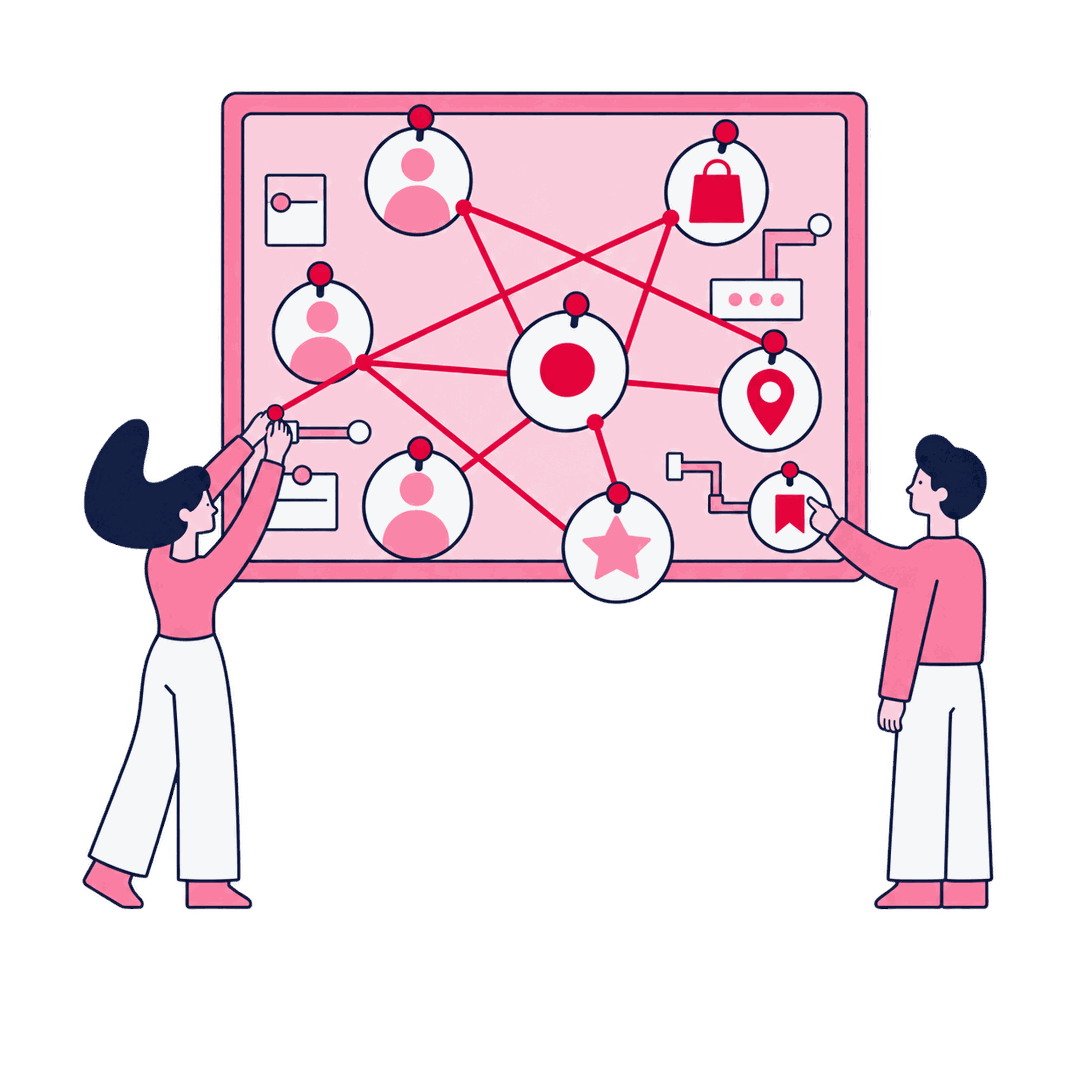
Entity Relationship Mapping
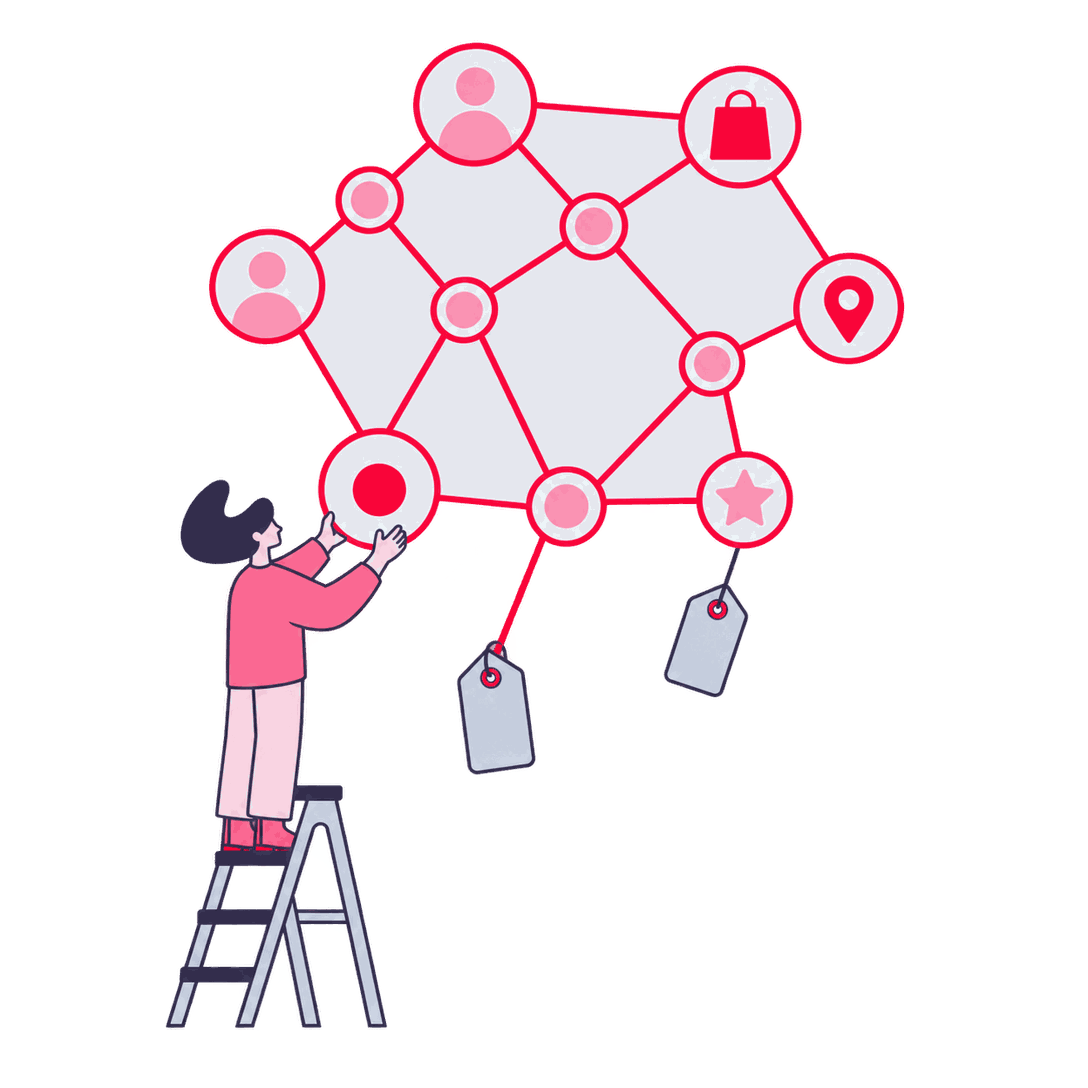
Knowledge Graph & Schema Architecture
Topic & Entity Authority Architecture
Third-Party Entity Consistency
The identity record
One approved version of the facts across systems
Owned pages, structured markup, and authoritative third-party sources may all repeat the same identity and relationships. We make the approved record unambiguous and track where those systems diverge from it.
The handoffs
Entity work has a defined stopping point
This capability owns semantic identity and relationship architecture. Technical AI Search Optimization checks how the record renders and crawls. AI Search Authority handles third-party corroboration and citation strength. High-risk updates remain under the enterprise parent module's change governance.
Scope and ownership
Every field has a named fact owner who approves the value other systems repeat
Outside records stay outside our control, so we monitor discrepancies without promising uniformity.
Namesakes, aliases, former names, and overlapping product names go into one inventory before anyone decides what is broken, then names, identifiers, and relationships are reconciled into a single approved model with a named fact owner on each field. Zeo owns semantic identity and relationship architecture; Technical AI Search Optimization checks how the record renders and crawls, AI Search Authority handles third-party corroboration, and high-risk updates stay under the enterprise parent module's change governance. After a fix ships we replay the query or discrepancy that exposed it and test cases the team did not optimize for, and the issue closes only once those checks pass.
Resolve the conflict while keeping fact ownership clear
Inventory the collisions
Namesakes, aliases, former names, and overlapping product names go into one list before anyone decides what is broken.
Reconcile an approved record
Names, identifiers, and relationships are brought into one model. Each field retains its named fact owner. That owner approves the value that other systems should repeat.
Send each discrepancy to its method
Knowledge Graph & Schema owns markup. Third-Party Consistency handles outside directories. Topic & Entity Authority takes the content structure, with one method owner accountable for each issue.
Test beyond the original conflict
After the fix ships, we repeat the query or discrepancy that exposed it and check cases the team did not optimize for. The issue closes only after those checks.

Clients on the work
What it is like to work with Zeo
Our clients describe the work in their own words.


We were working with a global supplier on SEO before. Accessibility and process management were a little more difficult with these teams. At the same time, in terms of budget, global suppliers were more costly for us due to exchange rate differences and man-hours. When we started working with Zeo, we first went through an audit, fixing the results and problems. After these processes, we placed SEO in a strategic place for digital marketing and created an always-on SEO strategy for our brands and implemented it step by step.

As MediaMarkt, we have been working with Zeo for 6 years in a very tight and coordinated way to manage our SEO processes. We receive the highest level of feedback from Zeo on increasing and improving our organic traffic. It is very enjoyable to get fast support on all our issues 24/7 and to work with Zeo to better embrace and continuously improve our brand, and we recommend it to everyone.

We strictly follow the regulations and algorithms that can change at any time; We need to act quickly. At this point, Zeo has become a partner that meets all our expectations with its professional, innovative and solution-oriented approach. The Zeo team has become a stakeholder in success by looking at our optimization processes and our brand as their own value. As the Acıbadem Healthcare Group family, we would like to thank all the Zeo team, who work tirelessly, constantly improve, and do not compromise on keeping their energy high under all circumstances!

Besides increasing our website's visibility in the UK with Zeo, the experienced team that closely follows its work and has extensive experience in its field has always made us feel like we are in the right place for SEO. We are on the right track with Zeo in a country and industry where competition is high.


We talked to a number of agencies while we were planning our website's infrastructure migration, and we ended up with Zeo. They start by understanding the problem, then bring fresh approaches to solving it better. Communication is strong, and they support you at whatever point you turn out to need it. Every minute we spend working with them convinces us further that we made the right call. If you're looking for someone to sort out the digital side, you're in the right place.
Adjacent search evidence
Case Studies
Organic search engagements establishing the indexation, content depth, and domain authority that AI answer engines draw from.

People who watch how AI cites a brand
GEO work starts with recording what AI answers actually say about a brand today, then moves to the parts you can influence. The consultants below work on the specific capability this page covers.

Elif Naz Akan Karakoç
Senior SEO Executive

Samet Özsüleyman
SEO Manager

Hande Parmaksız
SEO Manager
Sinem Bakır Yavaş
Senior SEO Executive

Sena Önder
Senior SEO Executive

Ruhan Tiryaki
Senior SEO Analyst

Ali Özgün Öz
SEO Executive

Bensu Tınastepe
Senior SEO Analyst

Gülşah Şahin Özkan
Senior SEO Analyst

Yağmur Bayram
Sr. SEO Analyst

Emir Kağan Kahveci
SEO Analyst

Metehan Urhan
New Business & Partnership Manager

Zafer Yıldız
Web Analytics Manager
Tools we use
What we watch AI answers with
Generative search leaves less to read than a rankings report does, so most of this work is assembling evidence from tools that were never built for it.
Entity and structured data
- Schema AppThe approved identity this page reconciles collisions into gets built and kept current in Schema App's Entity Hub, which is what lets every page's own JSON-LD reference one canonical record instead of each template repeating (and risking drifting) the same facts independently.
- InLinksThis capability's boundary is the approved identity and its machine-readable representation across owned pages. InLinks generates that representation from entities it detects in the page's existing copy, which keeps the markup expressing what the page already says rather than what a template asserts. Where a client's CMS owns markup publication, we take the entity reference from InLinks and leave the emitting to the existing template.
- YextThird-Party Consistency is one of the five methods this page names, and it needs a route for a corrected fact to reach outside sources. Yext both pushes the approved value to its publisher network and detects when a listing has been overwritten since. That overwrite signal is the part that matters here, since a correction that silently reverted is indistinguishable from one that was never made.
- Google Knowledge Graph Search APIBefore proposing a correction, this page's inventory step runs a quick first check on how Google's index currently associates entity data with the ambiguous name via the Knowledge Graph Search API. Google's own documentation states the API is 'not suitable for use as a production-critical service' and is being migrated toward Cloud Enterprise Knowledge Graph, so this stays a diagnostic triage step, weighed alongside other evidence rather than treated as the authoritative record of what Google resolves.
- WikidataFor a brand or founder whose canonical facts need a corroborating public record, a claimed and sourced Wikidata item is one of the few third-party entity stores this page can directly edit rather than only monitor, since several downstream AI systems and search knowledge panels consume it as a structured source.
- OpenRefineBefore a collision can be worked on it has to be distinguished from a data-entry variant, and this page starts every case from a specific confusion. OpenRefine clusters near-identical values across the record set, which separates three spellings of one entity from two genuinely different entities. Its reconciliation step can then match a cleaned value against a public identifier, which is what the canonical register needs to hold.
- Google Business ProfileA namesake collision often has a duplicate business listing behind it, and that listing is a source other systems read. Google Business Profile is the one third-party surface in this method where the brand can edit directly rather than request a change, which is why it sits early in the correction order. Its edit history also shows when a field was changed by someone outside the organization.
- Schema.org ValidatorSchema Architecture is one of the five methods here, and this page keeps identity correctness separate from any single platform's display rules. The Schema.org Validator checks syntax and vocabulary conformance without reference to what Google chooses to render, which is the right baseline when the goal is an accurate entity record rather than a rich result. An engine-specific test answers a different question and comes later.
- DiffbotThe point of this capability is that an outside system reads the brand's identity, so it helps to see that reading from outside. Diffbot's knowledge graph resolves a page to an entity using its own extraction rather than the site's markup, which is a genuinely independent check: where it lands on the wrong organization, the confusion this page starts from is reproduced rather than assumed. It is one machine's reading, not a verdict.
- Google Search ConsoleThis page's resolution measure needs proof the correction was reprocessed, not only that it was published; Search Console's recrawl and index-status data is what a named owner checks before closing a collision as resolved.
Content evidence and sourcing
- AirtableDisambiguation, relationship mapping, and third-party consistency each generate their own findings, but this page's own deliverable, the collision register and resolution measure, sits in one Airtable base so a reviewer can see an entity's open items across all five child methods at once, not five separate trackers.
Resolve the identity mismatch
Trace the fact that is causing the confusion
Identity, methods, and control