






Make proof inspectable
Fact, Proof & Provenance Design
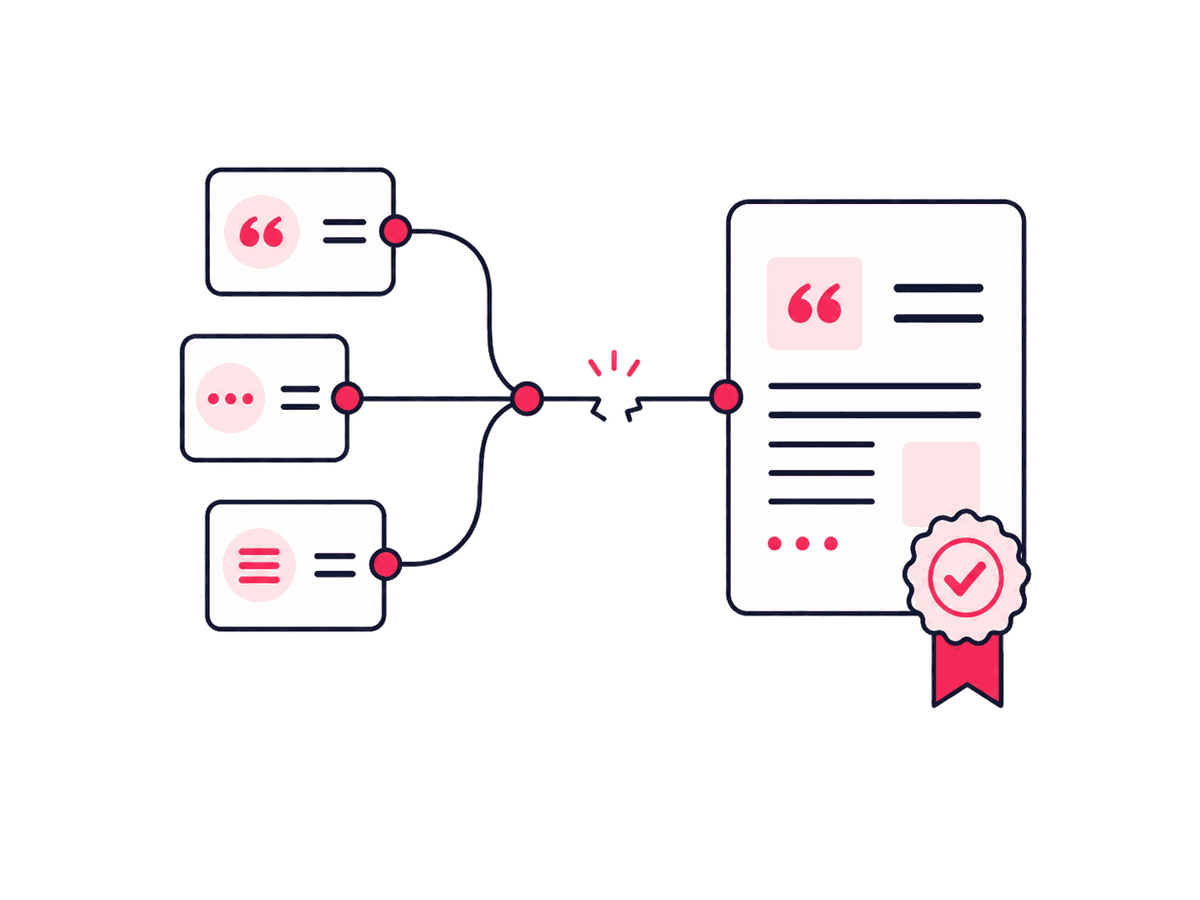
A page earns trust when each material claim leads back to a primary source, a date, and a method. More numbers don't make weak evidence stronger.
Every material claim is traced to its source, date, and method. We then add, qualify, or remove proof so the page carries evidence another specialist can inspect. Every material number on your priority pages can be traced back to its source, date, and method on request. Domain experts and editors who need a page's claims to survive a direct challenge.


Some of the 500+ brands we've worked with
See all references













































From claim to inspectable proof
How Zeo builds an inspectable proof base
Extraction, verification, and comparison are ours to run. Domain, data, editorial, and legal owners still sign off on every material statement before release.
How we hold ourselves to it
- Precision matches the evidence
- Every number keeps its source
- Density is not proof
- Reviewed by a second specialist
Define decision-useful proof criteria
The criteria connect each reader decision with an acceptable proof type and identify where qualitative evidence is more honest than a number. The strategist and the client domain owner approve decision relevance and acceptable proof types.
A proof-criteria matrix by audience decision, claim type, and acceptable source.

Extract and atomize material claims
Each piece of copy is split into testable claims. Every claim keeps its source, owner, precision level, and approval state. An editor confirms claim boundaries and excludes decorative or immaterial statements.
An atomic claim ledger with current wording, precision, source status, and accountable owner.

Verify source, scope, date, and method
Primary material is opened and calculations are reproduced where feasible. Who was counted, over what period, in which market, what was excluded, and how it was measured are then checked against the published and extracted wording for lost context. The domain owner validates method, calculation, and whether the evidence supports the proposed precision.
A source-verification record with reproduced calculations and unresolved methodological limits.


Add proof where it improves the answer
A fact, example, or method note is added only when it closes a documented decision gap and remains understandable in context. Editorial, legal, and data owners approve wording, disclosure, rights, and privacy within their remit.
An evidence-enrichment draft with claim-level provenance and disclosure notes.


Qualify or remove unsupported precision
Claims that sound more precise, current, or universal than their evidence are softened, put in context, or removed. The accountable claim owner approves each qualification or removal and records unresolved disagreement.
A qualify-replace-remove decision log for unsupported or stale claims.


Run specialist and adversarial review
A second specialist challenges sampled claims, checks conflicting evidence, and records each correction before release. An independent specialist accepts only claims that survive the original evidence rule and challenge set.
An independent challenge report with corrections, exceptions, and a release decision.
What your team can defend
What lets your team defend a claim later
The team receives verified proof to add, precise claims to qualify or remove, and the source, method, owner, and review date behind each decision.
Fact-density content audit
A page-by-page diagnosis of missing proof, decorative statistics, and unsupported claims, tied to the audience decisions affected. We replay it whenever an affected page ships.

Verified proof-point library
Approved facts, examples, methods, and quotations with source context, reuse rules, and named owners. We review source freshness monthly and revisit proof priorities and ownership quarterly.
Claim correction and enrichment plan
A prioritized list of claims to substantiate, qualify, replace, or remove, each with the exact editorial instruction and an accountable owner.

Publish-ready evidence-rich modules
Revised modules with claim-level source notes, required disclosures, and completed domain review.
Proof-coverage and traceability metrics
We report useful-fact coverage, supported-claim rate, source-context completeness, unsupported-precision rate, and adversarial survival separately. Citations, referrals, and conversions stay separate outcomes.
When proof is the real gap
When phrasing outruns the proof behind it
This method is for pages whose wording is stronger than the evidence behind it. A missing answer, stale coverage, or a demand for guaranteed exposure needs a different response.
A good fit when
- Fluent copy still makes generic claims — Claims repeat without evidence or cite statistics whose source, scope or date nobody can name.
- Evidence blocks a material decision — Nobody can say which facts change the reader's understanding, what proof is adequate, or which claims to qualify.
- Evidence is fragmented — Observations, numbers and expert judgment sit apart, without a reproducible baseline, claim-source ledger or accountable review.
- Approved evidence inputs are ready — Bring priority pages, first-party measurements and cases, citable sources, plus every licensing, legal and disclosure limit.
- Decision-useful facts and proof types — We identify the facts, examples, calculations and expert evidence that materially help the page's reader decide.
- Claims match their evidence boundary — Each claim keeps its population, period, market, exclusions and uncertainty, so it says no more than the source allows.
- Source provenance, freshness, and methodology — Every material number keeps its source, publication date, collection method and transformation history.
- Evidence keeps its limits and labels — Supporting numbers stay beside their limits, while observations, expert proxies, hypotheses and constraints keep their labels.
Better handled as other work when
- Guaranteed exposure sits outside the method — It isn't a deterministic ranking or citation product. Evidence, uncertainty and human decisions must stay explicit.
- Density does not establish truth — We do not count statistics per paragraph, invent data, cherry-pick evidence or mistake an exact figure for an accurate one.
- Selection is not part of the promise — We control traceable evidence and honest qualification. Rankings, recommendations and citations remain separate.
People who watch how AI cites a brand
GEO work starts with recording what AI answers actually say about a brand today, then moves to the parts you can influence. The consultants below work on the specific capability this page covers.

Samet Özsüleyman
SEO Manager

Can Mutioğlu
Senior SEO Executive
Ezgi Gülsen Yaylı
SEO Manager

Elif Naz Akan Karakoç
Senior SEO Executive

Didem Himmetli
Marketing Executive

Aybüke Göktuna
Senior SEO Analyst

Bensu Tınastepe
Senior SEO Analyst

Emir Kağan Kahveci
SEO Analyst

Mehmet Aktuğ
Co-Founder & COO

Ozan Ketenci
VP of Consulting & Strategy

Metehan Urhan
New Business & Partnership Manager

Zafer Yıldız
Web Analytics Manager

Ataberk Yüzat
SEO Executive
Tools we use
Tools behind this work
 Notion
the inspectable proof base itself, one entry per claim with its source, date, and method
 Airtable
records the adequate-proof decision for each claim, with the reasoning behind it
 Copyscape
confirms a piece of proof is original, not restated elsewhere without attribution
 Originality.ai
catches text lifted too closely from a source before the provenance record claims it as original
 Jupyter
reproduces the calculation behind a published number, which the verification step requires
 Datawrapper
renders a verified figure as a chart that carries its source line and alt text with it
Nearby methods and services
Parent capability
AI Citation Content Optimization
See how answer-first passages, citation-ready briefs, proof design, and refresh work fit together as one capability.
Upstream (brief the evidence)
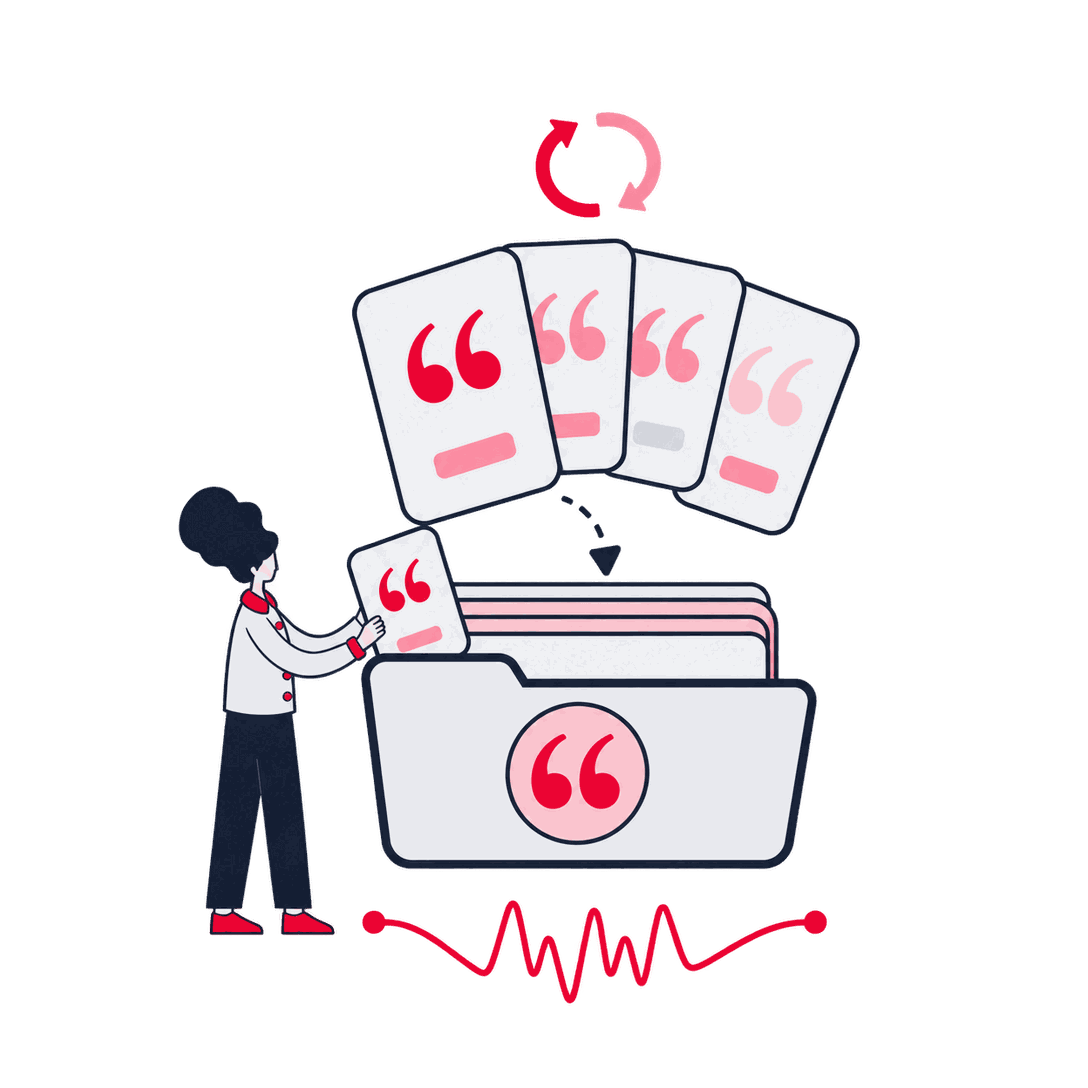
Citation-Ready Content Briefs
The claim-level brief is where each proof requirement gets fixed before drafting. This method verifies the evidence behind it.


Where the verified answer leads
Answer-First Passage Engineering
Once claims are traceable, this method rebuilds the page so the proven answer leads with its qualifications intact.
Density is not the same as proof
Test the evidence behind a disputed claim