








Content Optimization & Operations
Internal Linking Strategy & Implementation
Use contextual links to help readers reach the next useful page.
Internal Linking Strategy & Implementation connects pages with a clear reason: descriptive anchor text, useful context, and a destination that is ready for the reader. You walk away with each page's role defined, the priority connections live and validated, and page owners on record that the links are relevant.

Some of the 500+ brands we've worked with
See all references















































How we run it
How useful connections become live links
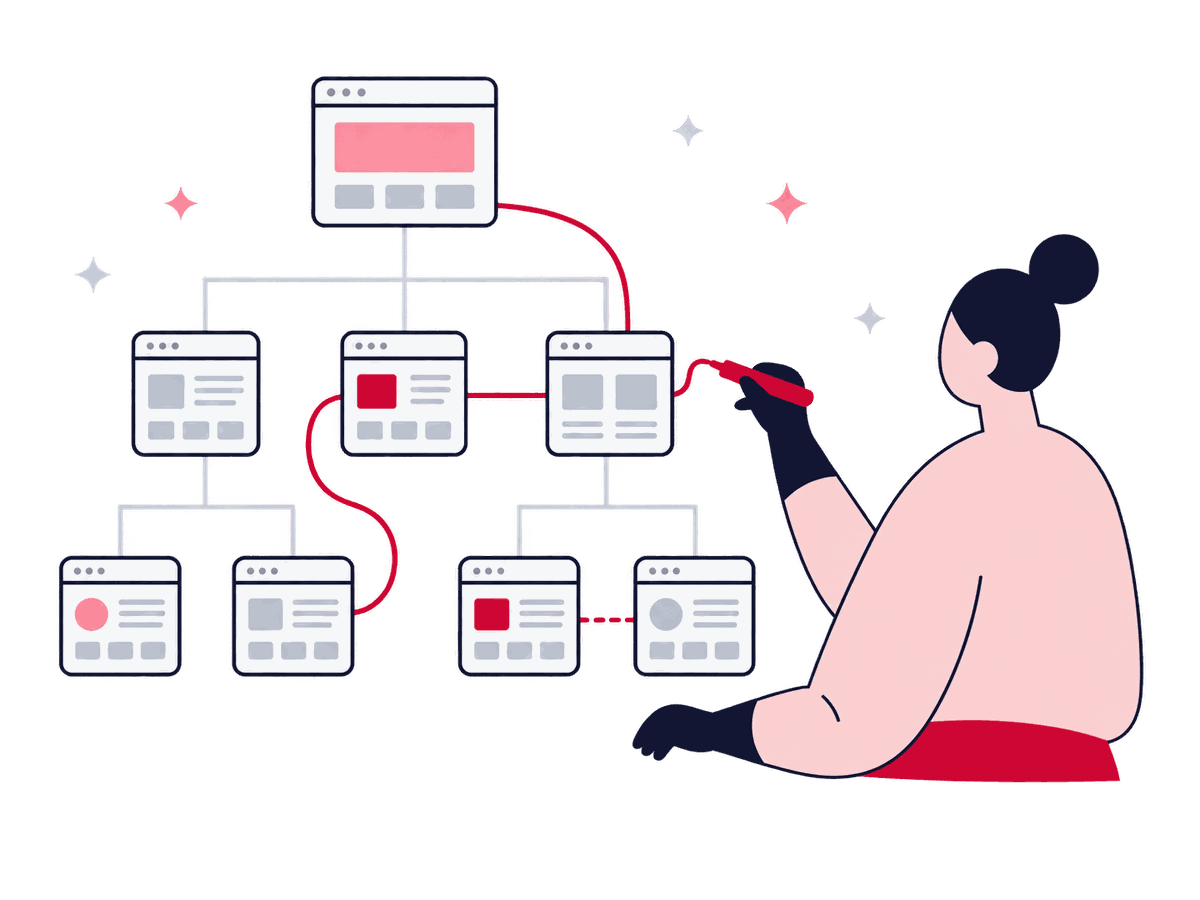
We map existing pages, identify useful connections, write contextual anchors, secure page-owner approval, and validate every live link.
Give every page a clear role
We inventory the pages, define the job of each one, and identify where a reader would reasonably want to go next. The possible crawl mis-tags get a strategist's review before the page-role map is trusted as canonical.
A canonical page-role map with orphaned and dead-end pages flagged.


Prioritize the missing connections
We identify buried pages, reader dead ends, and existing links whose destinations do not match their context. A strategist ranks the gap list by actual reader benefit. The number of missing connections is a weak proxy for that.
A prioritized list of missing or broken connections, ranked by how much they'd actually help.


Place descriptive anchors in real sentences
Each anchor describes what the reader will find and sits naturally within the surrounding sentence rather than being added as an afterthought. Each suggested anchor goes through an editor, who checks it in its actual sentence and against its destination before it's added to the list.
A source-to-target list with the exact anchor text and placement for each link.


Confirm each destination is ready
The destination owner confirms the page is accurate, useful, and ready before a new internal link sends readers there. The destination page's owner signs off that the page is ready for the traffic a new link would send.
A confirmed implementation list with page-owner sign-off.


Publish, validate, and watch usage
After implementation, we verify every link and review early usage to see whether readers follow the intended path. A strategist confirms the live links resolve correctly and reviews the first-week usage before calling it done.
Validated live links and a short note on what we're watching next.


The final link decision happens inside the sentence
A scan can find topic overlap across hundreds of pages, flag orphaned content, and draft anchor options for likely page pairs. We treat those results as a working list. An editor reads the source paragraph, opens the destination, and decides whether the connection helps someone continue. Every approved link is checked in that context before publication.
What you get
What the team can implement and verify
The plan specifies every connection. Post-publication validation confirms that those links resolve correctly and remain useful in context.

Page-role map and priority gaps
An inventory of page roles, orphaned content, dead ends, and the connections most likely to help readers.
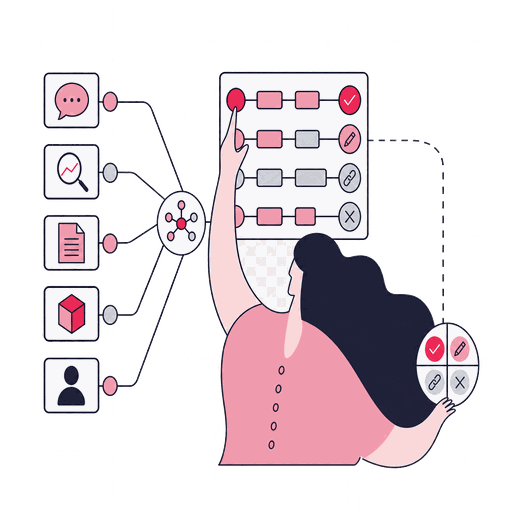
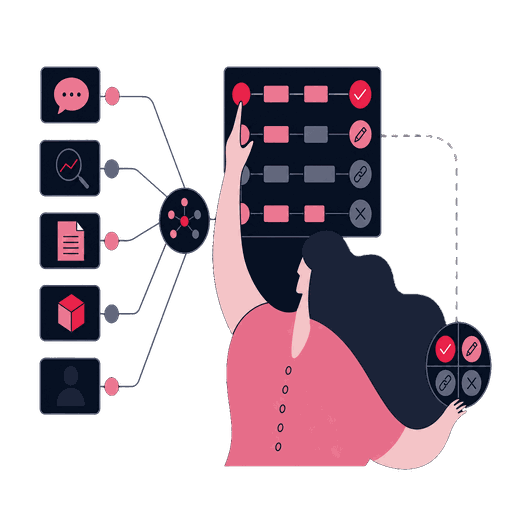
Approved source-to-destination plan
The source page, destination, proposed anchor, and placement for each link, ready for owner approval.
Live-link validation record
A live-link check with notes on the reader behavior the team will monitor next.
We call it done when: the destination pages are confirmed ready, the links are live and validated, and page owners have signed off on relevance.
Who it fits
Strong pages are hard to reach from each other
This method creates deliberate links between relevant pages. Anchor wording follows the sentence and destination, with relevance taking priority over keyword repetition.
A good fit when
- Useful pages already exist, but weak contextual links leave readers and crawlers at dead ends before they reach the next relevant destination.
- Editors know which pages should connect, but they need anchor wording that describes each destination naturally inside its own sentence.
- The site has enough useful pages that isolated fixes no longer hold together, so the team needs a repeatable source-to-destination plan.
- New pages publish without relevant paths into or out of the site, so their owners have to patch internal links after readers start arriving.


Better handled as other work when
- A fixed link-volume target is driving the plan, so editors would add connections even when no reader needs the destination.
- Every anchor is expected to repeat an exact-match keyword, even when the sentence becomes awkward.
- Destination pages are inaccurate, too thin to help, or scheduled for removal, so sending readers there would only move the problem elsewhere.
People who write and ship this content
Some of these consultants write the pages themselves. Others plan distribution or check how a piece performs once it's live, so the team below covers more than one stage of the work.

Deniz İmre Temiztürk
Content Specialist

Didem Himmetli
Marketing Executive

Ozan Ketenci
VP of Consulting & Strategy

Metehan Urhan
New Business & Partnership Manager

Sinem Bakır Yavaş
Senior SEO Executive

Hande Parmaksız
SEO Manager

Ezgi Gülsen Yaylı
SEO Manager

Elif Naz Akan Karakoç
Senior SEO Executive

Gülşah Şahin Özkan
Senior SEO Analyst

Ruhan Tiryaki
Senior SEO Analyst

Mehmet Aktuğ
Co-Founder & COO

Yağmur Bayram
Sr. SEO Analyst

Zafer Yıldız
Web Analytics Manager
Tools we use
Tools behind this work
 Screaming Frog
confirms the destination is actually ready before a link goes live
 Ahrefs
finds where a destination's topic is already mentioned but not yet linked
 InLinks
varied anchor phrasing built from entity relationships, not one repeated phrase
 Google Search Console
confirms after publish that Google actually picked up the new link
Where this leads next
Methods connected to Internal Linking Strategy & Implementation


Upstream
Content Pruning & Consolidation
Sort out duplicate or dead pages first. Linking a reader toward something that's about to be merged or removed just creates more cleanup later.


Downstream
Content Localization
Once a market's pages are properly connected, localization can carry that same link logic straight into the next language.
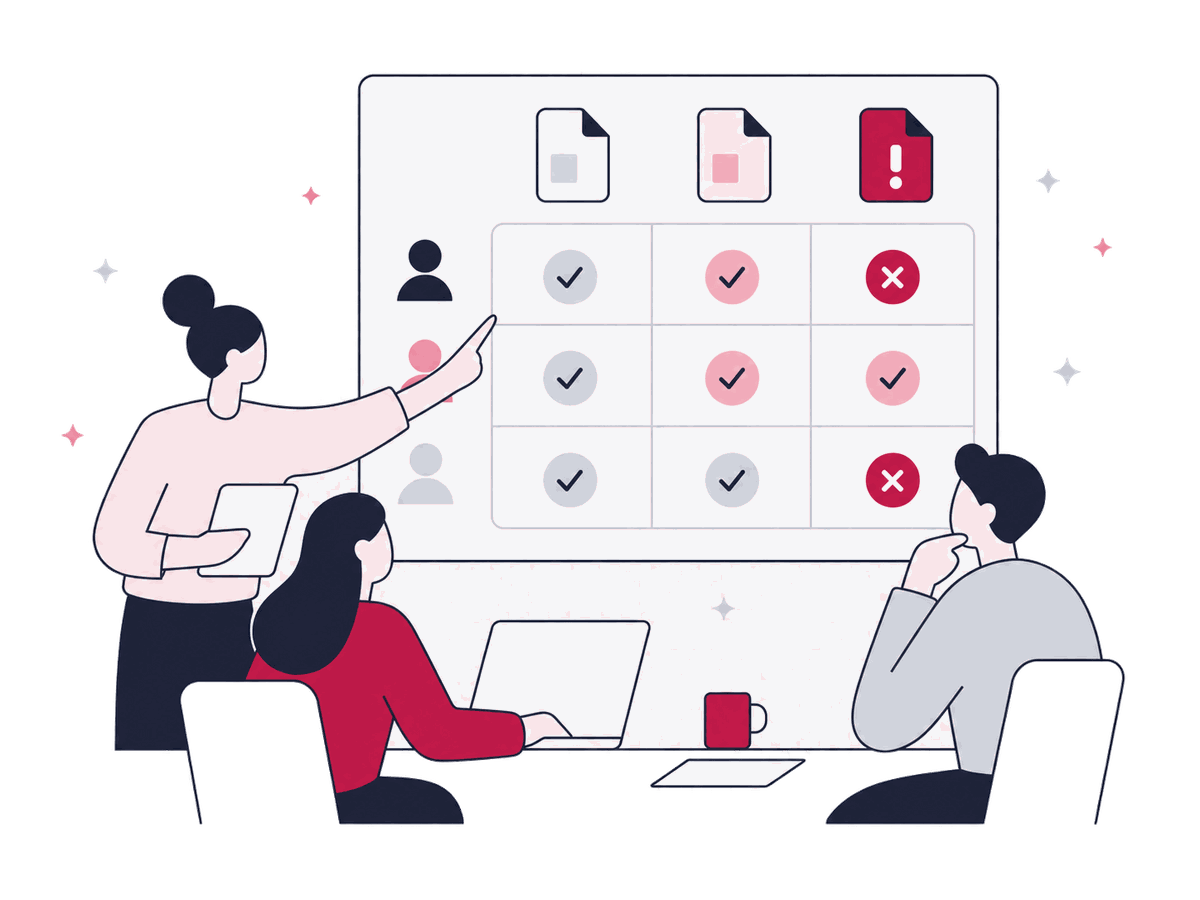
Complementary
Content Governance
Deciding which page deserves a given anchor is a judgment call, and governance says who has the authority to make it stick.
Start the work
Are useful pages leaving readers at a dead end?


Before we start