








Content Optimization & Operations
Content Pruning & Consolidation
Reduce the portfolio without removing pages that still provide value.
Content Pruning & Consolidation gives every page a keep, merge, redirect, or remove decision when a portfolio has become difficult to manage. Each action includes evidence, approval, and a rollback plan. You walk away with a keep, merge, redirect, or remove decision for every URL in scope, a signed approval for each destructive action, and a rollback ready before launch.


Some of the 500+ brands we've worked with
See all references








































How we run it
How we reduce a portfolio safely
We preserve the current state, classify each URL, map changes, secure approval, and validate the rollout.
Freeze the current state
We lock the canonical URL inventory, current rankings, links, and conversions as a baseline before anything moves, so we have something to roll back to if needed. Nothing is classified until the content owner has confirmed the baseline inventory is accurate.
A frozen baseline inventory with owners and dependencies attached.


Classify every URL in scope
Each page gets sorted by evidence into one of three groups: genuinely unique value, real overlap with another page, or no remaining reason to exist. Before any merge or redirect gets designed, a strategist reads the classified list from end to end.
A classified list with a proposed action and confidence level for each URL.
Design the merges and redirects
For anything merging or redirecting, we map exactly where the value goes, keep whatever's unique, and plan one-hop redirects instead of chains. SEO signs off on the merge map before any redirect gets built.
A merge map and redirect manifest with no redirect chains.


Get destructive calls signed off
Anything hard to reverse gets a named approver from SEO, legal, product, or engineering before it happens. A named approver from SEO, legal, product, or engineering signs off before anything ships. The agent that flagged the duplicate never gets that authority.
An approved decision register with sign-off recorded per action.


Ship with a rollback ready
Redirects go live, we validate them against the plan, and we watch the specific signals that would tell us to roll something back. The content owner confirms the rollback trigger list while the monitoring window is still open.
Validated redirects, a rollback plan, and a monitoring window.
Every removal has a named human behind it
A thousand-URL inventory needs help with sorting. Agents can cluster pages by topic overlap, flag likely duplicates, and find redirect chains that already exist. That removes much of the manual spreadsheet work. None of those flags is a removal decision. A merge determines which page keeps the framing, while a removal assumes the page no longer serves anyone who needs it. The consequences belong to the people making those calls, so every merge, redirect, and removal has a named approver before launch.
What you get
What supports every merge or removal
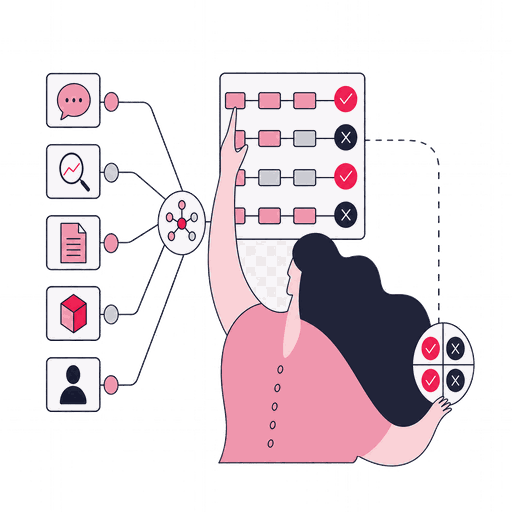
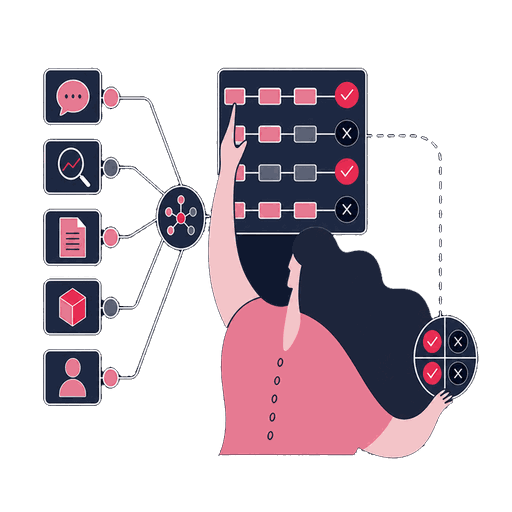
The decision register explains every action, while the redirect manifest and rollback plan make execution safer.
Decision register
Every URL in scope with its classification, proposed action, and confidence level.


Merge map and redirect manifest
Exactly where value and traffic should land, with no redirect chains.

Validation and rollback plan
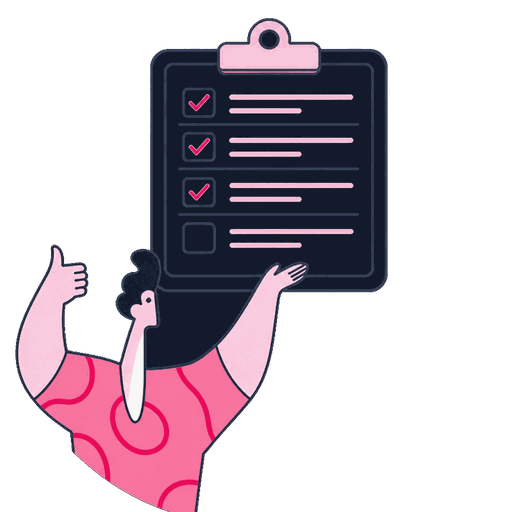
Confirmation the redirects work as designed, plus what to watch and how to reverse a call if it goes wrong.
Sign-off record
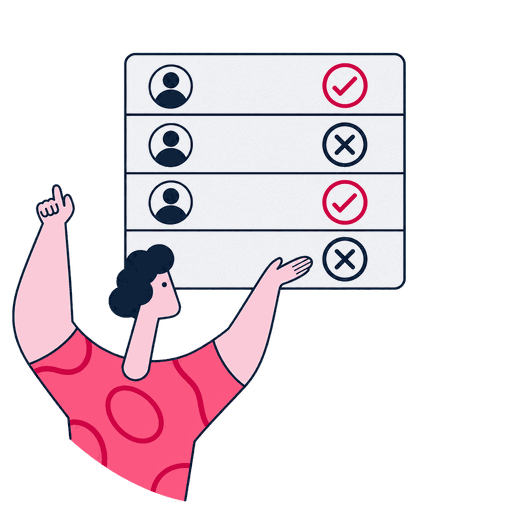
Who approved each destructive action and when, so an irreversible call always traces back to a specific person.
We call it done when: every destructive action has a named approver, redirects are validated with no chains, and there's a rollback plan on standby.
Who it fits
When the portfolio has outgrown its purpose
This is a URL-level decision process. No page gets deleted by an automatic traffic rule.
A good fit when
- Overlapping pages compete for the same job, but nobody has decided which URL should keep the unique value.
- Every keep, merge, redirect, or remove call needs evidence and a confidence level, because traffic alone cannot justify an irreversible action.
- Redirects and merges must preserve the reader's path and existing links, while the team needs a one-hop map it can validate before launch.


Better handled as other work when
- The plan is to delete every URL below a traffic threshold, while nobody is checking whether a low-traffic page is the only answer to a real question.
- No SEO, legal, product, or engineering approver can sign the destructive calls, so the merge and removal decisions cannot move safely.
- The team wants a one-time cleanup without a frozen baseline or rollback trigger, so a broken redirect would have no known state to return to.
People who write and ship this content
Some of these consultants write the pages themselves. Others plan distribution or check how a piece performs once it's live, so the team below covers more than one stage of the work.

Can Mutioğlu
Senior SEO Executive

Samet Özsüleyman
SEO Manager

Metehan Urhan
New Business & Partnership Manager

Sinem Bakır Yavaş
Senior SEO Executive

Hande Parmaksız
SEO Manager

Sena Önder
Senior SEO Executive

Bensu Tınastepe
Senior SEO Analyst

Gülşah Şahin Özkan
Senior SEO Analyst

Ali Özgün Öz
SEO Executive

Ruhan Tiryaki
Senior SEO Analyst

Yağmur Bayram
Sr. SEO Analyst

Emir Kağan Kahveci
SEO Analyst

Zafer Yıldız
Web Analytics Manager
Content we've produced on this topic
Tools we use
Tools behind this work
 Screaming Frog
freezes the full URL inventory before any page gets classified
 LinkChecker.pro
retests every signed redirect before and after the merge ships
 Google Search Console
the per-URL click history that decides if a page is safe to remove
 Google Analytics
the post-launch watch that catches a merge going wrong after release
Where this leads next
Methods connected to Content Pruning & Consolidation


Upstream
Content Performance Reviews
A performance review is usually what surfaces the overlap and dead weight in the first place, before this method decides what to do about each URL.
Downstream
Internal Linking Strategy & Implementation
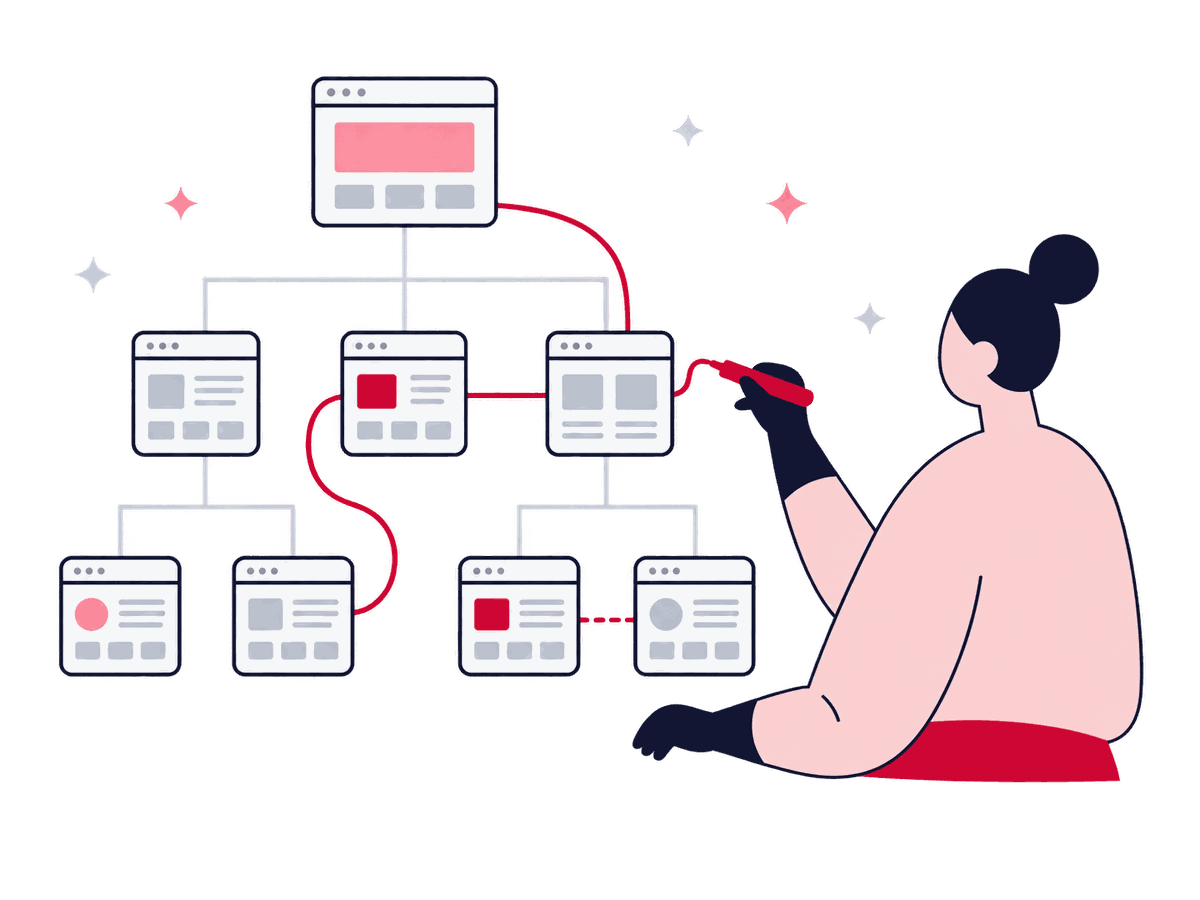
Once URLs are merged or removed, the internal link graph needs a pass so nothing still points at a redirected or retired page.


Complementary
Editorial Workflow Design
Once pruning decides what to merge, redirect, or remove, workflow design is what keeps those tasks moving between the people who execute them.
Start the work
Has the content portfolio become difficult to manage?


Before we start