









Zeo delivery method
Crawl & Index Optimization
An inventory of what should be indexed, evidence for what is actually happening, and cohort decisions that each carry a name and a reason.
Robots rules, sitemaps, canonical tags, and redirects are usually written at different times by different people, so after a site has run a few years they routinely disagree. A rule blocks a page the sitemap still lists as a priority, or a canonical points one way while a redirect sends bots another. We pull server logs and Search Console coverage to see what's actually happening, compare it against every current rule, and decide cohort by cohort which URLs to allow, consolidate, redirect, or retire. The pages worth finding get found. The rest stop competing for attention.


Some of the 500+ brands we've worked with
See all references














































Stages and gates
How we do it
Four stages, each one grounded in log data and Search Console evidence.
Get the real data
We pull your URL inventory, server logs, and Search Console coverage. This shows what bots and search engines are actually doing instead of a crawler's best guess at what's live. Our technical lead confirms the log window and URL scope are genuinely representative before the dataset becomes the agreed baseline.
A dated, scoped dataset everyone agrees is the starting point.


Compare crawled against indexed
We line up bot requests against index coverage, sitemap membership, and canonical signals for the same URLs, so we can see exactly where discovery and indexing disagree. Each disagreement gets read in its own context, and our technical lead decides whether it is a real problem or a deliberate exclusion.
A clear map of which URLs are eligible, which are excluded, and which are stuck in between.


Decide, cohort by cohort
For each group of URLs we choose allow, consolidate, redirect, noindex, or retire, and write down why, so the next person doesn't have to guess. The allow, redirect, consolidate, or noindex call for each cohort is made by our technical lead, who signs their name to the reason.
A change list where every item traces back to evidence instead of a hunch.


Ship it small, then watch
We roll out the smallest version of the change, recrawl, and check whether the index actually responded the way we expected. Whether the pilot is strong enough to expand, or needs another round first, is our technical lead's decision.
Either the pattern holds and we expand it, or it doesn't and we find out why before it spreads.


AI reconciles the datasets; a named technical lead decides what each cohort deserves.
AI reconciles the CMS URL export, the routing layer, and the raw server-log sample into one matched dataset, joins bot-request logs, sitemap membership, canonical signals, and Search Console coverage per URL, groups URLs by shared template, parameter pattern, or mismatch signature, and diffs the recrawled pilot cohort against the prediction. The cohort call stays human. We will not force every URL into the index to inflate a coverage number, we do not ship a bulk robots, canonical, or redirect change without sampling who it actually touches first, and we never build directives that show search engines something different from what your visitors see.
Deliverables and acceptance
What you get
Four things you can hold in your hand.


Brief
Crawl & index baseline
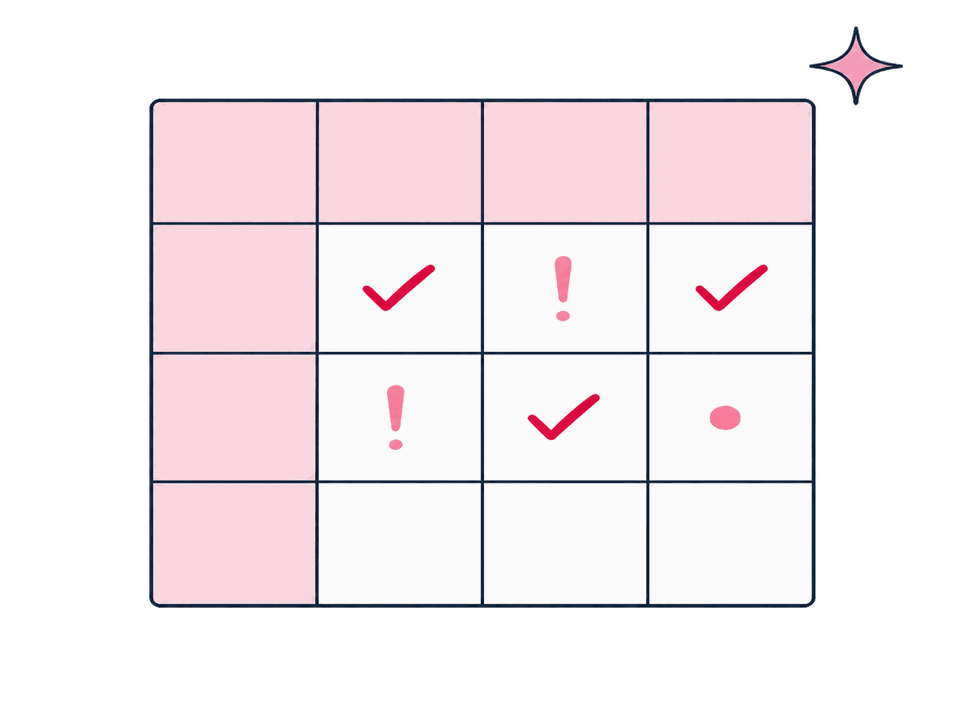
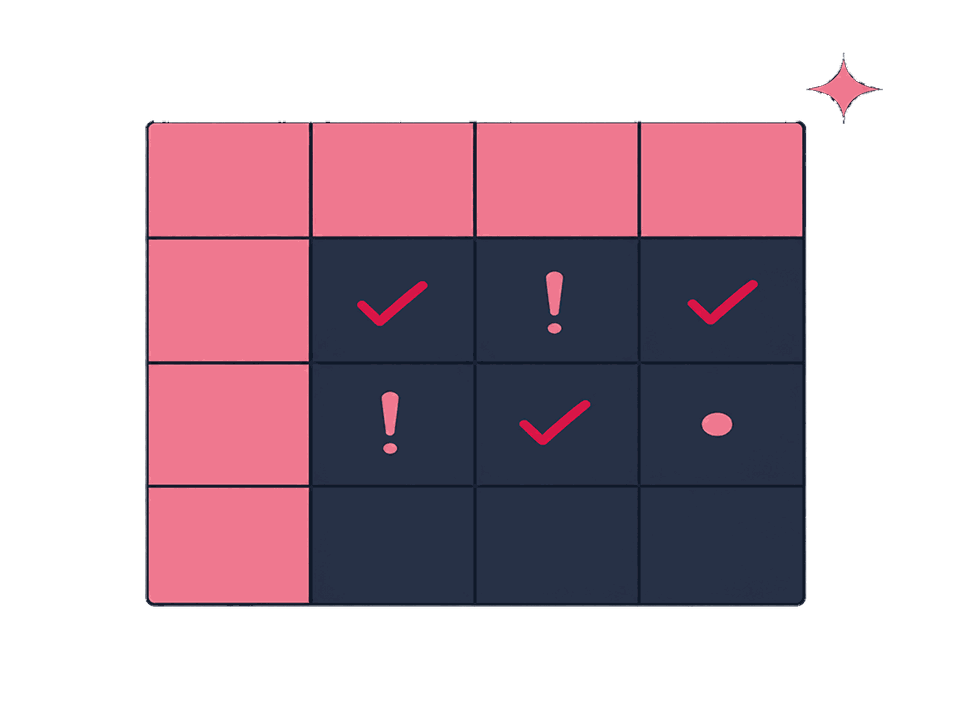
Decision matrix
URL-state evidence


Redirect map
Robots, sitemap & redirect changes

Audit report
Post-launch validation
We call it done when: The baseline, URL-state evidence, directive changes, and post-launch validation are done when the baseline names the cohorts, the owner, and what is out of scope, every URL's crawl and index status is backed by a log line or a Search Console record, every rule change carries a reason, an owner, and a way to reverse it, and the validation says plainly whether the index moved as expected and what happens next.
Fit and readiness
When you need this
Getting crawled isn't the same as getting indexed, and getting indexed isn't the same as getting found for the right thing.
A good fit when
- You're not sure how much of your site search engines actually keep in the index, versus just visit once and move on.
- Your crawl budget is going to parameters, duplicates, or pages nobody should be looking at in the first place.
- You need robots, sitemap, and canonical rules that someone actually owns and can explain.


Better handled as other work when
- You want every URL forced into the index regardless of whether it deserves to be there.
- You want to ship a bulk redirect or noindex change today without checking who and what it touches first.
If one of these is closer to your situation, start here instead: Technical SEO
We call it done when: You finish with an inventory of what should be indexed, evidence of what is actually happening, and a monitoring habit that catches drift before it costs you traffic.
The specialists behind this SEO work
Zeo's SEO work goes back to 2006, when we started what we call the first SEO blog in the MENA region. The consultants shown here are doing that work today, matched to what this page covers.

Samet Özsüleyman
SEO Manager

Mehmet Aktuğ
Co-Founder & COO

Metehan Urhan
New Business & Partnership Manager

Elif Naz Akan Karakoç
Senior SEO Executive

Ruhan Tiryaki
Senior SEO Analyst

Ezgi Gülsen Yaylı
SEO Manager

Hande Parmaksız
SEO Manager

Sinem Bakır Yavaş
Senior SEO Executive

Sena Önder
Senior SEO Executive

Bensu Tınastepe
Senior SEO Analyst

Ozan Ketenci
VP of Consulting & Strategy

Zafer Yıldız
Web Analytics Manager

Didem Himmetli
Marketing Executive

Deniz İmre Temiztürk
Content Specialist

Ataberk Yüzat
SEO Executive
Content we've produced on this topic
Tools we use
Tools behind this work
 Screaming Frog
directive crawl for canonicals, robots, sitemaps, and redirects
 JetOctopus
bot-request evidence by directory, pattern, and response code
 Oncrawl
joined crawl, log, analytics, and Search Console states
 Sitebulb
visual crawl maps for traps, depth, and isolated cohorts
 Google Search Console
index coverage, sitemap status, and sampled URL decisions
 Bing Webmaster Tools
second-engine index checks and controlled URL submission evidence
 Yoast SEO
index directives and sitemap membership traced to their WordPress source
Where this fits
Related services


Technical SEO
Core Web Vitals & Speed
Low server response latency and efficient caching protocols enable search engine user-agents to crawl deeper directory trees per visit.

Technical SEO
Site Architecture & Internal Linking
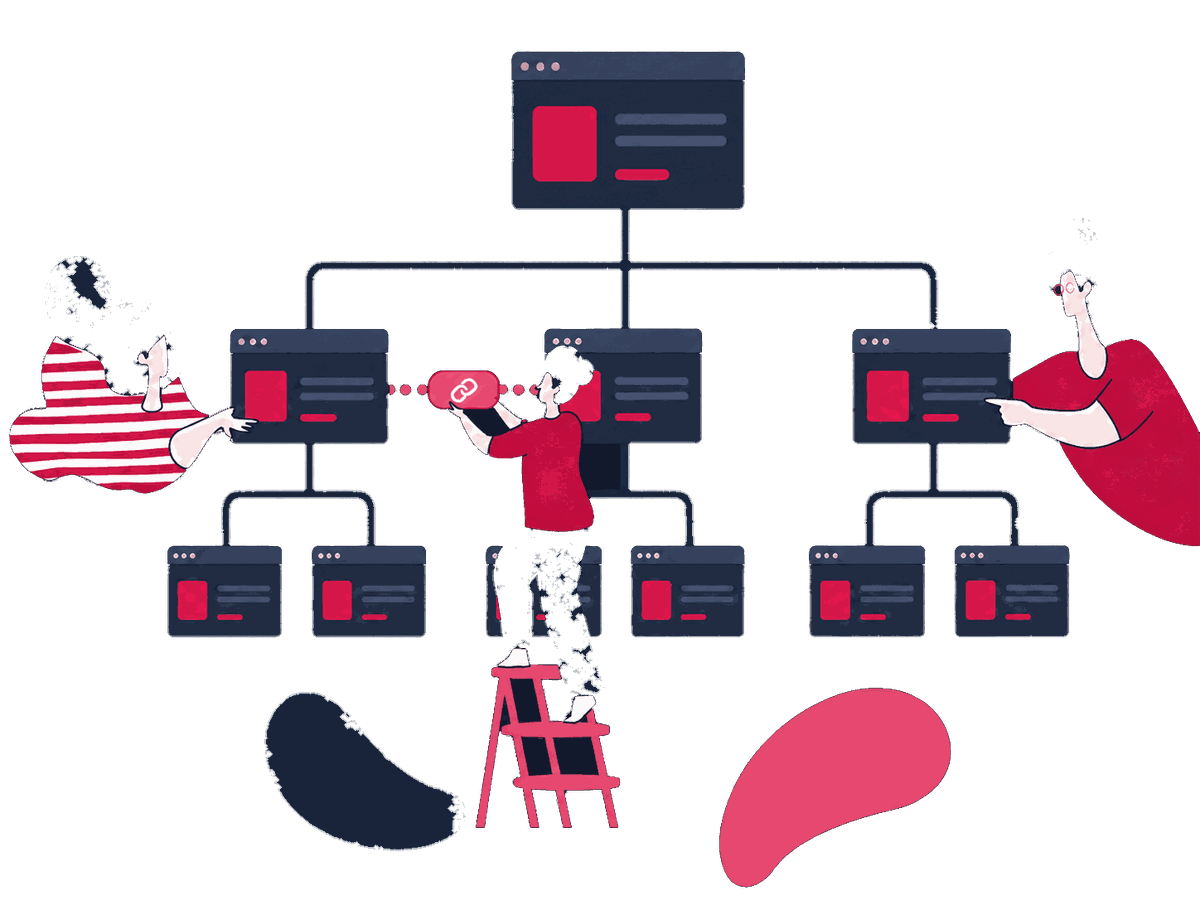
Clean crawling rules and sitemap prioritization guide search bots along logical internal linking paths toward high-priority pages.


Technical SEO
Structured Data & Rendering
Efficient rendering architecture ensures structured data scripts and canonical tags execute cleanly during automated search bot passes.
Next step
See what's actually in your index


Before we start