







Zeo delivery method
Structured Data & Rendering
The visible page, the rendered HTML, and the JSON-LD saying the same thing, with every property tied to an owner and regressions caught at the template that caused them.
A page can look complete in a browser and still reach a crawler as incomplete HTML, and markup that passes a validator can describe something no visitor will actually find on the page. We capture what the source, the rendered page, and the JSON-LD each separately claim, then fix the owning template wherever the three disagree instead of patching the symptom on one page at a time. We make the visible page, rendered HTML, and structured data tell the same truth, with no invisible claims and no false promise of a rich result.


Some of the 500+ brands we've worked with
See all references








































Stages and gates
How we do it
We capture what the page and its markup actually say before deciding anything is wrong. Once the mismatches trace back to a template, one fix replaces the guesswork, and we keep testing it against the awkward cases.
Capture every version of the page
We save source HTML, server-rendered HTML, browser-rendered DOM, and JSON-LD for representative templates and states, including consent and edge cases. A specialist confirms the captured states represent the edge cases that matter before they become the before-picture everyone works from.
A reliable before-picture that shows what users and crawlers each receive.


Compare visible and machine-readable truth
We line up each entity and property against the text and data users can see, then flag anything missing, contradictory, or impossible to maintain. A specialist and the source owners confirm which flagged mismatches are genuine defects before any template gets a fix.
A property-level matrix that separates genuine defects from harmless validator noise.


Fix the owning template
We map approved properties to owned fields, add null and stale-data behavior, and correct the rendering path where the mismatch starts. A specialist signs off on the mapping and the stale-data behavior before the template fix ships as one versioned change.
One versioned template fix instead of a pile of page-by-page patches.


Test normal and awkward cases
Before expanding the change, we check live samples for empty fields, changed prices, unavailable items, consent variants, and JavaScript failures. A specialist reviews every awkward-case result and decides whether the release stays truthful enough to expand.
A release that stays truthful when the content isn't in its neatest possible state.


AI captures and diffs every version of the page; people confirm the defect and the fix.
AI captures source HTML, server-rendered HTML, browser-rendered DOM, and JSON-LD for every representative template and consent state in one pass, diffs every entity and property against the visible text and data and separates genuine defects from validator noise, maps each approved property to its owned field and drafts the null and stale-data behavior, and runs the empty-field, changed-price, unavailable-item, consent-variant, and JavaScript-failure cases against live samples before rollout expands. It confirms nothing on its own. We do not mark up reviews, prices, availability, authorship, or relationships a visitor cannot verify on the page or in an approved source, we will not promise a rich result because valid markup only creates eligibility, and we do not push a template-wide schema change without representative rendering and freshness tests first.
Deliverables and acceptance
What you get
Four artifacts that keep structured data tied to the page instead of floating off into its own SEO universe.
Decision matrix
Rendering parity matrix
Evaluation sheet
Property eligibility review


Policy document
Property-to-source contract
Dashboard
Markup health view
We call it done when: The parity matrix, property review, property-to-source contract, and markup health view are done when source, rendered, visible, and JSON-LD values sit side by side for every representative template state, every property is marked required, useful, conditional, or excluded with a link to the rule behind it, every emitted value has one source, one owner, and defined missing-or-stale behavior, and live errors are grouped by template and property so one shared defect never masquerades as hundreds of unrelated pages.
Fit and readiness
When you need this
Passing a schema validator is easy. Keeping the markup true when the page, price, or availability changes is the genuine job.
A good fit when
- Your source HTML, rendered page, and structured data don't reliably match across templates, devices, or consent states.
- You have markup in place but nobody can say whether the page is eligible for the search enhancement it's chasing.
- Schema fields pull from multiple systems and you need one owned source for price, availability, author, or entity identity.


Better handled as other work when
- You want to add markup solely because a validator accepts it, even when the corresponding fact isn't visible on the page.
- You're looking for a guarantee that valid structured data will make a rich result appear.
If one of these is closer to your situation, start here instead: Technical SEO
We call it done when: Representative templates show the same supported facts in visible content and JSON-LD, every property has a source owner, and regressions are caught before they spread.
The specialists behind this SEO work
Zeo's SEO work goes back to 2006, when we started what we call the first SEO blog in the MENA region. The consultants shown here are doing that work today, matched to what this page covers.

Samet Özsüleyman
SEO Manager

Elif Naz Akan Karakoç
Senior SEO Executive

Hande Parmaksız
SEO Manager

Sena Önder
Senior SEO Executive

Bensu Tınastepe
Senior SEO Analyst

Sinem Bakır Yavaş
Senior SEO Executive

Ali Özgün Öz
SEO Executive

Ruhan Tiryaki
Senior SEO Analyst

Aybüke Göktuna
Senior SEO Analyst

Yağmur Bayram
Sr. SEO Analyst

Emir Kağan Kahveci
SEO Analyst

Yiğit Konur
Founder & Chief Strategy Officer

Can Mutioğlu
Senior SEO Executive

Deniz İmre Temiztürk
Content Specialist

Ataberk Yüzat
SEO Executive
Content we've produced on this topic
Tools we use
Tools behind this work
 Screaming Frog
raw versus rendered HTML comparisons with sitewide schema validation
 Sitebulb
property-level schema errors grouped by type and template
 Schema App
owned property-to-field mappings with ongoing deployment health monitoring
 Botify
sitewide JavaScript rendering gaps in content and markup
 Lumar
Lumarscheduled rendered crawls for schema and content drift
 Google Search Console
live enhancement errors, affected URLs, and post-release coverage
 Bing Webmaster Tools
markup checks confirming what Bingbot actually reads on live pages
Where this fits
Related services


Technical SEO
Crawl & Index Optimization
Validating JSON-LD schema execution ensures search engine bots parse entity markup accurately during initial crawl passes without rendering errors.


Technical SEO
Core Web Vitals & Speed
Server-rendered structured data scripts prevent client-side hydration delays, keeping page layouts stable and improving Core Web Vitals.

Technical SEO
Site Architecture & Internal Linking
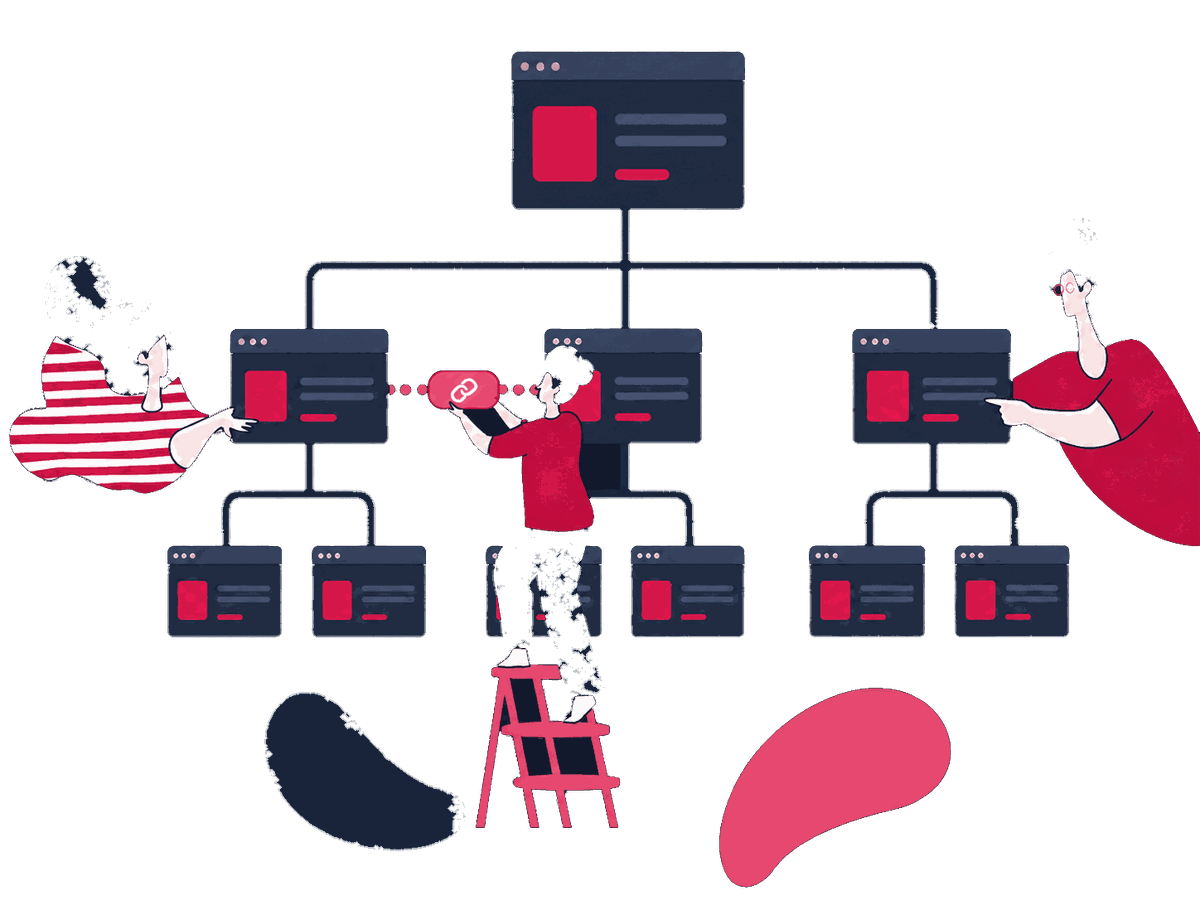
Breadcrumb and SiteNavigationElement schemas mirror physical internal link hierarchies, clarifying domain taxonomy for search crawlers.
Next step
Compare what your page and schema say


Before we start