






Zeo delivery method
Content & Keyword Audit
One honest decision per URL, keep, refresh, merge, retire, or create, with the demand that already works protected on the way through.
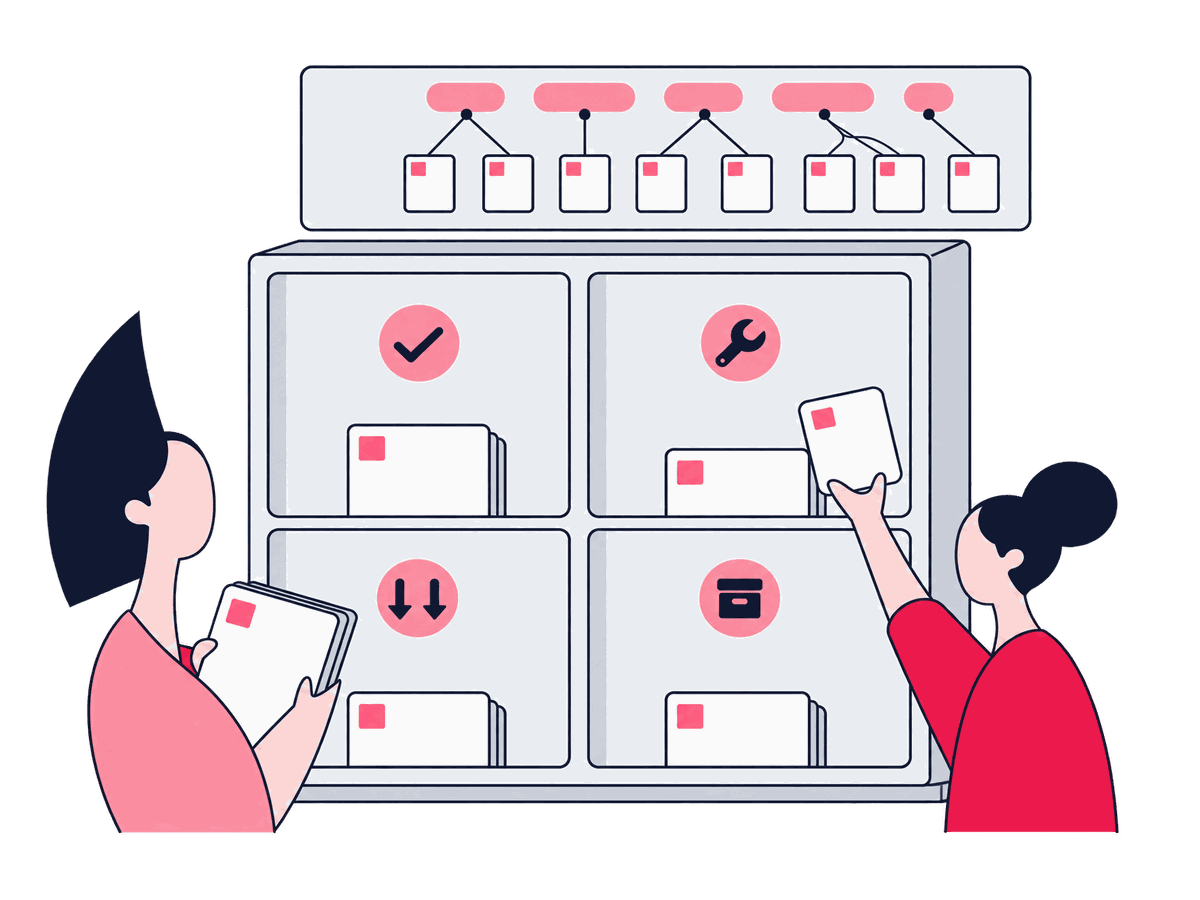
A site can carry thousands of pages and still leave important questions unanswered, because finding keywords is the easy part. Deciding which existing page should own each one is the hard part. We build the current page inventory, connect it to the queries people actually reach it on, and give every page one clear decision, keep, refresh, merge, retire, or create, with the demand that already works protected on the way through. We decide what to keep, refresh, merge, retire, or create using page-level evidence and the value each page carries for your business.
Some of the 500+ brands we've worked with
See all references


































Stages and gates
How we do it
We treat the page inventory like a living product.
Build the current page inventory
We reconcile crawl, CMS, canonical, analytics, and ownership data into one list (including the pages your navigation has forgotten). A specialist assigns the owner, locale, and lifecycle state that the reconciled data can't infer on its own.
One current inventory where every URL has a template, locale, owner, purpose, and lifecycle state.


Connect queries with the pages people reach
We join Search Console, analytics, conversion signals, and current result pages at the same URL and time window. This keeps us from blaming a traffic decline on the wrong change. The content lead separates genuine cannibalization from the uncertain matches that do not justify touching anything.
A map showing the demand each page currently owns, with uncertain matches clearly identified.


Choose a job for every page
A specialist checks intent, unique evidence, authority, internal links, performance, and risk before assigning keep, refresh, merge, redirect, retire, reframe, or create. A specialist makes the actual keep, refresh, merge, retire, or create call, weighing risk the score can't see.
A page-level decision list with a reason beside every call.


Turn the decision into a usable brief
We turn each accepted decision into an owned edit, merge, redirect, or new-page brief with factual sources, dependencies, and a way back if it underperforms. A specialist sets the rollback condition and checks the brief against the decision before it reaches the queue.
A backlog editors and developers can ship without reopening the audit.

Watch changed pages as cohorts
We compare kept, refreshed, merged, redirected, retired, and new pages against the same baseline, and keep useful losses visible instead of hiding them inside totals. A specialist decides keep, adjust, restore, or stop for each cohort so a losing page can't hide inside a winning total.
A clear keep, adjust, restore, or stop decision for each type of content action.


AI reconciles and pre-sorts; a specialist makes the call.
AI reconciles crawl, CMS, canonical, and analytics exports into one page list, surfaces the orphaned URLs navigation forgot, compares ranking positions on shared queries, pre-scores pages against the decision checklist, drafts the edit, merge, or redirect brief from the decision's source facts, and aggregates each cohort against the same baseline. Nothing useful is deleted, redirected, canonicalized, or noindexed without the source owner's approval, evidence of the traffic being protected, and a recoverable path.
Deliverables and acceptance
What you get
The next editorial cycle gets easier to run because of what comes out of this one.
Content calendar
Page action inventory
Architecture map
Intent & coverage map
Prioritized backlog
Consolidation & creation backlog
Tracking plan
Editorial validation plan
We call it done when: The action inventory, coverage map, backlog, and validation plan are done when every priority URL has one action, one owner, and one reason, and every merge or retirement names the outcome it protects and the condition that restores it.
Fit and readiness
When you need this
This is for teams ready to make page-level decisions.
A good fit when
- Your content library has grown so quickly that no one can clearly explain the purpose of every page.
- Several pages compete for the same searches, but you need to avoid merging the wrong one and losing useful demand.
- You need a defensible plan for publishing and consolidation, grounded in product truth, observed queries, and the editorial capacity you have available.


Better handled as other work when
- You only need a keyword list or a batch of AI rewrites, without assigning each page an owner or a clear purpose.
- You want to delete, redirect, or noindex useful pages without protecting the traffic, facts, and customer journeys they already support.
If one of these is closer to your situation, start here instead: SEO Audit
We call it done when: Every priority URL carries a clear action and an owner, every merge or retirement has a safe destination and recovery path, and every new page has a distinct job. The clutter comes out without sacrificing the useful demand you've already earned.
The specialists behind this SEO work
Zeo's SEO work goes back to 2006, when we started what we call the first SEO blog in the MENA region. The consultants shown here are doing that work today, matched to what this page covers.

Metehan Urhan
New Business & Partnership Manager

Can Mutioğlu
Senior SEO Executive

Aybüke Göktuna
Senior SEO Analyst

Yiğit Konur
Founder & Chief Strategy Officer

Hande Parmaksız
SEO Manager

Ezgi Gülsen Yaylı
SEO Manager

Sinem Bakır Yavaş
Senior SEO Executive

Sena Önder
Senior SEO Executive

Bensu Tınastepe
Senior SEO Analyst

Gülşah Şahin Özkan
Senior SEO Analyst

Ali Özgün Öz
SEO Executive

Ruhan Tiryaki
Senior SEO Analyst

Yağmur Bayram
Sr. SEO Analyst

Emir Kağan Kahveci
SEO Analyst

Zafer Yıldız
Web Analytics Manager
Content we've produced on this topic
Tools we use
Tools behind this work
 Ahrefs
shows which pages carry links and rank beyond recent analytics
 Semrush
compares audited pages with current competitors and missing topic coverage
 Screaming Frog
builds the working URL inventory with templates and canonical states
 Keyword Cupid
groups overlapping queries before merge or new-page decisions
 Copyscape
confirms substantial copy overlap among suspected duplicate pages
 Google Search Console
maps the queries and search demand each page currently owns
 Google Analytics
adds entrances, conversions, and journey value to page decisions
Where this fits
Related services

SEO Audit
Technical & Crawl Audit
Content keyword gaps are audited alongside technical crawlability to confirm whether missing visibility stems from poor relevance or index blocks.


SEO Audit
Backlink & Authority Audit
Underperforming keyword targets are cross-checked with inbound link counts to determine if content requires rewrites or external authority.

SEO Audit
Competitor & SERP Audit
Internal keyword topic coverage is mapped against market competitors to identify unaddressed user search intents and format gaps.
Next step
Give every useful page a clear job


Before we start