





Zeo delivery method
Backlink & Authority Audit
One link inventory everyone can trust, and a reclaim, earn, or let-go decision behind every link that a vendor score never made alone.
A backlink profile built up over years mixes links that carry real authority with dead weight nobody has checked, and a vendor toxicity score just hands you a number to argue about instead of a reason. We map the full link graph, confirm which links are still live, judge risk the way a person actually would, and decide link by link whether to reclaim it, leave it, or let it go. We identify the links carrying authority, separate the noise, and pursue recoverable losses and confirmed risks with evidence.

Some of the 500+ brands we've worked with
See all references























Stages and gates
How we do it
We work through four stages in order. A vendor score alone is never enough to reclaim or disavow a link.
Map the whole link graph
We merge every backlink export into one graph, same source definitions, same timestamps, duplicates and redirects resolved, so nothing gets double-counted or quietly dropped. A specialist sets the source list, timestamp window, and exclusions before the merged graph becomes the audit's baseline.
One inventory with a clear scope, exclusions, and an owner.


Check what's still live
We sample live pages, historical destinations, referral context, prior outreach, and manual-action evidence to distinguish confirmed changes from tool noise. A specialist confirms each flagged gap against the actual live page before it earns a place on the authority gap map.
An authority gap map where every entry traces back to a page you can still visit today.

Judge risk the way a person would
A specialist classifies suspicious patterns by context, source, intent, scale, history, because no single toxicity score gets to be the verdict on its own. A specialist weighs the intent, ownership, and precedent behind each cluster before any link earns the risk label.
A short list of genuine risks with reasoning attached.


Reclaim, earn, or let go
For each supported opportunity we approve the fix, the outreach, or the disavow request with evidence and a named owner, and we say no to the rest. A named owner signs off on every reclaim, outreach, or disavow action, including the condition that would reverse it.
A backlog of link moves worth doing, each with a condition for pulling it back out if it doesn't pan out.


AI merges the exports; a specialist decides what the evidence means.
AI reconciles overlapping backlink exports from different tools into one graph, pulls live-page and historical snapshots so nobody opens thousands of URLs by hand, groups suspicious link patterns by source, scale, and history, and drafts the outreach note and disavow-candidate list from confirmed evidence. No vendor toxicity score decides a disavow or removal on its own: a specialist checks the live page first, and a link whose status stays genuinely unclear is recorded as unclear.
Deliverables and acceptance
What you get
Four things you can act on today.
Link ledger
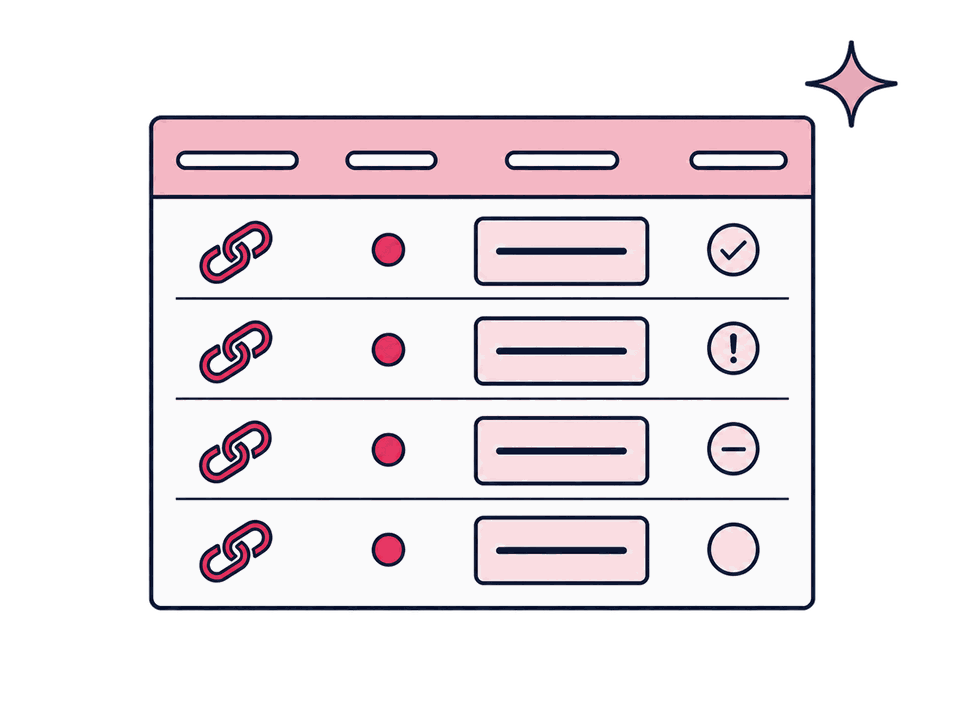
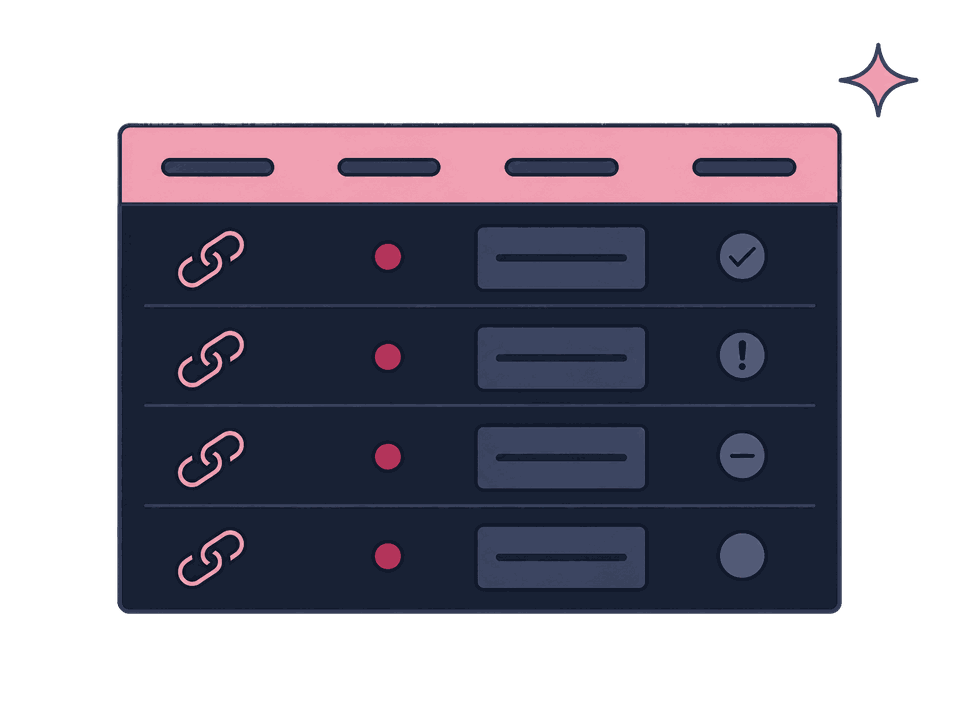
Normalized link inventory
Decision matrix
Authority gap map
Prioritized backlog
Reclaim & earn backlog
Audit report
Risk evidence record
We call it done when: The link inventory, gap map, backlog, and risk record are done when every link traces to a source and a date, every finding traces to a live page or dated record, and every confirmed risk carries the action taken and the reasoning behind it.
Fit and readiness
When you need this
This is for teams who need to know which links carry value and which ones are noise.
A good fit when
- You want one team responsible for telling meaningful authority signals apart from noise across your link profile.
- You have lost links that may be recoverable and want to know which ones justify the time and effort of outreach.
- You don't have a clean, current picture of what's linking to you and why (exports from three tools disagree and nobody's reconciled them).


Better handled as other work when
- You want a single authority or toxicity score and a matching disavow file, without manually reviewing what is still live.
- You're trying to buy, swap, or manufacture links instead of earning new ones or recovering links you lost.
If one of these is closer to your situation, start here instead: SEO Audit
We call it done when: A clean link inventory, a sourced authority gap map, an owned reclaim-or-earn backlog, and a record of what happened to the confirmed risks (nothing decided behind a score).
The specialists behind this SEO work
Zeo's SEO work goes back to 2006, when we started what we call the first SEO blog in the MENA region. The consultants shown here are doing that work today, matched to what this page covers.

Yiğit Konur
Founder & Chief Strategy Officer

Ezgi Gülsen Yaylı
SEO Manager

Metehan Urhan
New Business & Partnership Manager

Sinem Bakır Yavaş
Senior SEO Executive

Elif Naz Akan Karakoç
Senior SEO Executive

Sena Önder
Senior SEO Executive

Bensu Tınastepe
Senior SEO Analyst

Ali Özgün Öz
SEO Executive

Ruhan Tiryaki
Senior SEO Analyst

Aybüke Göktuna
Senior SEO Analyst

Emir Kağan Kahveci
SEO Analyst

Burak Pehlivan
Co-founder & CEO

Ozan Ketenci
VP of Consulting & Strategy

Zafer Yıldız
Web Analytics Manager

Ataberk Yüzat
SEO Executive
Tools we use
Tools behind this work
 Ahrefs
exports live, lost, and redirected backlinks with destination history
 Semrush
adds a separate backlink source and competitor authority comparison
 Moz
Mozchecks link discoveries omitted or dated differently elsewhere
 Majestic
cross-checks referring domains and shows how authority flows between them
 LinkResearchTools
groups suspicious link patterns for manual context and risk review
 Linkody
monitors approved reclaim targets and records whether links return
 Google Search Console
compares vendor exports with Google's own sampled links report
Where this fits
Related services

SEO Audit
Technical & Crawl Audit
Off-page toxic links and anchor profiles are evaluated alongside server errors, redirect chains, and indexing barriers discovered during crawl audits.
SEO Audit
Content & Keyword Audit
Backlink distribution across subfolders highlights whether authority concentrates on brand homepages or flows to high-priority commercial content clusters.

SEO Audit
Competitor & SERP Audit
Domain authority metrics and referring domain velocity are benchmarked directly against top-ranking competitors in organic search results.
Next step
See which links still carry weight


Before we start