






When a competitor gain deserves attention
Competitor Benchmarking & Regression Alerts
A competitor alert fires only after its lead clears the agreed variance threshold across the matched prompt set, with the source difference attached.
Each brand faces the same questions, platforms, markets and run conditions. Reviewers inspect the sources behind any gap to distinguish a persistent displacement from category drift, source changes or an isolated answer. You get an alert only when a competitor's gain survives normal answer variance, with the exact sources behind the shift named. Category and brand leads who need to know whether a competitor's AI-answer gain persists before reacting to it.


Some of the 500+ brands we've worked with
See all references











































From governed set to a justified alert
An alert has to clear the variance threshold
Comparable brands, eligible questions, event definitions, and repeat rules are fixed before cross-brand answers and sources are collected.
How we hold ourselves to it
- Same questions, same conditions
- Gap adjusted for variance
- Sources checked before copying
- No single category rank
Normalize the comparison set
We agree competitor roles, category boundaries, market scope, aliases and explicit exclusions for each question family. The client category owner approves who is comparable for each prompt family and market.
Governed competitor register with rationale and owner.


Stratify prompts by intent and market
We build a matched prompt panel and freeze event definitions, platforms, modes, markets and repeat policy. The measurement lead approves comparability, denominators and holdouts.
Comparable opportunity matrix naming the eligible brands and the runs each share is counted against.


Capture repeated platform results
Repeated answers and exact sources are collected for every eligible brand-question pair. An operator audits matrix completeness and applies the same validity rule to every brand.
Cross-brand answer corpus with complete run conditions.


Classify presence and source portfolios
Reviewers classify mention, recommendation and citation events and resolve the exact source portfolio. The calibrated analysts approve ambiguous events and exact-page resolution.
Brand-event table and cited-source inventory.


Benchmark source portfolios and event shares
We compare source relevance, credibility, concentration, support and coverage alongside event shares. Source and domain reviewers approve classification and challenge weak evidence.
Category source-portfolio benchmark with explainable gaps.


Translate gaps into ethical opportunities
We adjust conclusions for observed variance and turn persistent, controllable differences into bounded tests. Zeo and client owners approve only controllable opportunities with an explicit stop rule.
Stability-adjusted opportunity map with action and non-action decisions.


The regression brief you get
A regression brief that says who moved, where, and with what evidence
The handoff shows persistent displacement, source-portfolio shifts, category changes, and the bounded tests worth running, plus the gaps too weak to act on.


Category visibility benchmark
A like-for-like category baseline sliced by platform, prompt family, market and event type.
Competitor citation portfolio
Where each brand is mentioned, recommended and cited across the matched opportunity set.


Stability-adjusted opportunity brief
A stability-adjusted set of gaps with bounded tests, expected learning and explicit non-actions.
Ethical source and content action plan
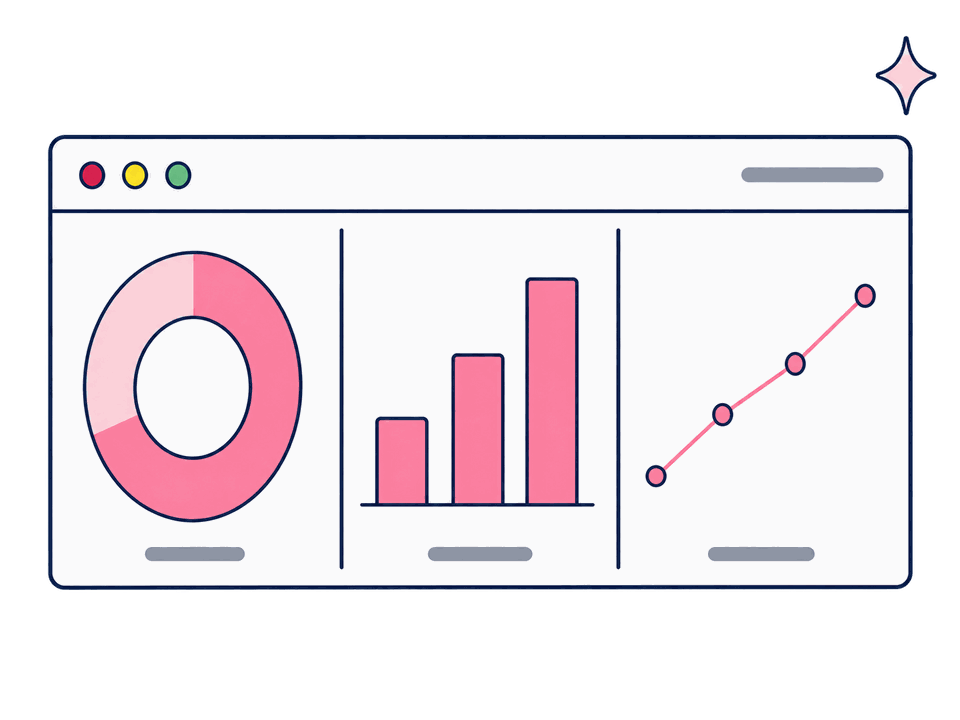
The domains and exact pages supporting category answers, including concentration and support quality, paired with the approved source and content actions.
Platform-specific mention share
Use only within the matched opportunity set. Mention share is not recommendation share.
Before the team follows a rival
A competitor gain needs comparable evidence
Rivals may appear more often while your brand drops out of familiar questions. This method establishes whether the movement survives matched conditions and an honest count of the runs behind it.
A good fit when
- A competitor gap is visible but unexplained — Question coverage, recommendation context, sources, and ordinary volatility are still mixed together.
- The comparison mixes unlike brands or prompts — Category membership, eligible questions, or market conditions differ across the brands being compared.
- Visible tactics are being copied without evidence — A competitor uses a format or source, but no controlled comparison shows that it explains the observed gap.
- Competitor roles differ by prompt family — We name direct, alternative, and reference competitors and record why each belongs.
- Every brand faces the same eligible questions — We hold platform mode, market, repeat policy, and event definitions constant.
- One category rank hides different events — We compare mention share, recommendation coverage, and citation exposure before reading one category rank.
- The exact sources behind the gap remain ungrouped — We group cited domains and pages by type, credibility, relevance, diversity, concentration, and support.


Better handled as other work when
- You want one category rank from incomparable evidence — We withhold the league table when prompt eligibility, run conditions, brand roles, or sample strength differ.
- You need one guaranteed rank across platforms — Each engine, prompt family, and source pool keeps its own result because cross-platform evidence is not one rank.
People who watch how AI cites a brand
GEO work starts with recording what AI answers actually say about a brand today, then moves to the parts you can influence. The consultants below work on the specific capability this page covers.

Hande Parmaksız
SEO Manager

Sinem Bakır Yavaş
Senior SEO Executive

Sena Önder
Senior SEO Executive

Zafer Yıldız
Web Analytics Manager

Ozan Ketenci
VP of Consulting & Strategy

Ali Özgün Öz
SEO Executive

Bensu Tınastepe
Senior SEO Analyst

Gülşah Şahin Özkan
Senior SEO Analyst

Ruhan Tiryaki
Senior SEO Analyst

Yağmur Bayram
Sr. SEO Analyst

Emir Kağan Kahveci
SEO Analyst

Metehan Urhan
New Business & Partnership Manager

Didem Himmetli
Marketing Executive
Tools we use
Tools behind this work
 Peec AI
runs every tracked competitor against the identical prompt panel and conditions
 Profound
runs every brand in the register against the same panel, which is this page's matched condition
 Semrush
checks whether a rival's answer gain is matched by an ordinary search gain, or is specific to answers
 SE Ranking
tracks AI Overview appearances for the matched set, one of the surfaces the benchmark covers
 Ahrefs
surfaces a competitor's own cited sources, so a gap can be checked against a source change
 Jupyter
runs the variance-threshold check that decides whether a gap clears the bar for an alert
Nearby methods and services
Canonical capability
AI Visibility Monitoring & Answer Accuracy
See how competitor alerts connect to the wider Operate-stage measurement system.


Sibling method
Brand Mention & Share-of-Model Tracking
Use this sibling to establish your own conversation share before comparing the movement with named competitors.


Build-stage method
AI Citation Source Gap Analysis
Use this Build-stage method when the regression points to a real, actionable source gap.
A gap that survives variance is worth a response
Decide whether the competitor gain merits a response