







A dated view of answer visibility
Brand Mention & Share-of-Model Tracking
See how much of the sampled answer surface your brand holds, with mentions, recommendations and citations counted separately by platform.
A versioned question panel runs repeatedly across the platforms, modes and markets in scope. We keep the conditions and source context with every observation, then analysts review the event labels and decide whether a movement warrants attention. You get a dated read on the brand's share of the answer space. Mentions, recommendations, and citations are counted separately, each against its own set of runs. Marketing and measurement leads who need a defensible share-of-voice number built from a repeated prompt panel.

Some of the 500+ brands we've worked with
See all references














































Panel to baseline, step by step
From a versioned prompt panel to a defensible baseline
Collection and comparison are automated. Named specialists still approve coverage, run conditions, and the final classification at every material step.
How we hold ourselves to it
- Events kept separate
- Same panel every run
- Variance sets the threshold
- No hidden ranking claim
Design the representative prompt panel
Sourced questions get sampled, intent and persona coverage gets balanced, and unseen prompts get held back for later checks. The measurement lead and client research owner approve coverage, exclusions, and holdouts.
Approved prompt library with provenance, strata, and the prompts held back.


Document observation conditions
Platform, mode, locale, interface, timestamp, and replicate policy are recorded before collection starts. A monitoring specialist confirms every compared condition is observable and repeatable.
Run-condition ledger and reproducibility card.


Run repeated platform-specific samples
The fixed panel runs repeatedly, keeping raw answers, source links, errors, and unavailable runs on record. An operator audits sample completeness and excludes only runs covered by the written validity rule.
Timestamped observation corpus with complete run metadata.


Classify mentions, recommendations, and citations
Calibrated reviewers label mentions, recommendations, citations, exact pages, claim support, and uncertainty. The calibrated analysts settle ambiguous labels and review agreement samples.
Event ledger with label rationale and abstention state.


Reconcile with first-party outcomes
Answer events get compared with first-party referrals and outcomes, using aligned definitions and time windows. The client's analytics owner approves tagging, denominators, and any outcome interpretation.
Visibility-to-outcome table with explicit non-attribution.


Set variance-aware alert rules
Thresholds get set from observed variance, escalation owners get documented, and the baseline gets replayed after approved changes. An independent reviewer approves an alert or intervention only when the documented threshold is met.
Alert policy and before/after monitoring report.


What lands in your hands
A visibility baseline you can defend and rerun
You get a dated share-of-model baseline you can rerun next quarter. Each deliverable names its owner and the decision it supports, with enough provenance for another specialist to challenge or reproduce it.
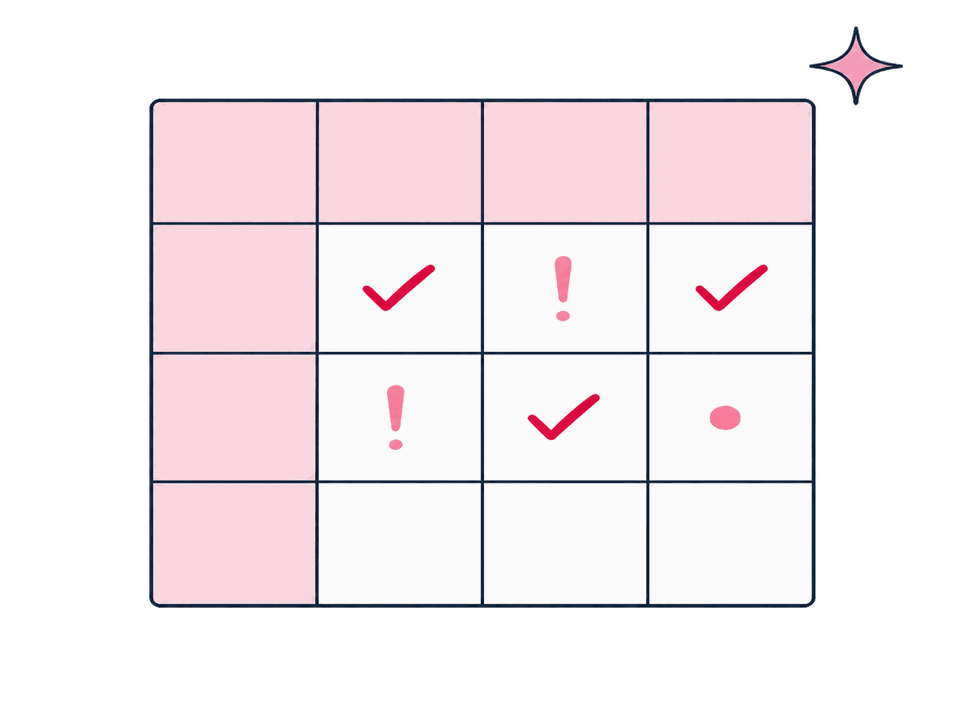
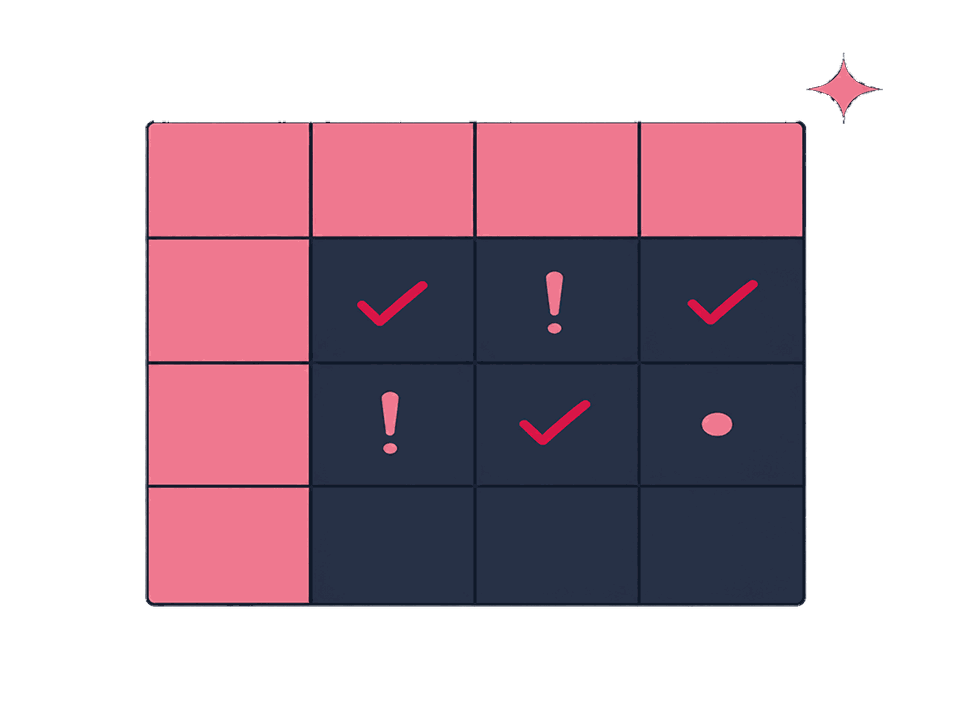
AI visibility baseline
A dated, platform-specific baseline for the approved prompt population, including variance and known blind spots.
Platform-specific monitoring view
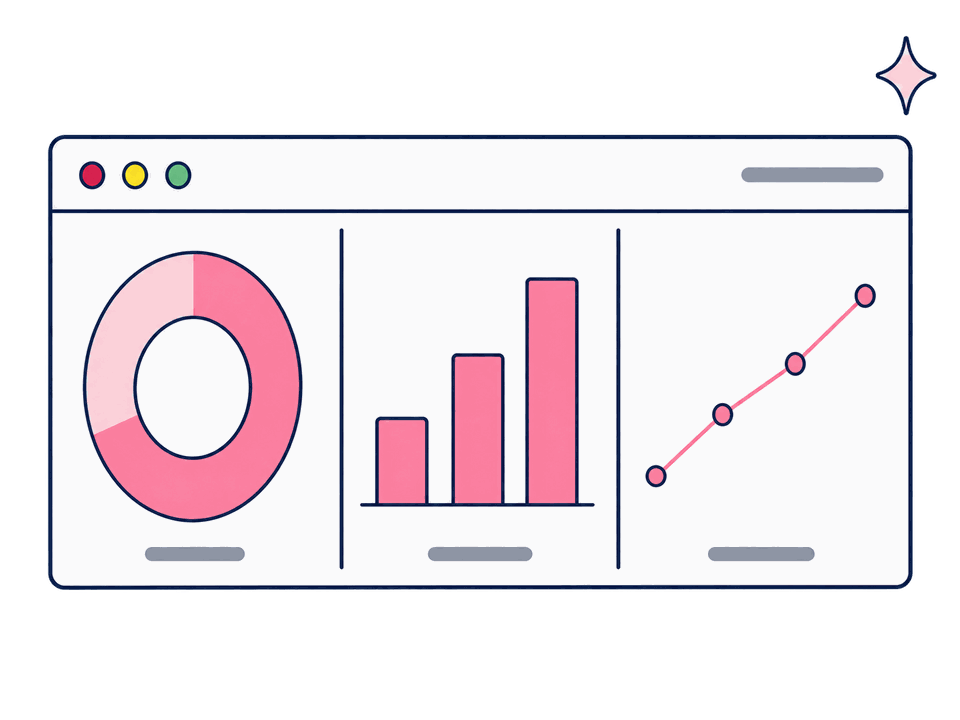
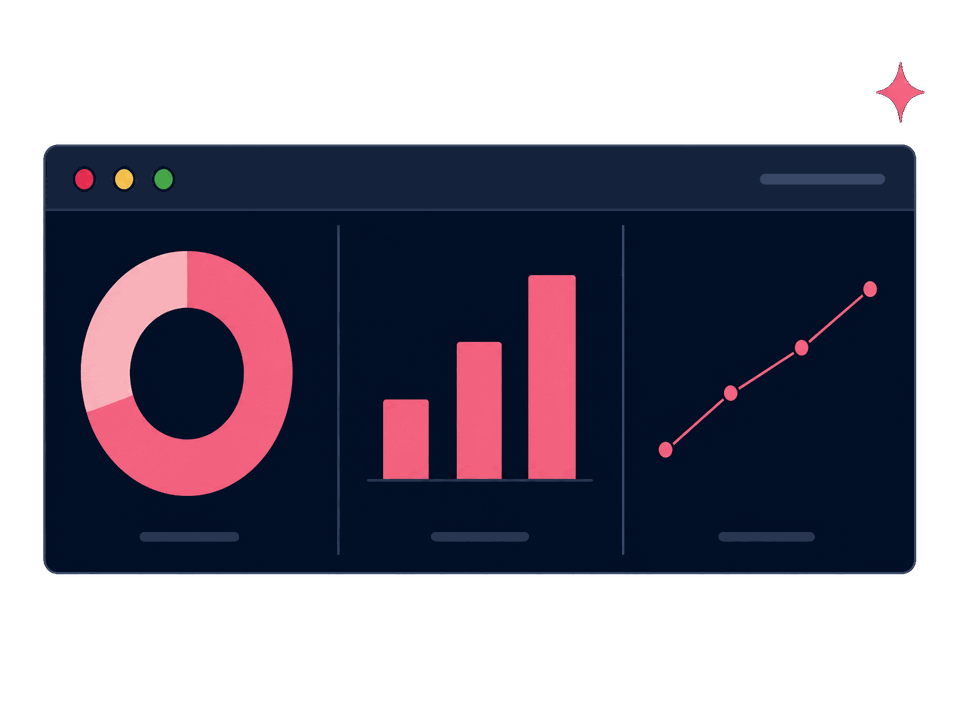
A monitoring view that keeps platform, prompt family, event type, source, and run range explorable.

Variance and alert policy
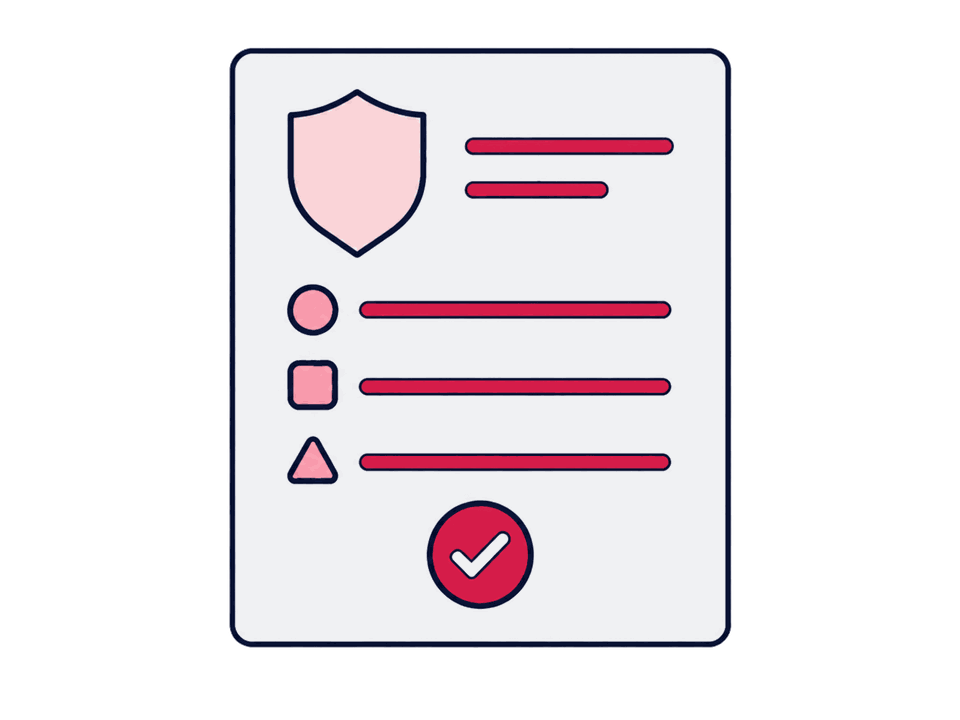
Thresholds, minimum replicates, escalation owners, and suppression rules for noisy or known platform events.
Every rate shows the runs behind it
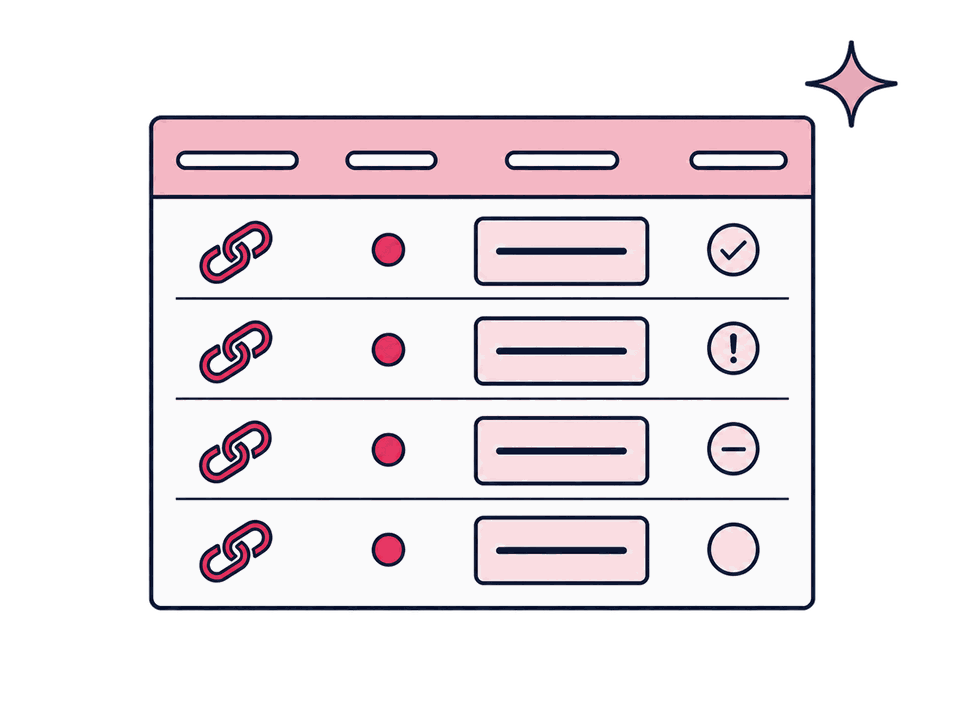
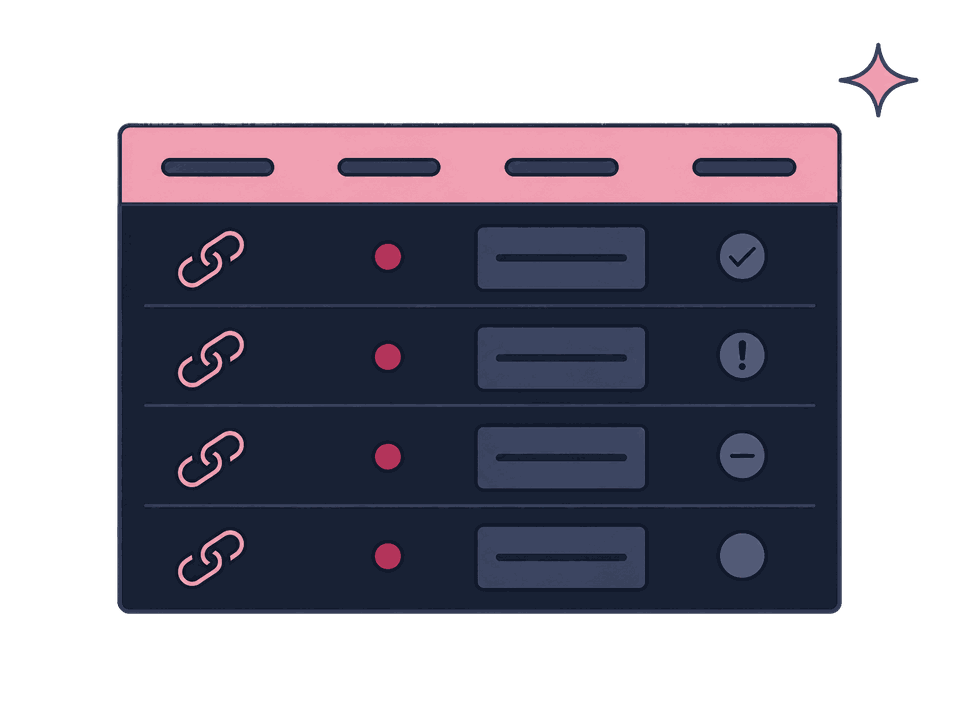
Mention rate, recommendation rate, and domain citation rate, each with the valid-run count and confidence range that produced it. No rate ships without them.


A monthly insight and action brief
A concise review of persistent movements, supporting evidence, first-party outcomes, and recommended next tests.
A number the team can explain
Category visibility needs a stable baseline
The work begins when scattered answer captures need to become a repeatable category measure, with the run conditions and the sample behind every rate on the page.
A good fit when
- Strategy is being set from isolated screenshots — No stable prompt panel or repeated run shows whether the answer pattern holds.
- The team can't explain what moved — A blended score changed, yet the platform, prompt family, citation layer, and source behind the movement remain unclear.
- Visibility and outcome records use different windows — Answer observations cannot be reconciled with analytics, CRM and server evidence under one definition.
- The prompt panel still needs a version — The questions behind the number must be fixed, documented, and run repeatedly before the team can interpret share-of-model.
- The prompt panel overweights one audience slice — Search, sales and support questions lack balanced intent, persona, market and journey coverage.
- Compared runs do not share the same conditions — Platform, mode, locale, interface, timestamp or replicate differs between observations.
- Mentions, recommendations and citations share one label — Domain, exact-page and claim-support events cannot be read apart.
- Visibility and business outcomes share one denominator — AI referrals, qualified actions and results need separate bases and owners.


Better handled as other work when
- You need deterministic AI rank tracking — Stochastic answers cannot become fixed positions or represent every user, model and prompt.
- You need a mention to reveal hidden model rank — Observed outputs expose neither the internal ranking nor the full consulted source set.
- A dashboard move looks larger than normal variance — The observed run range has not been checked before the team draws a conclusion.
People who watch how AI cites a brand
GEO work starts with recording what AI answers actually say about a brand today, then moves to the parts you can influence. The consultants below work on the specific capability this page covers.

Hande Parmaksız
SEO Manager

Elif Naz Akan Karakoç
Senior SEO Executive

Sena Önder
Senior SEO Executive

Can Mutioğlu
Senior SEO Executive

Didem Himmetli
Marketing Executive

Ali Özgün Öz
SEO Executive

Aybüke Göktuna
Senior SEO Analyst

Bensu Tınastepe
Senior SEO Analyst

Ruhan Tiryaki
Senior SEO Analyst

Emir Kağan Kahveci
SEO Analyst

Burak Pehlivan
Co-founder & CEO

Ataberk Yüzat
SEO Executive

Deniz İmre Temiztürk
Content Specialist
Tools we use
Tools behind this work
 Profound
runs the versioned, repeated prompt panel this page's baseline is built from
 Peec AI
reports visibility as a competitive share against named rivals, not a lone brand score
 Otterly.AI
logs mention and citation as distinct fields, which is this page's five-event separation
 OpenRouter
runs the versioned panel across providers through one interface, so the model is the only variable
 Cloudflare AI Gateway
logs every panel request and response, which is the run metadata this page counts against
 Jupyter
reruns the movement-significance check in a notebook a second analyst can inspect
Nearby methods and services
Canonical capability
AI Visibility Monitoring & Answer Accuracy
Read the capability page for how this baseline feeds every other Operate-stage measurement method.

Sibling method
Citation & Source Tracking
Pair this baseline with the citation-level view once mention share establishes that the brand is in the conversation at all.


When share moves against you
Competitor Benchmarking & Regression Alerts
Share-of-model only means something next to a competitor line. This method watches for the crossover and alerts on it.
A share number with its run count attached
Give the share number a baseline your team can inspect