




AI Consulting Services
Take one AI product from question to working release

Some of the 500+ brands we've worked with. Our delivery runs on 100+ AI workflows in production.
See all references


































Task-level offerings
Choose the product decision you need to make next
Build & Integrate

AI Proof ofConcept Development
A proof of concept fits one product hypothesis that needs the smallest credible experiment and a traceable proceed, revise, or stop call.


AI Pilot &MVP Development
Move to a pilot once the product slice is operable and a controlled cohort can supply quality, adoption, support, cost, and incident evidence.
Custom Generative AIApplication Development
Build the full application when the user job is validated but state, identity, data paths, model behavior, controls, and operations must work together.

Enterprise AICopilot Development
A copilot fits an existing workflow needing role-scoped suggestions, visible sources, human review, and correction evidence before any consequential action.
AI Document IntelligenceApplication Development
Document intelligence fits analysts who need conclusions tied to exact passages and versions, with conflicting evidence and uncertainty visible inside the case workflow.
LLM APIIntegration
Select API integration when a working model call needs application-owned schemas, secret boundaries, retries, fallbacks, budgets, and provider-change support signals.
Enterprise AIIntegration
Enterprise integration fits when the AI product must cross identity, event, and transaction boundaries while preserving source-system authority, reconciliation, recovery, and audit evidence.

Fine-Tuning DatasetCuration
Curate the dataset when the product needs permitted, representative training examples with calibrated labels, isolated evaluation splits, and a traceable source trail.


LLM Fine-Tuning &Model Customization
Fine-tune only when prompt and RAG baselines leave a stable behavior gap, then compare target lift with regression, consistency, cost, and latency.


DomainAdaptation
Domain adaptation fits repeatable specialist-language or format failures, where local gains must be weighed against general regression and refresh burden.


AI Product Discovery& Experience Design
Start with product discovery while the user job, AI role, uncertain moments, review points, and fallback paths remain too vague for engineering.


Model Selection &Baseline Benchmarking
Benchmark models once the intervention class is settled but candidates still need the same workload, safety cases, latency conditions, and cost assumptions.
Fine-Tune vs RAGvs Prompting Assessment
Run the intervention assessment when weak product output could stem from prompting, retrieval, training, or system design and the failure pattern remains unclear.
Why it matters
A convincing demo settles very little
The released product still has to hold together across the experience, model behavior, data, integrations, evaluation, security, cost, and the people expected to operate it.
How we work
Let each slice earn the next one
We begin with the smallest product slice that can answer the decision at hand, compare it with the current baseline, and widen the scope only when the evidence supports another commitment.
Scope and ownership
Each slice earns the next one, and someone can always say stop
We agree the user job, the target outcome, and who gets to say proceed, change, or stop before any build starts.
We name the product decision — user job, target outcome, constraints, available evidence, decision owner — then read the real users, systems, data, known failures, and existing controls before choosing an approach. Zeo builds the smallest workable slice that can answer the decision at hand, compares it against the current baseline, and runs the cases that could change the answer rather than the ones that would confirm it. Widening scope is a separate commitment supported by evidence, not a default. At handoff, accepted behaviour, open exceptions, support and monitoring duties, and the triggers for rollback or another review pass to the named operating owner.
Four decisions from product boundary to handoff
Name the product decision
Agree the user job, target outcome, constraints, available evidence, and who gets to say proceed, change, or stop.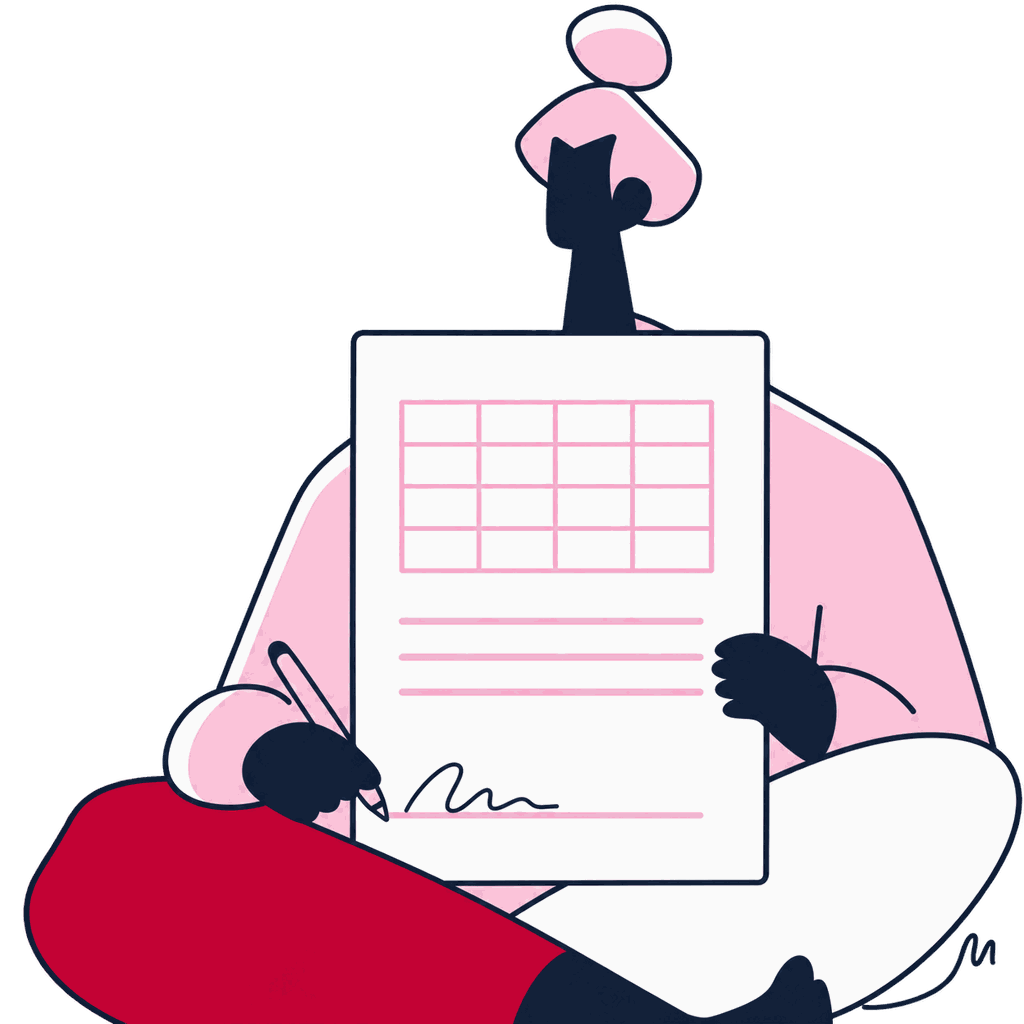
Read the working conditions
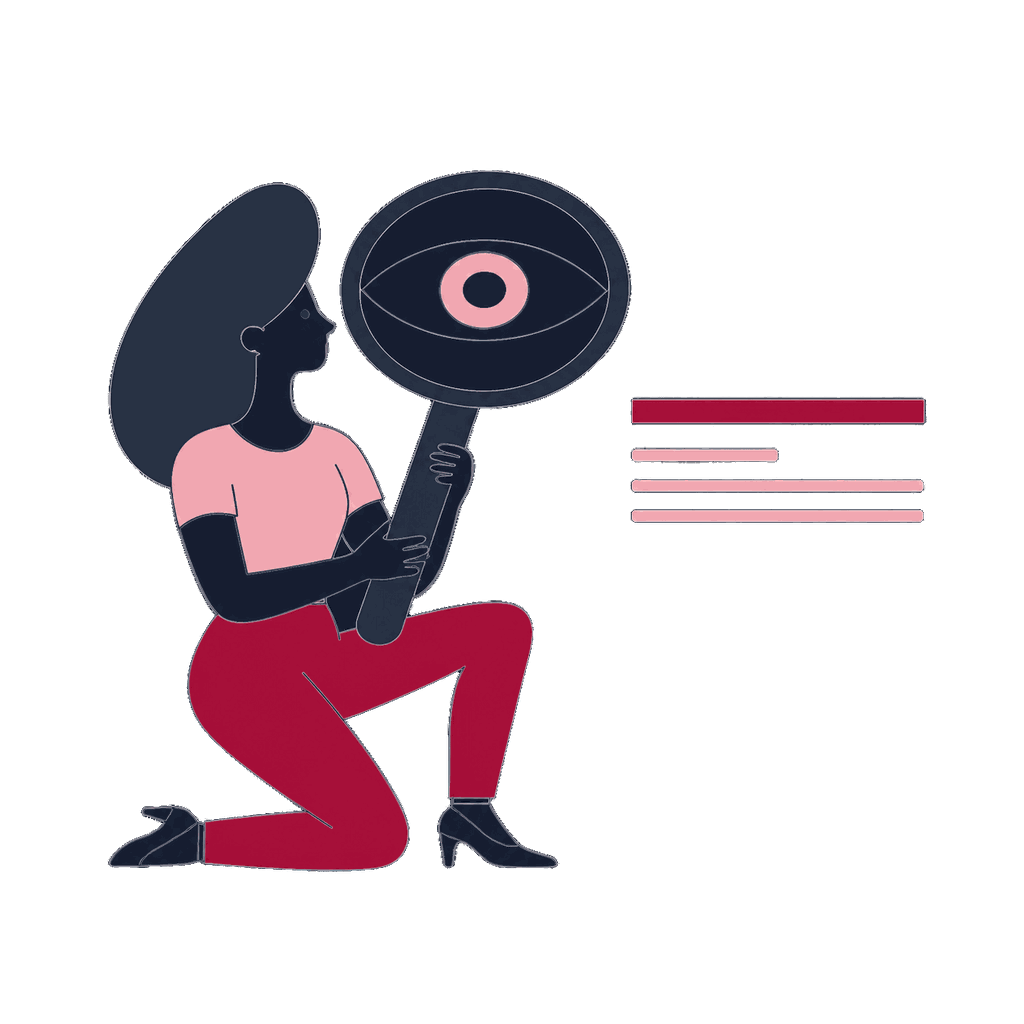
Look at the real users, systems, data, known failures, and existing controls before choosing the product approach.
Build and challenge the useful slice
Choose the simplest workable design, build the bounded scope, and run the cases that could change the decision.
Put operation in named hands
Transfer accepted behavior, open exceptions, support and monitoring duties, and the triggers for rollback or another review.


Inside our own team
Five Zeo consultants on what AI is changing in their work
Every operational consultant at Zeo has secure LLM access and training, and AI sits inside the daily work. Five of them came through our AI Bootcamp and wrote down what they expect it to change.


I see generative AI having an enormous effect on daily life and on every industry it touches. As the technology develops, the range of uses will keep widening across creativity, problem-solving, and innovation. We can already see that range in realistic image, video, and music production, pharmaceutical research, and design. I expect the effect on industries to become profound. E-commerce, healthcare, finance, and many other sectors will be able to create more engaging, personalized experiences and make their processes more efficient.
The ability to produce unique content and solutions will open new possibilities and increase efficiency.

Generative AI has the potential to transform SEO, digital marketing, and many other sectors. I expect it to play an important role in our lives in the near future, with more personal experiences, more effective marketing, faster interpretation of data, and quicker action. Products and services will improve. Processes such as customer communication will become more efficient, and organizations that fail to keep up will fall behind businesses that bring AI into their work.
Organizations should start planning the AI applications that make sense for their sector now.

We may be at a moment as significant as the computer revolution, with the potential to transform businesses and industries. Yet for many people, generative AI still means opening a tool such as ChatGPT for a task at work or in daily life. That is only the surface. Companies that integrate generative AI models into workflows and customer processes, and go beyond content production, will gain huge competitive advantages in the coming years.
I believe generative AI should be on the agenda of every board of directors as soon as possible.

I see artificial intelligence as the most exciting technology of both the present and the future. Its potential is unlimited, and we're still at the tip of the iceberg. AI is developing quickly, while much of what it could mean for different sectors remains unexplored. The effect on digital work is already substantial. In the years ahead, I expect breakthroughs that change how entire industries work.
AI's potential will keep expanding. No sector can afford to ignore the opportunity for efficiency and progress. We will keep discovering new dimensions, and I don't see a saturation point.

Work by major technology companies is likely to give generative AI a much wider role in the years ahead. It will create new dynamics in art and design, as well as in sensitive fields such as healthcare and finance. As the technology becomes part of daily life, the ethical and risk questions will grow with it. Being able to follow and experience those developments up close is what makes generative AI so exciting to me.
I look forward to seeing more uses of generative AI that benefit society.
AI Application Proof
Case Studies
Full-stack AI applications and specialized enterprise search systems.
People who ship the AI systems they advise on
Agents, chatbots, and RAG systems at Zeo are built by senior engineers who keep operating them after launch. The consultants below are those builders, matched to the work this page covers.







Tools we use
The AI engineering stack behind the work
Models, retrieval, evaluation and observability are separate layers of a working system. These are the ones we build and operate on.
Models and cloud platforms
- OpenAIThe hero's smallest useful slice often starts on OpenAI when the user job needs a mature, tool-calling model API quickly, used across AI Proof of Concept Development, AI Pilot & MVP Development, and Custom Generative AI Application Development before a later model-selection step decides whether it stays.
- AnthropicEnterprise AI Copilot Development and AI Document Intelligence Application Development both need a model that can keep several sources and actions coherent inside one user job, which is why Claude is one of the two default providers this page's build-and-test loop starts on.
- Google GeminiAI Product Discovery & Experience Design and AI Document Intelligence Application Development both include user jobs that may start from an image or document, and Gemini is the model candidate this page's account tests when that native multimodal path matters.
- Mistral AIAI Document Intelligence Application Development uses Mistral's OCR before the model reasons over a document, since a product can't locate a passage inside a scan it hasn't converted into readable structure first.
Agent and automation frameworks
- LangChainCustom Generative AI Application Development and Enterprise AI Copilot Development both use LangChain to connect the model to retrieval, tools, and any required approval points, keeping the user job's full application flow inspectable rather than a series of unrelated API calls.
- LlamaIndexEnterprise AI Copilot Development and AI Document Intelligence Application Development both need source-traceable retrieval, and LlamaIndex is the layer that keeps each surfaced passage linked to the document and version it came from.
- UnstructuredAI Document Intelligence Application Development, needs a preprocessing layer that preserves a document's structure before the product searches or reasons over it, and Unstructured's partitioning is that layer: headings, tables, and reading order survive into the index the product later reasons over.
Application and prompt tooling
- Pydantic AILLM API Integration and Custom Generative AI Application Development use Pydantic AI when a product needs the model to return a typed object another part of the application can trust, rather than free-form text the next step has to parse defensively.
Retrieval, embeddings and memory
- PineconeEnterprise AI Copilot Development and Custom Generative AI Application Development use Pinecone when the first useful slice proves retrieval works and the next step is serving that retrieval at production query volume.
Gateways and hosted inference
- LiteLLMLLM API Integration and Model Selection & Baseline Benchmarking both need the application layer decoupled from whichever provider wins the comparison, and LiteLLM's unified interface is what keeps that decision reversible.
- PortkeyAI Pilot & MVP Development and Enterprise AI Integration use Portkey to add production-safe retry and fallback behavior around a model call, since a working release has to recover from an upstream failure instead of only succeeding in a demo.
- ReplicateAI Proof of Concept Development uses Replicate when a user job needs a specialized image, audio, or open model quickly, so the team can test the product question before spending time operating that model's own infrastructure.
- OpenRouterModel Selection & Baseline Benchmarking uses OpenRouter to run a fixed evaluation set against many candidate models before the product locks into one, avoiding a separate integration project for every model considered.
Evaluation and observability
- Weights & BiasesThe hero's test-under-representative-conditions step uses Weights & Biases to keep a candidate product or tuned model's results linked to the baseline it was meant to improve, relevant across AI Proof of Concept Development and every fine-tuning child.
- LangfuseThe hero promises handoff with evidence and operating owners, and Langfuse's run traces are what that evidence looks like in practice across AI Pilot & MVP Development, Custom Generative AI Application Development, and Enterprise AI Integration.
- BraintrustAI Proof of Concept Development, Model Selection & Baseline Benchmarking, and every tuned-model child use Braintrust to pin their evaluation set to the exact candidate under consideration, which is what lets the go/no-go decision rest on a fixed comparison.
- HeliconeModel Selection & Baseline Benchmarking needs to weigh a candidate's quality against what it will cost and how fast it responds in the actual product, and Helicone supplies that operating side of the comparison.
Training, serving and MLOps
- Hugging FaceFine-Tuning Dataset Curation, LLM Fine-Tuning & Model Customization, and Domain Adaptation all start from model weights and training scripts available through Hugging Face, since those jobs require a model that can actually be specialized rather than a closed API that only accepts prompts.
- PredibaseLLM Fine-Tuning & Model Customization and Domain Adaptation use Predibase when the product needs a managed path from specialization to deployment, rather than one vendor for training and another for serving the result.
- MLflowLLM Fine-Tuning & Model Customization and Domain Adaptation use MLflow's model registry to keep the tuned checkpoint, its evaluation, and its production promotion linked as one auditable lifecycle.
- DVCFine-Tuning Dataset Curation and Domain Adaptation both use DVC to keep the specialist dataset tied to the exact model version it produced, which is what lets the team prove the held-out evaluation set never leaked into training.
- UnslothLLM Fine-Tuning & Model Customization uses Unsloth when the training objective is valid but a full conventional fine-tuning run would demand more GPU memory than the project's budget justifies.
Safety and security testing
- Guardrails AICustom Generative AI Application Development, Enterprise AI Copilot Development, and Enterprise AI Integration all need the control the hero says gets handed over with the product to run at the moment of action, and Guardrails AI is that enforcement point.
Data, labeling and development
- JupyterAI Proof of Concept Development and Fine-Tuning Dataset Curation both run their core comparison and coverage analysis in Jupyter, so the decision to move forward traces back to rerunnable work rather than a compelling demo.
- TonicFine-Tuning Dataset Curation and Domain Adaptation both use Tonic where real specialist examples are too sparse or sensitive, extending coverage without extending exposure.
Next step
Deploy generative AI solutions with clear business value
FAQ