









Content Strategy & Research
Keyword & Topic Research
Know exactly which questions deserve a page, which deserve a refresh, and which deserve neither.
Search volume alone doesn't tell you what to write. Keyword & Topic Research maps query demand to the audience behind it, so every topic decision comes with intent, business relevance, and a clear next step attached. You walk away with clusters that carry an intent, a business-fit score, and a next action, checked against what you have already published.

Some of the 500+ brands we've worked with
See all references








































How we run it
How the demand map gets built
Each step turns raw query data into a decision a planning meeting can use.
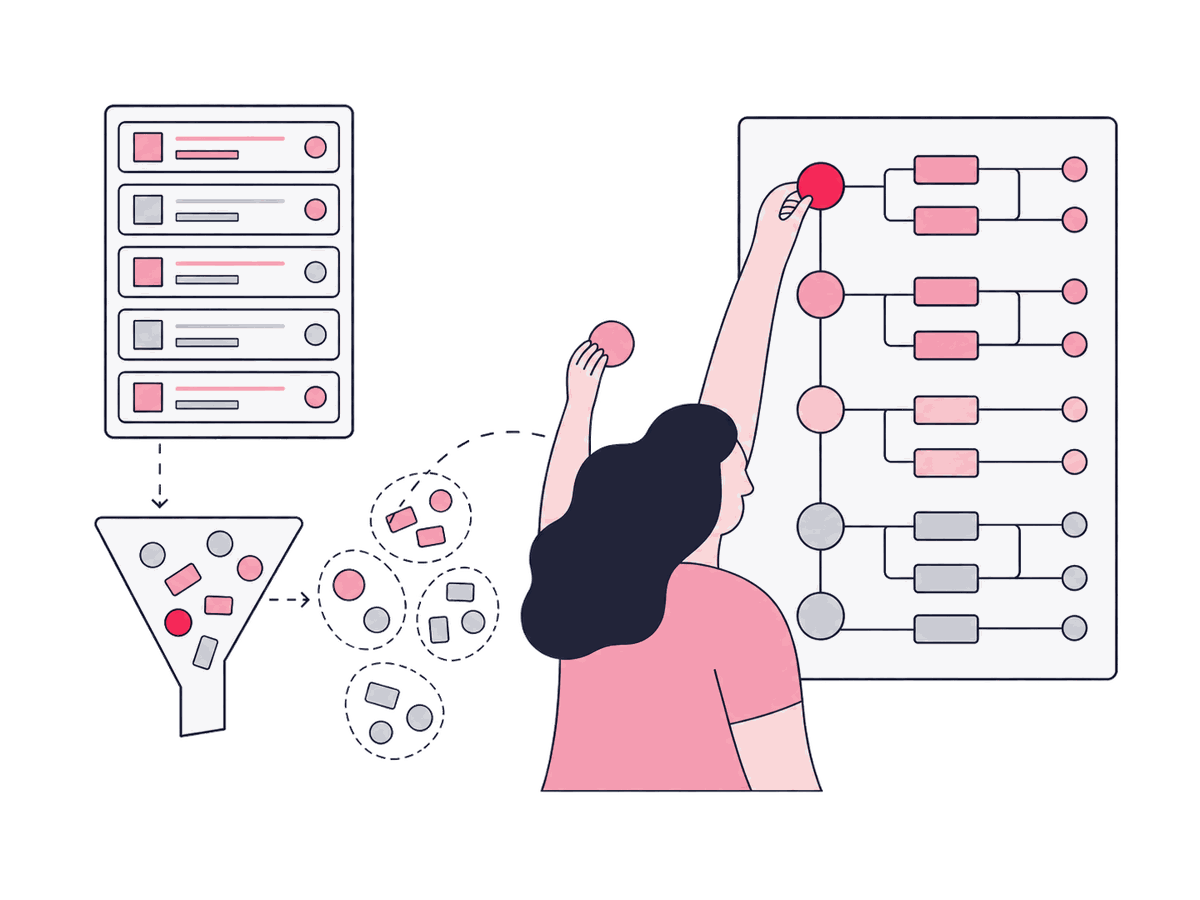
Pull the raw demand signal
Query datasets, result-page patterns, and whatever first-party search and site data you already have, gathered before any judgment gets applied. A strategist checks that the pulled dataset's sources are reliable before anyone builds on top of it.
A raw demand dataset with sources attached.


Check it against what already exists
Every query gets checked against your current URL inventory, so we aren't recommending a page for something you already rank for. A strategist resolves any ambiguous overlap between a query and an existing page, since a surface-level match can still be a false one.
A demand set filtered against existing coverage.


Cluster by real intent
Queries that look similar but mean different things get split apart. Queries that mean the same thing get grouped, even if the wording differs. A strategist decides where an ambiguous query actually splits, since automatic clustering can still miss the difference.
Intent-based clusters.


Score for business fit and confidence
We score each cluster for business relevance and evidence confidence alongside demand. Volume alone would rank the list badly. A strategist weighs the business relevance the data can't see on its own before a cluster earns a high score.
A prioritized topic map with confidence and business-fit scores.


Assign the next action
Every cluster gets a clear call: new page, section addition, refresh, or leave alone. That turns raw data into a decision the roadmap can use. Before a cluster reaches the roadmap, a strategist approves its final call: new page, refresh, or leave alone.
A demand map with an explicit next action per cluster.


Agents can sort the query set. A strategist sets the priority.
Agents are useful for the heavy sorting: matching thousands of queries to your URL inventory and drafting an initial set of clusters. Search volume still says nothing on its own about whether a topic deserves a page. A Zeo strategist reads the intent, weighs the business relevance, and makes the final call. Weak or ambiguous evidence remains marked for review on the roadmap.
What you get
What the keyword map prioritizes
A ranked list only helps if the reasoning behind it survives contact with a skeptical stakeholder.
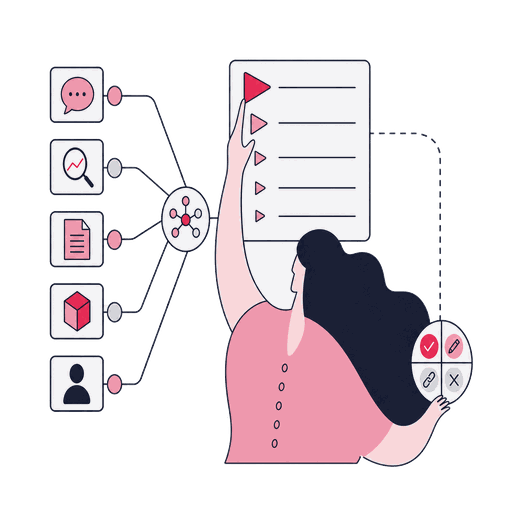
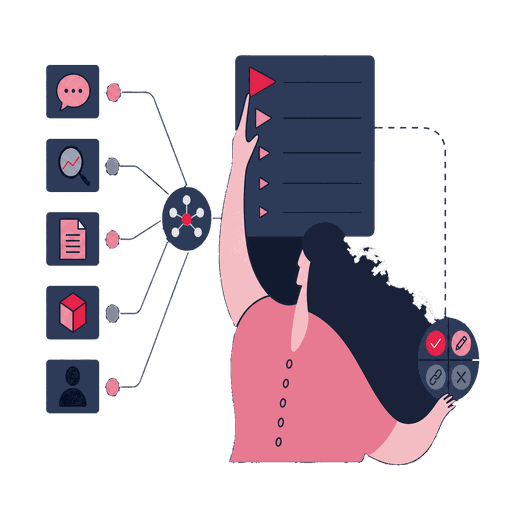
Prioritized keyword and topic demand map
Clusters, intent, audience job, and a next action for each, organized so a planning meeting can use it directly.
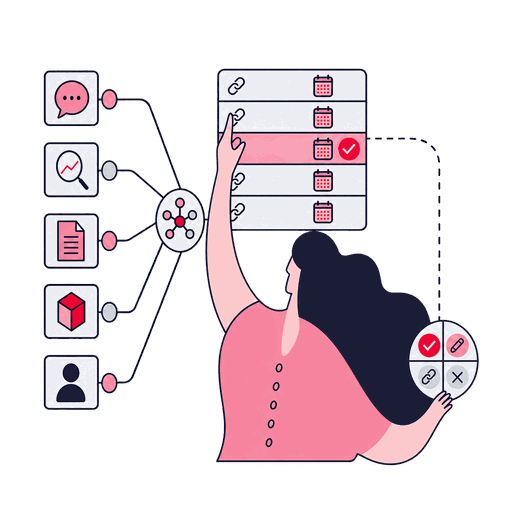
Evidence and source register
Where every number came from, so a skeptical stakeholder can check it themselves.

Page-boundary notes
Which queries share a page and which need their own, so the next brief does not accidentally create two pages competing for the same result.
We call it done when: every cluster has an intent, a business-fit score, and a next action, and the map has been checked against what is already published.
Who it fits
When this earns its place
This decides what's worth writing about. It doesn't write the brief or the page itself.
A good fit when
- A large keyword export exists, but nobody can tell which queries deserve a new page, a refresh, or no action at all.
- SEO and content keep disagreeing about priority because nobody has checked demand against what already exists.
- Every roadmap topic needs a reason a skeptical stakeholder can inspect, but the current priority is backed only by search-volume rows.


Better handled as other work when
- Search volume is being treated as proof of audience demand, so high-volume queries move forward without anyone checking the intent behind them.
- The plan gives every keyword its own page. Several phrases share one intent while ambiguous queries split into different needs, so the URL boundaries will be wrong.
- A specific ranking has to be promised before the topic is approved, although the page, site, and competition still determine the eventual position.
People who write and ship this content
Some of these consultants write the pages themselves. Others plan distribution or check how a piece performs once it's live, so the team below covers more than one stage of the work.

Yiğit Konur
Founder & Chief Strategy Officer

Ozan Ketenci
VP of Consulting & Strategy

Samet Özsüleyman
SEO Manager

Metehan Urhan
New Business & Partnership Manager

Sinem Bakır Yavaş
Senior SEO Executive

Gülşah Şahin Özkan
Senior SEO Analyst

Elif Naz Akan Karakoç
Senior SEO Executive

Bensu Tınastepe
Senior SEO Analyst

Mehmet Aktuğ
Co-Founder & COO

Yağmur Bayram
Sr. SEO Analyst

Emir Kağan Kahveci
SEO Analyst

Zafer Yıldız
Web Analytics Manager

Ataberk Yüzat
SEO Executive
Content we've produced on this topic
Tools we use
Tools behind this work
 Ahrefs
the primary volume pull: thousands of keyword ideas, clustered, in one query
 Google Keyword Planner
a second, Google-sourced volume number to check the primary pull against
 Keyword Cupid
clusters by real search intent, using which URL Google already ranks
 Airtable
the demand map itself: cluster, score, and assigned action in one table
 Google Search Console
checks a candidate topic against what the site already ranks for
Where this leads next
What the keyword map sets up

Upstream
Competitor Content Analysis
See where competitors are already thin before deciding which of your own topic clusters to prioritize.

Downstream
SEO Content Briefs
Once a topic earns a page, this turns the decision into a brief a writer can use.

Complementary
Expert Interview & Knowledge Capture
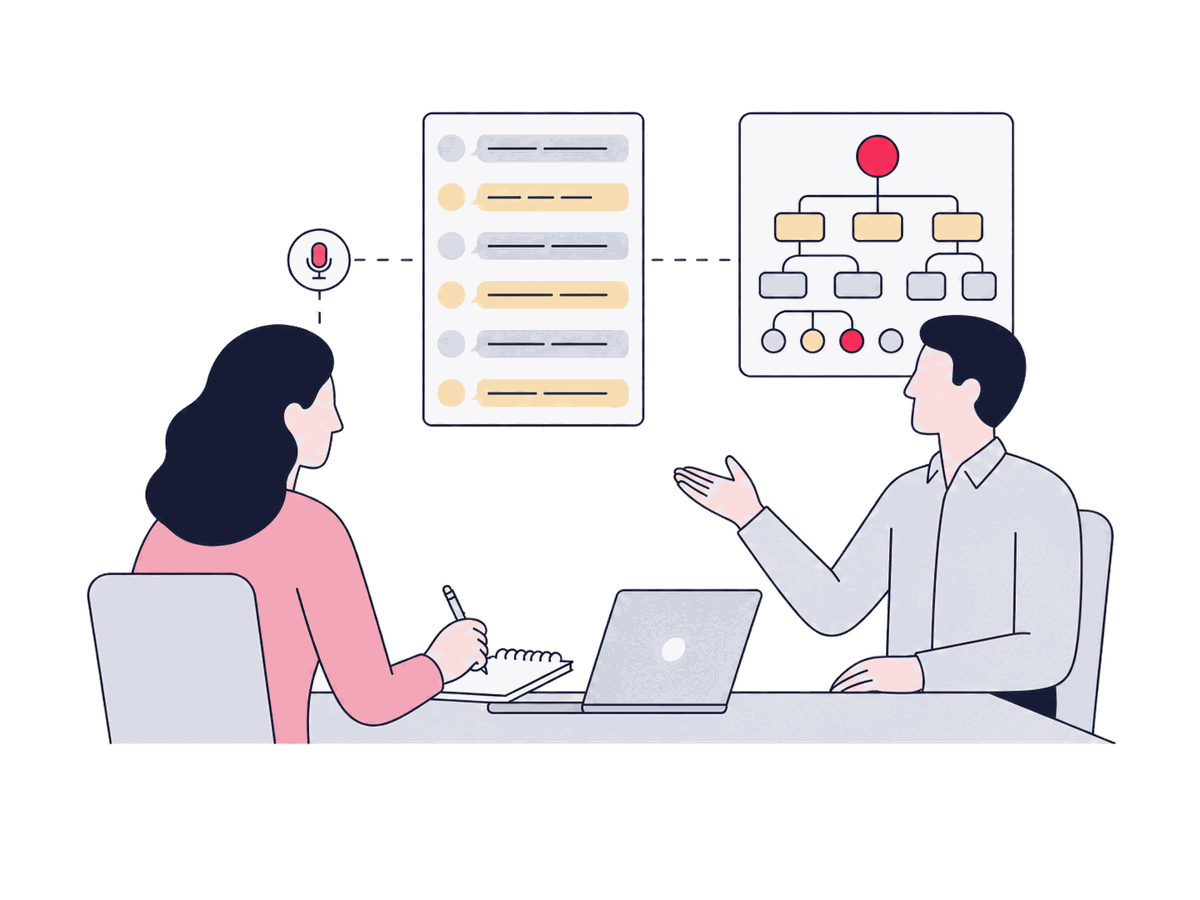
A validated topic still needs someone who genuinely knows the subject, and an interview is where that firsthand material gets captured before any writing starts.
Start the work
Sitting on keyword data nobody's turned into a plan?


Before we start