

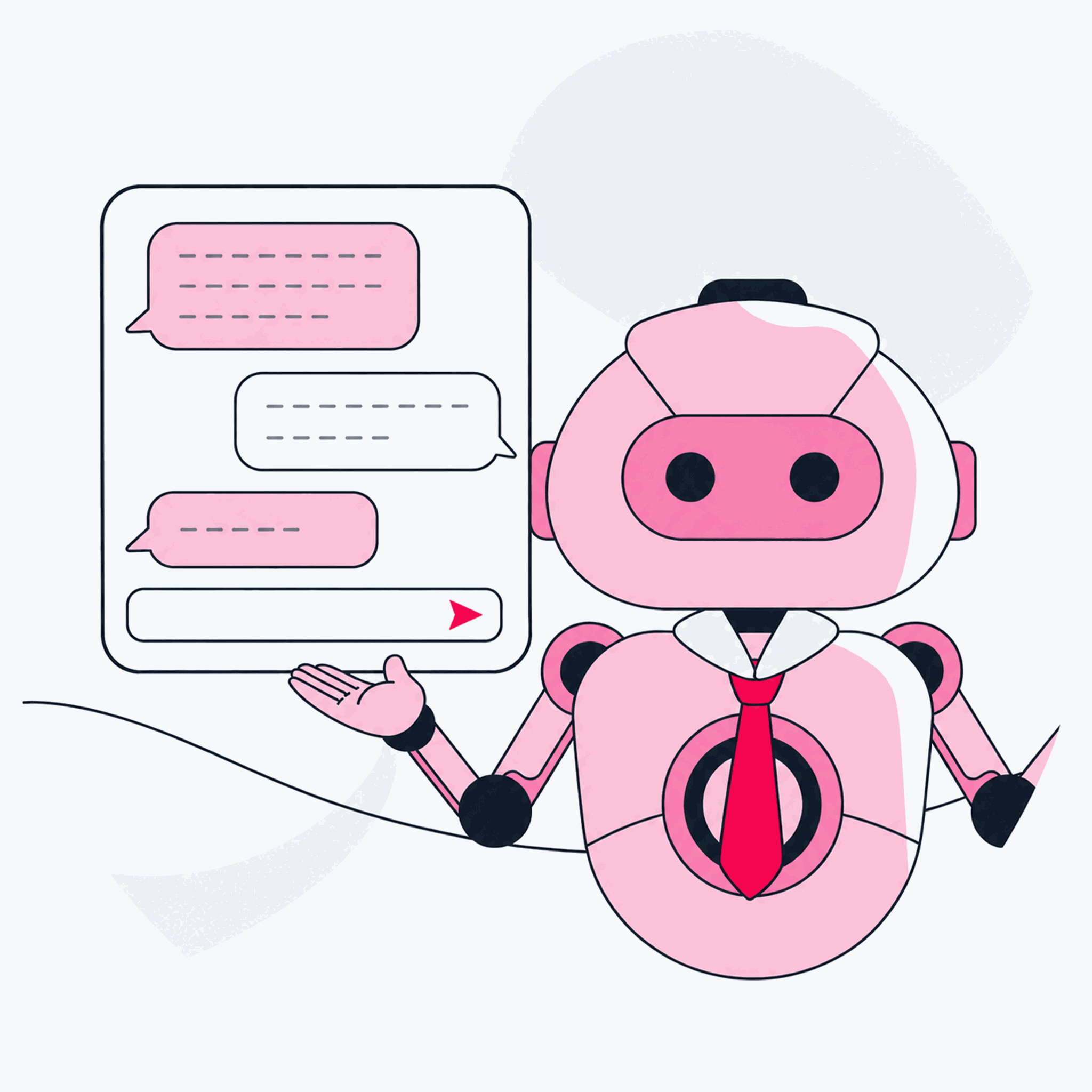
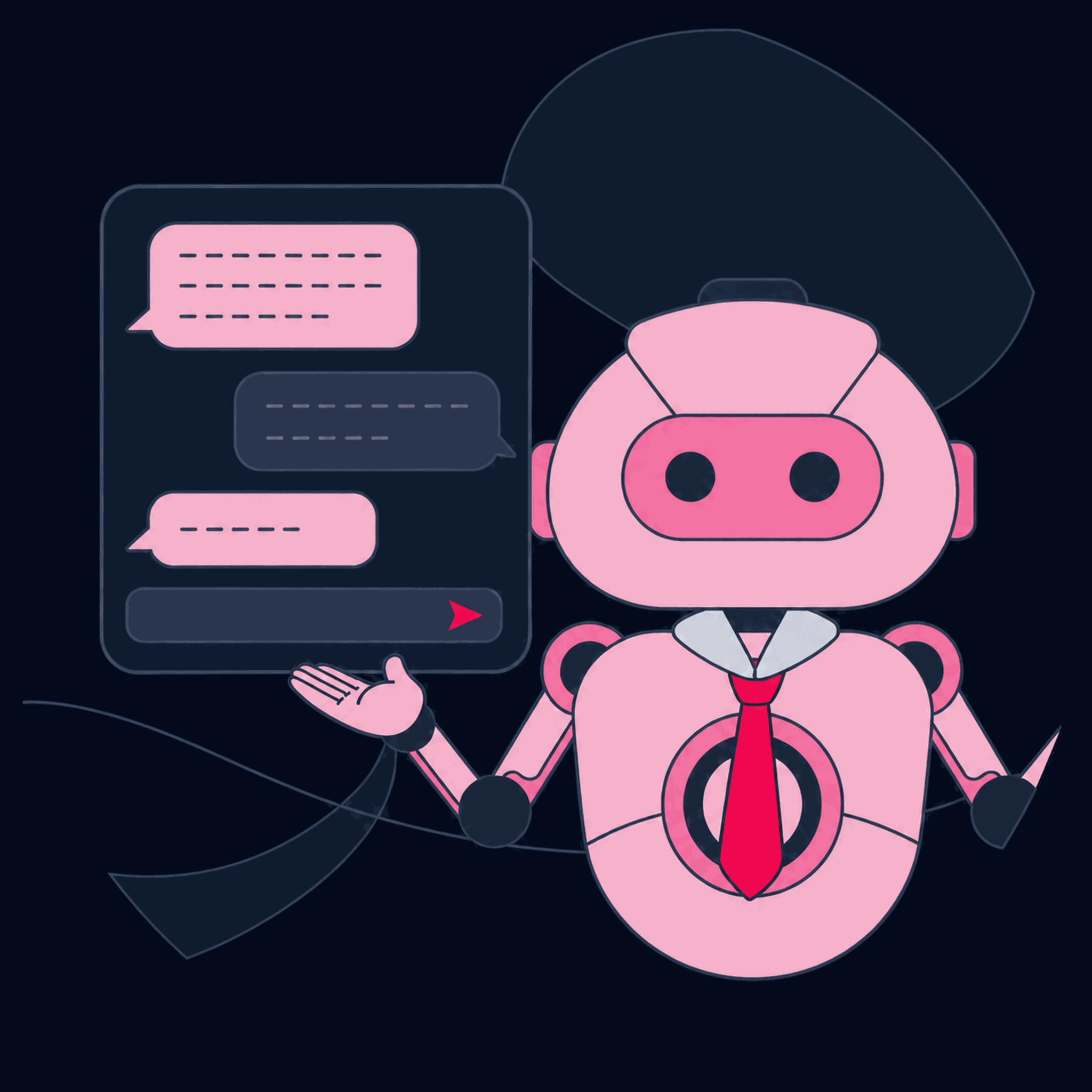
A chatbot is software that holds a conversation with a person through text or voice. The user writes or speaks in ordinary language and the system replies in turn, without menus or forms in between.
Early chatbots ran on rules. A pattern in the message triggered a scripted reply, which worked while people stayed inside expected phrasings and fell apart the moment they did not. The next generation added intent classification and entity extraction, so a message could be mapped to a defined intent with its parameters filled in. Chatbots built on large language models handle free-form input directly and answer without a predefined script.
Most production chatbots are still narrow on purpose. A system message defines the subject boundary, the model reads the company's own documents through a retrieval step, and a handover path to a human sits behind the whole thing.
A concrete case: a telecom operator puts a chatbot in front of its support queue. It answers balance, package and invoice questions directly by calling internal APIs. When it detects a complaint about a service outage, it collects the account details and passes the conversation to an agent with that context attached, so the customer does not repeat themselves.
Measuring one is not about accuracy alone. Task completion rate, the share of conversations handed to a human and where users abandon are watched together.