











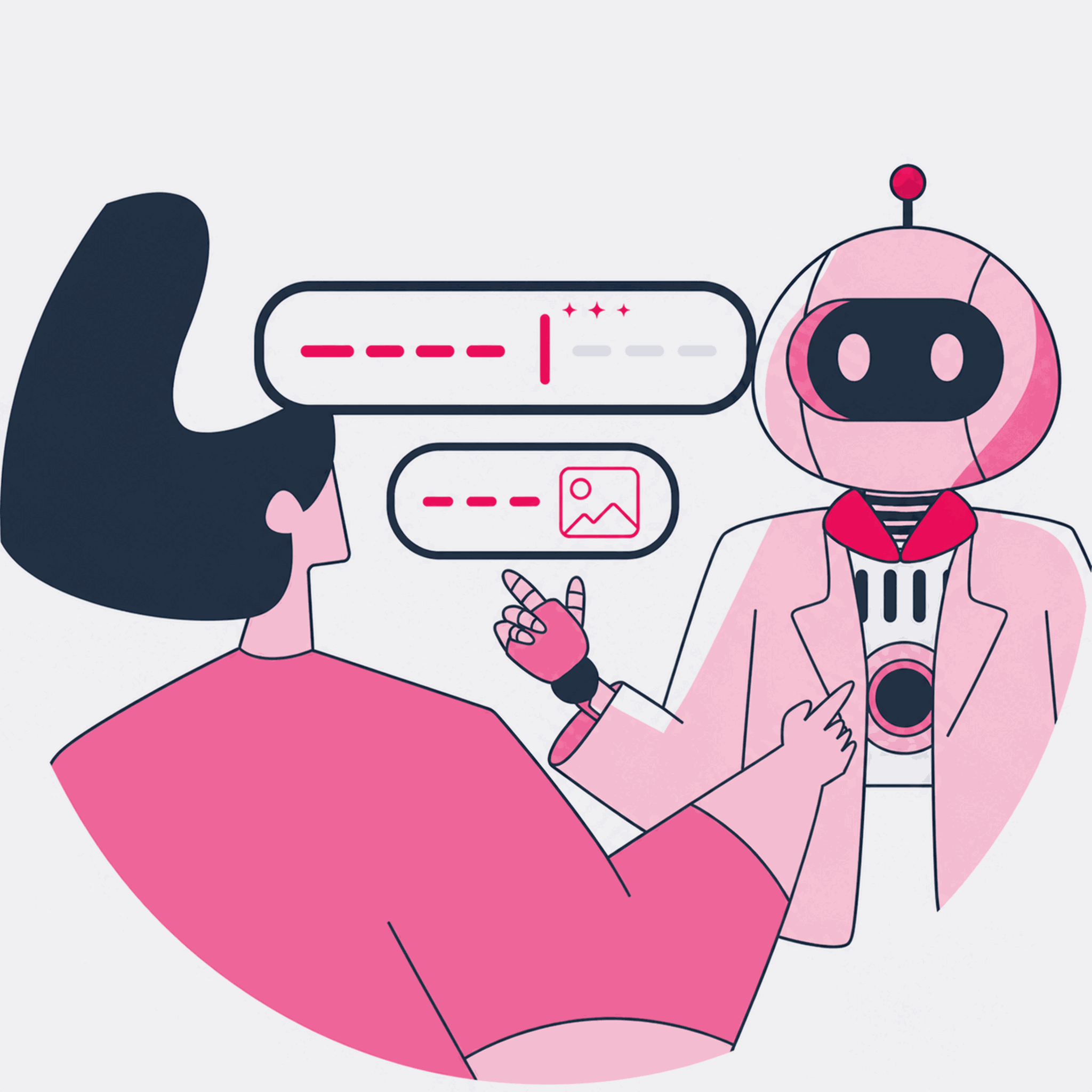
Generation is a model producing new content from the patterns it learned. The output can be text, images, audio, video or code. What separates it from tasks like classification is that the model builds an output that did not exist before, step by step, rather than choosing among existing options.
In language models the process runs at token level. At each step the model produces a probability distribution over the whole vocabulary, decoding rules pick one from it, and the chosen token is appended to the input before the loop restarts. Because the pick involves randomness, the same prompt can yield different outputs. Settings like temperature and top-p decide how wide that randomness gets.
Direction comes from the prompt. The clearer the instruction and the fuller the context, the more predictable the output. Left loose, the model goes wherever its probability distribution leads.
A concrete case: a publisher generates headline options for a new article. Running the same prompt ten times returns ten different lists, because different tokens get sampled each time. The team compares the lists and chooses, using the model as an option generator rather than a decision maker.
The accuracy of generated content is not guaranteed. The model produces the likely continuation rather than the true one, so factual claims get checked separately.