







Shopping, Performance Max & Feed Management
When Performance Max delivery slips, the product feed underneath it is usually where the answer starts.
Performance Max automates bidding, budget, audiences, and creative across Google's channels from one campaign, which can make the cause of an item's delivery loss difficult to see. We audit the product feed against Google's data specification, connect disapprovals to items losing impressions, and then review the campaign layer above it. You end up with a clear line from a feed error to its campaign-level symptom, so a fix gets applied at the source where the problem started. Teams running Shopping or Performance Max off a real product feed worth auditing are the fit here. A service business with no Merchant Center feed has nothing for this method to work on.


Some of the 500+ brands we've worked with
See all references














































How the work runs
Feed evidence leads the campaign diagnosis
Merchant Center and the live campaign provide the checkpoints for every fix. AI can flag mismatches and track approval timing. It cannot resubmit a feed, edit product data, or change a live Performance Max campaign.
How we hold ourselves to it
- Audit the feed before adjusting the campaign
- Treat every disapproval as a diagnosis to work through
- Respect the platform's own re-crawl and approval timing
- Investigate what automation leaves unexplained
Audit the feed against the product data spec
Check attributes, identifiers, images, and price and availability parity with the live site against Google's own product data specification. Ecommerce or feed owner confirms which flagged issues are real versus expected.
Feed audit against Google's product data specification covering attributes, identifiers, images and price and availability parity.


Reconcile Merchant Center with Ads-side performance
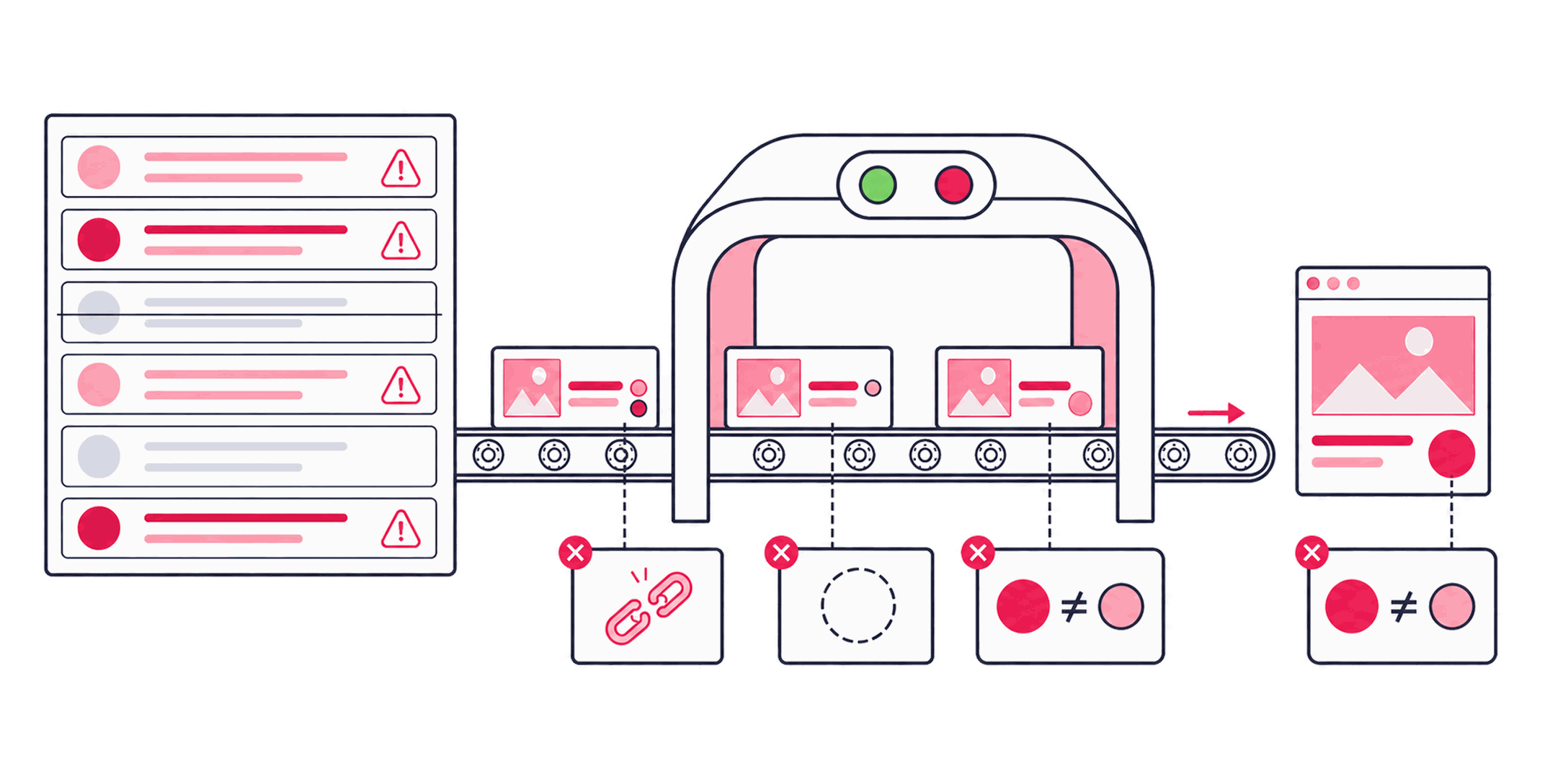
Connect specific disapprovals and warnings to the items actually losing impressions in the campaign, with feed and delivery evidence in the same review. The paid-search lead validates which disapprovals are worth prioritizing first.
Reconciliation connecting specific disapprovals and warnings to the items actually losing impressions.
Fix and resubmit, tracking the approval window
Correct the feed, resubmit it, and log the expected re-crawl and approval timing. Review begins after the platform has had time to process it. The feed owner approves the corrected data before resubmission.
Remediation log recording each fix, its resubmission and the expected re-crawl and approval timing.


Audit Performance Max asset and listing groups
Check asset groups and listing groups against the now-cleaned feed for gaps, overlaps, or groupings that no longer match the catalog. The paid-search lead approves any structural change to asset groups.
Asset and listing group map checked against the cleaned feed, with gaps, overlaps and stale groupings flagged.


Diagnose automation visibility gaps
Use the diagnostics and insights the platform does expose to explain what an automated asset group is otherwise hiding about a delivery change. The strategy lead validates the explanation before it counts as a finding.
Diagnostic note using the exposed insights to explain a delivery change an automated asset group otherwise hides.


Set the recurring feed-health cadence
Assign an owner and a schedule for checking feed diagnostics before an unresolved error turns into a campaign-level symptom again. The feed owner reviews and closes each cycle.
Feed-diagnostics cadence with a named owner and a carried-forward queue.


What lands with your team
A remediation record tied to the underlying cause
The audit, reconciliation, and remediation record tie a delivery drop to a specific feed row and the evidence around it.
Feed health audit
Every error and disapproval found, its severity, and its reconciled impact on Ads-side performance.


Feed and campaign remediation log
What was fixed, when it was resubmitted, and when it actually cleared. The record shows the fix's actual timeline.


Performance Max asset and listing group map
Current structure checked against the cleaned feed, with gaps and stale groupings flagged.


Recurring feed-diagnostics cadence
The review schedule, its owner, and the open queue carried from the last cycle.
Before the work starts
When this work is the right next step
Campaign symptoms can begin with a product-feed problem. Google's product data specification sets out what an item needs: correct identifiers, complete attributes, and a price that matches the live landing page. If any of those are wrong, the item can be disapproved while the campaign layer shows only weaker delivery and no obvious cause. Performance Max makes the problem harder to trace because it automates across channels from one campaign and does not expose which keyword or placement drove a result.
A good fit when
- Shopping or Performance Max runs on a real product feed with enough SKUs to audit, but feed errors have not been reconciled with item-level delivery.
- A feed fix has been resubmitted, yet the team is judging campaign delivery before Google's re-crawl and approval window has had time to close.
- Performance Max delivery has dropped, but nobody can tell whether the cause is in the product feed or campaign layer.
- Items sit disapproved in Merchant Center for attribute or price mismatches nobody has reconciled with Ads-side performance.
- A feed fix went live yesterday, and someone's already calling it a failure because nothing has changed yet.
- Performance Max delivery dropped, and nobody can say whether the feed, the automation, or something else caused it.
- A price shown in the feed does not match the live landing page, and the mismatch surfaced as a disapproval.

Better handled as other work when
- The business does not sell physical products through Shopping and has no Merchant Center feed, so this method has no catalog evidence to audit.
- The expected outcome is confirmation before Google's re-crawl window can finish, so a feed remediation cannot be judged on the requested timeline.
- Feed or site product data cannot be edited by the team, which means a confirmed attribute or price mismatch cannot be corrected at its source.
People who own a single channel
Paid Search, Paid Social, CRO, and Programmatic each run under a named owner at Zeo. The consultants below are matched to the channel this page is about, so you can see who you'd actually work with.







Tools we use
Tools behind this work
 Optmyzr
reads the Performance Max campaign layer once the feed itself is already clean
 DataFeedWatch
reshapes the raw feed against the channel's own attribute requirements before it gets submitted
Related work


Parent service
Paid Search & PPC Management
Account review reaches structure, bids, budgets, destinations, and policy status in each engine, but not the product feed. That feed is where this method starts, before the campaign layer.


Structural discipline
Account & Campaign Architecture
Performance Max asset groups still need the same theming and ownership discipline as any other campaign layer.


Downstream dependency
Budget Allocation & Forecasting
Feed health decides how much of a Shopping or Performance Max budget can actually deliver, so it sets the ceiling any spend scenario and pacing rule has to assume.
Start with the product feed
Audit the feed behind a Shopping delivery drop