





AI Consulting Services
Run AI as a measurable, supportable production service
Some of the 500+ brands we've worked with. Our delivery runs on 100+ AI workflows in production.
See all references




























Task-level offerings
Five operating needs, each with a defined boundary
Assure & Operate
AI Trace &Quality Monitoring
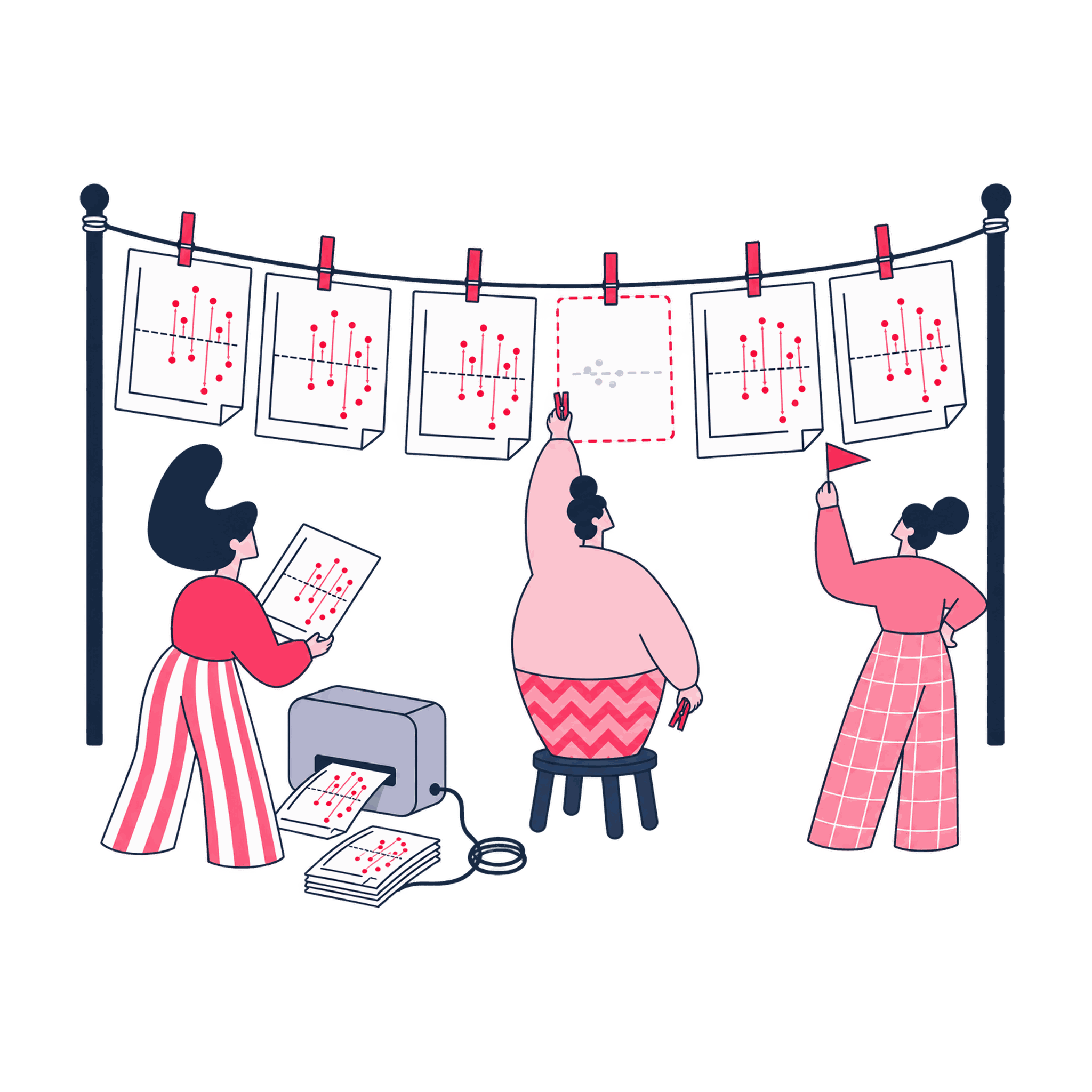
Trace monitoring fits production AI that needs observable inputs, retrieval, tool calls, state, policies, and outcomes connected to alerts and response owners.


AI Cost &Latency Optimization
Cost and latency optimization fits production changes to caching, routing, context, retrieval, or tools that must preserve shared quality, reliability, and fallback gates.


AI Production Readiness& Release Engineering
Release engineering fits when model, prompt, data, evaluation, rollout, rollback, monitoring, and support decisions need one owner-approved production path.
LLMOps & ModelLifecycle Platform Implementation
Build the lifecycle platform when versions, evaluation evidence, approvals, promotion state, monitoring findings, rollback, and lineage no longer travel together.


Managed AI Operations& Continuous Improvement
Use managed operations when incidents, quality findings, cost movements, and proposed changes arrive through separate queues and need one prioritized service record.
Why it matters
AI behavior changes even when application code does not
A model update, a prompt edit, a new document source, or a vendor change can alter behavior without touching application code. Production teams need a way to see those changes and a named person who can act on them.
How we work
Operate versions, evidence, and decisions
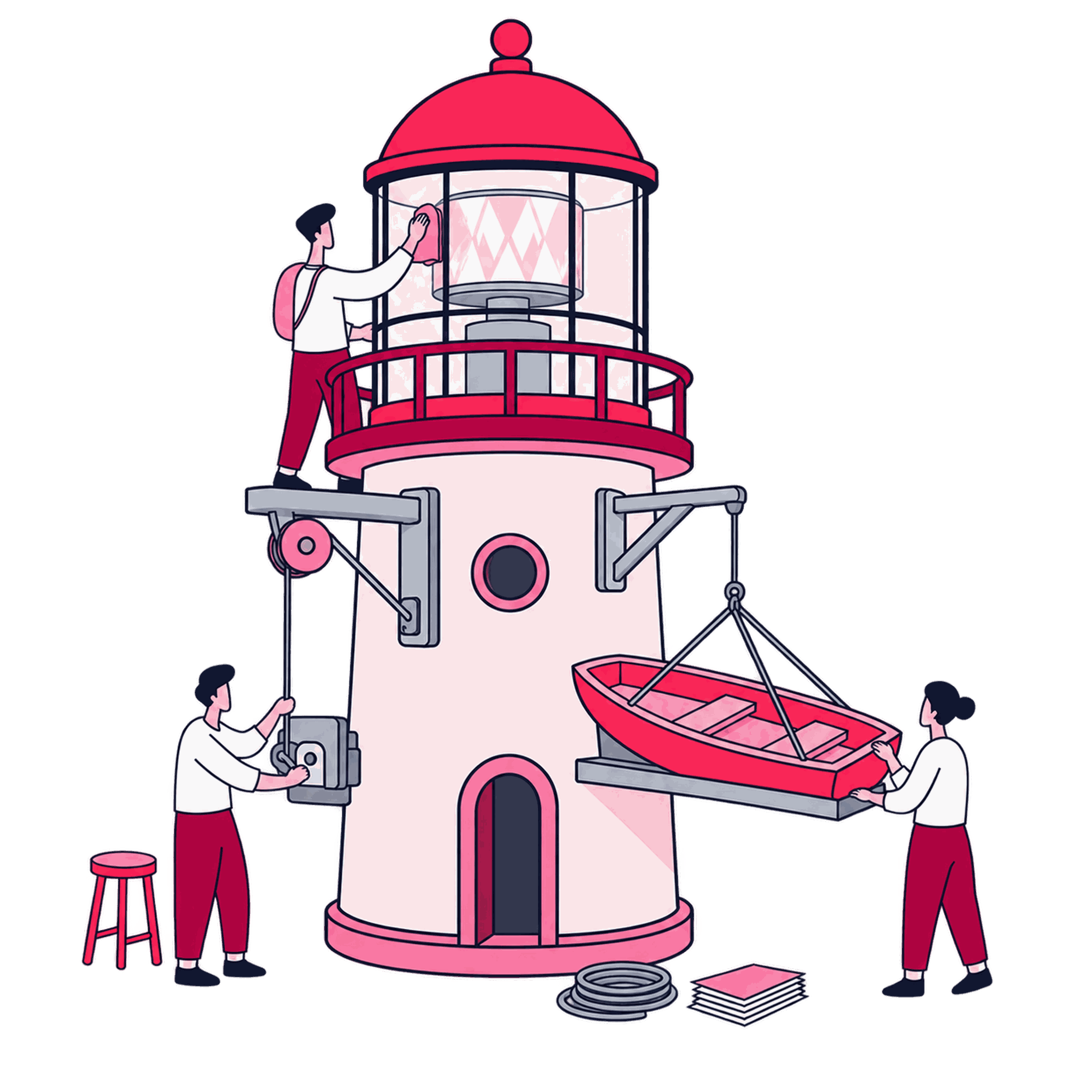
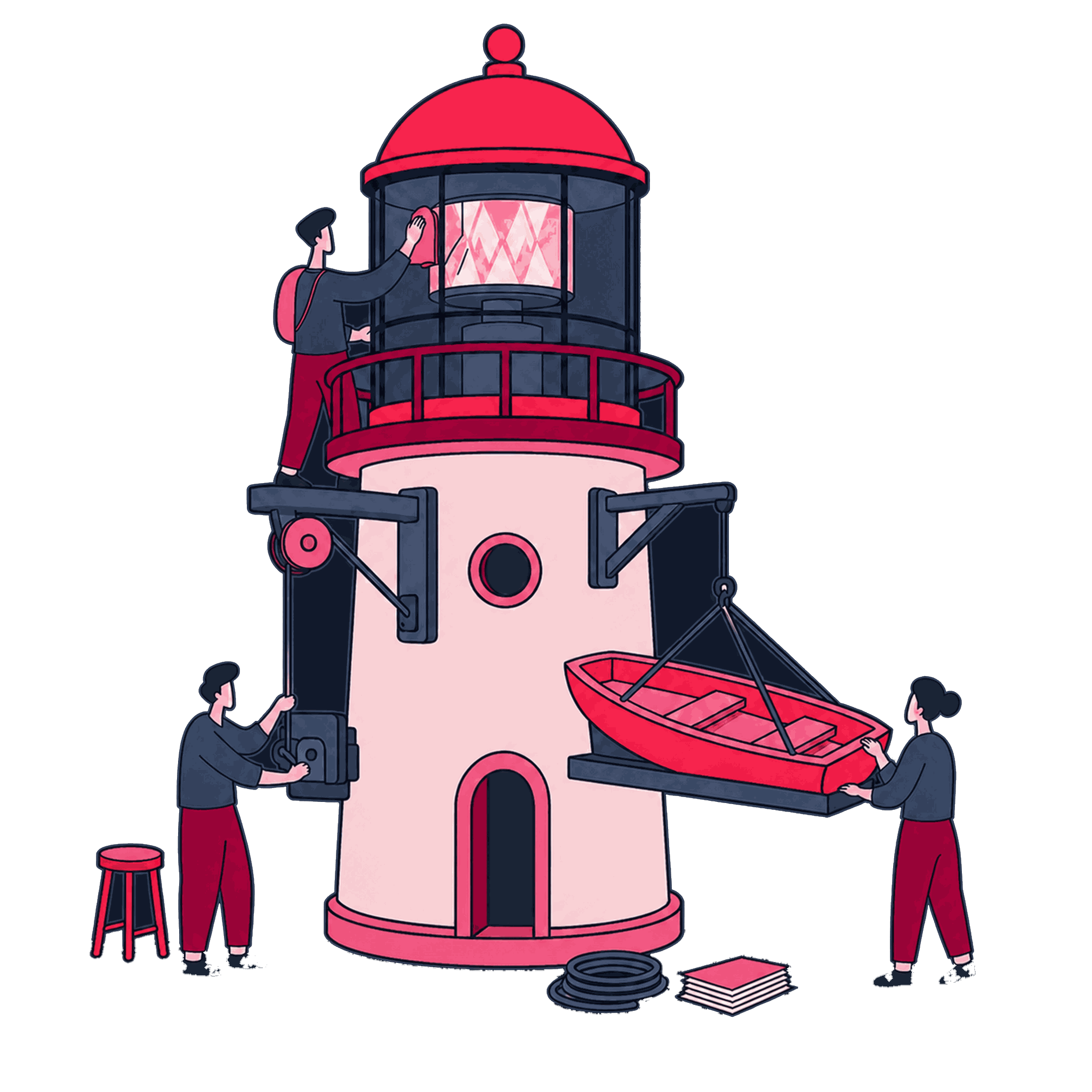
Every material change keeps its version, evaluation, rollout, monitoring, rollback, and owner decision together. The charter says which systems and signals belong inside that boundary.
Scope and ownership
A charter says which systems and signals are inside the operating boundary
Behaviour can change without an application release, so the boundary and the decision authority are named first.
We name the systems, users, owners, constraints, evidence sources, and decision authority before the operating scope expands, then establish a production baseline from representative traces, quality signals, cost, latency, incidents, release paths, and current controls, keeping unknowns visible. Every material change keeps its version, evaluation, rollout, monitoring, rollback, and owner decision together, so a model update, a prompt edit, a new document source, or a vendor change is something the team can see and act on. Options are compared and the selected change is tested against representative behaviour, critical failures, and rollback conditions; the record closes with the accepted change, open exceptions, residual risk, operating responsibilities, and the next review trigger.
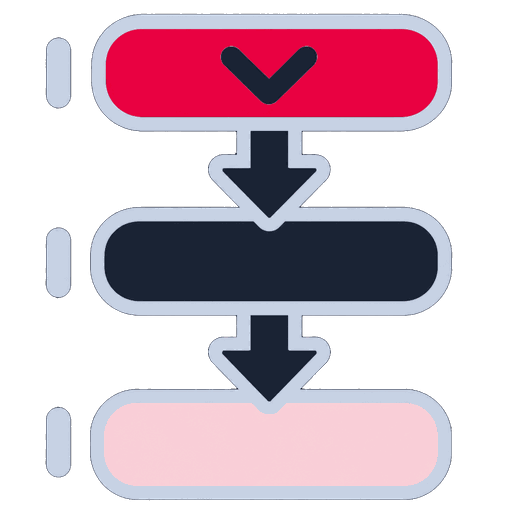
How production AI moves from evidence to action
Define the service boundary
Name the systems, users, owners, constraints, evidence sources, and decision authority before the operating scope expands.
Establish the production baseline
Inspect representative traces, quality signals, costs, latency, incidents, release paths, and current controls while keeping unknowns visible.
Test the smallest useful change
Compare options and test the selected change against representative behavior, critical failures, rollout, and rollback conditions.
Decide, hand over, and review
Record the accepted change, open exceptions, residual risk, operating responsibilities, next measurement, and review trigger.



Inside our own team
Five Zeo consultants on what AI is changing in their work
Every operational consultant at Zeo has secure LLM access and training, and AI sits inside the daily work. Five of them came through our AI Bootcamp and wrote down what they expect it to change.


I see generative AI having an enormous effect on daily life and on every industry it touches. As the technology develops, the range of uses will keep widening across creativity, problem-solving, and innovation. We can already see that range in realistic image, video, and music production, pharmaceutical research, and design. I expect the effect on industries to become profound. E-commerce, healthcare, finance, and many other sectors will be able to create more engaging, personalized experiences and make their processes more efficient.
The ability to produce unique content and solutions will open new possibilities and increase efficiency.

Generative AI has the potential to transform SEO, digital marketing, and many other sectors. I expect it to play an important role in our lives in the near future, with more personal experiences, more effective marketing, faster interpretation of data, and quicker action. Products and services will improve. Processes such as customer communication will become more efficient, and organizations that fail to keep up will fall behind businesses that bring AI into their work.
Organizations should start planning the AI applications that make sense for their sector now.

We may be at a moment as significant as the computer revolution, with the potential to transform businesses and industries. Yet for many people, generative AI still means opening a tool such as ChatGPT for a task at work or in daily life. That is only the surface. Companies that integrate generative AI models into workflows and customer processes, and go beyond content production, will gain huge competitive advantages in the coming years.
I believe generative AI should be on the agenda of every board of directors as soon as possible.

I see artificial intelligence as the most exciting technology of both the present and the future. Its potential is unlimited, and we're still at the tip of the iceberg. AI is developing quickly, while much of what it could mean for different sectors remains unexplored. The effect on digital work is already substantial. In the years ahead, I expect breakthroughs that change how entire industries work.
AI's potential will keep expanding. No sector can afford to ignore the opportunity for efficiency and progress. We will keep discovering new dimensions, and I don't see a saturation point.

Work by major technology companies is likely to give generative AI a much wider role in the years ahead. It will create new dynamics in art and design, as well as in sensitive fields such as healthcare and finance. As the technology becomes part of daily life, the ethical and risk questions will grow with it. Being able to follow and experience those developments up close is what makes generative AI so exciting to me.
I look forward to seeing more uses of generative AI that benefit society.
LLMOps Proof
Case Studies
Model routing, prompt versioning, token caching, and latency optimization in production.


People who ship the AI systems they advise on
Agents, chatbots, and RAG systems at Zeo are built by senior engineers who keep operating them after launch. The consultants below are those builders, matched to the work this page covers.







Tools we use
The AI engineering stack behind the work
Models, retrieval, evaluation and observability are separate layers of a working system. These are the ones we build and operate on.
Models and cloud platforms
- OpenAIThe hero's claim that AI behavior changes even when application code doesn't is most visible at a model-version boundary, and OpenAI's own deprecation schedule is what several children, LLMOps & Model Lifecycle Platform Implementation especially, plan a version transition against.
- AnthropicWhere a client runs Claude models in production, Anthropic's own changelog is what AI Trace & Quality Monitoring checks first when a quality metric shifts, before assuming the change is in the client's own application code.
- Amazon Web ServicesFor clients whose broader infrastructure already runs on AWS, AI Production Readiness & Release Engineering and Managed AI Operations & Continuous Improvement deploy inside that same governed boundary rather than adding a separate operating environment.
- Microsoft Azure AIWhere a client's operating environment is Azure-native rather than AWS-native, Azure AI Foundry is the equivalent boundary AI Production Readiness & Release Engineering deploys inside, so the release pipeline lives alongside the client's existing governance rather than a separate platform.
- NVIDIA AIWhen LLMOps & Model Lifecycle Platform Implementation calls for self-hosting a model rather than calling a hosted API, NVIDIA's inference stack is the infrastructure this page's account builds that deployment on.
Gateways and hosted inference
- LiteLLMAI Cost & Latency Optimization frequently tests whether a cheaper or faster model can replace a current one, and LiteLLM's unified interface is what lets that swap happen at the gateway rather than in every application that calls the model.
- PortkeyPortkey's response caching and fallback routing are levers AI Cost & Latency Optimization pulls directly, since a cached or gracefully-routed call is cheaper and faster than a fresh model call every time.
- Cloudflare AI GatewayFor a client whose traffic already runs through Cloudflare's edge network, AI Cost & Latency Optimization sometimes routes model calls through Cloudflare AI Gateway instead of a separate gateway service, keeping caching and rate limiting inside infrastructure the client already operates.
Evaluation and observability
- LangfuseThe hero's own section, operate versions, evidence, and decisions, is what Langfuse's run-level tracing supplies directly, used across AI Trace & Quality Monitoring and LLMOps & Model Lifecycle Platform Implementation as the day-to-day operating record.
- Weights & BiasesAI Trace & Quality Monitoring's central question, did behavior change and against what baseline, is answered by Weights & Biases' run history, keeping each production version's evaluation results linked to the one before it.
- DatadogThis page's process step, test the smallest useful change, needs a production signal to test that change against, and Datadog's live metrics and alerting are what AI Cost & Latency Optimization and AI Trace & Quality Monitoring both check before and after a change ships.
- Arize PhoenixAI Trace & Quality Monitoring uses Arize Phoenix to find the specific condition or query type where a model's production behavior diverges, since an aggregate quality score can hide exactly the failure the hero warns behavior changes without application code changing.
- HeliconeAI Cost & Latency Optimization, tracks its core metrics directly in Helicone, giving the team a live per-call view of exactly what a production system costs to run and how fast it responds.
- BraintrustAI Production Readiness & Release Engineering's sign-off runs its evaluation suite in Braintrust against the specific build being considered for release, keeping the readiness decision pinned to one named candidate.
- TraceloopAI Production Readiness & Release Engineering needs to confirm a release behaves the way its design claimed once it's actually running, and Traceloop supplies the post-deployment traces that make the comparison possible.
- LaunchDarklyAI Production Readiness & Release Engineering needs a release mechanism that can pull back a bad version instantly, and LaunchDarkly's feature-flag rollout is already in the registry for exactly this purpose in other families; here it's the rollback lever this page's release engineering work is built around, distinct from a redeploy.
- Monte CarloThe hero's claim that AI behavior changes even when application code doesn't often traces to a change in an upstream data source, not the model or the code, and Monte Carlo's data observability is the piece AI Trace & Quality Monitoring adds when a quality shift needs to be ruled in or out at the data layer before the investigation moves downstream.
Training, serving and MLOps
- MLflowLLMOps & Model Lifecycle Platform Implementation, builds its version-promotion pipeline on MLflow's model registry, keeping each stage of a model's path to production a recorded, auditable transition.
- vLLMWhere a client self-hosts a model rather than calling a hosted API, vLLM is the inference engine LLMOps & Model Lifecycle Platform Implementation deploys, sized for the concurrent request volume a production release has to sustain.
Next step
Deploy generative AI solutions with clear business value

FAQ