




AI Training · Legal
AI Training for Lawyers and Legal Teams
Contracts, case files, correspondence, and research memos: a legal team's day runs on text, and that's exactly where generative AI can save hours. This training for lawyers and legal teams puts that to work as confidential, verified daily practice, with a lawyer's review in every workflow.
- modules
- 6
- hours
- 13
Why this training
Why AI in this industry
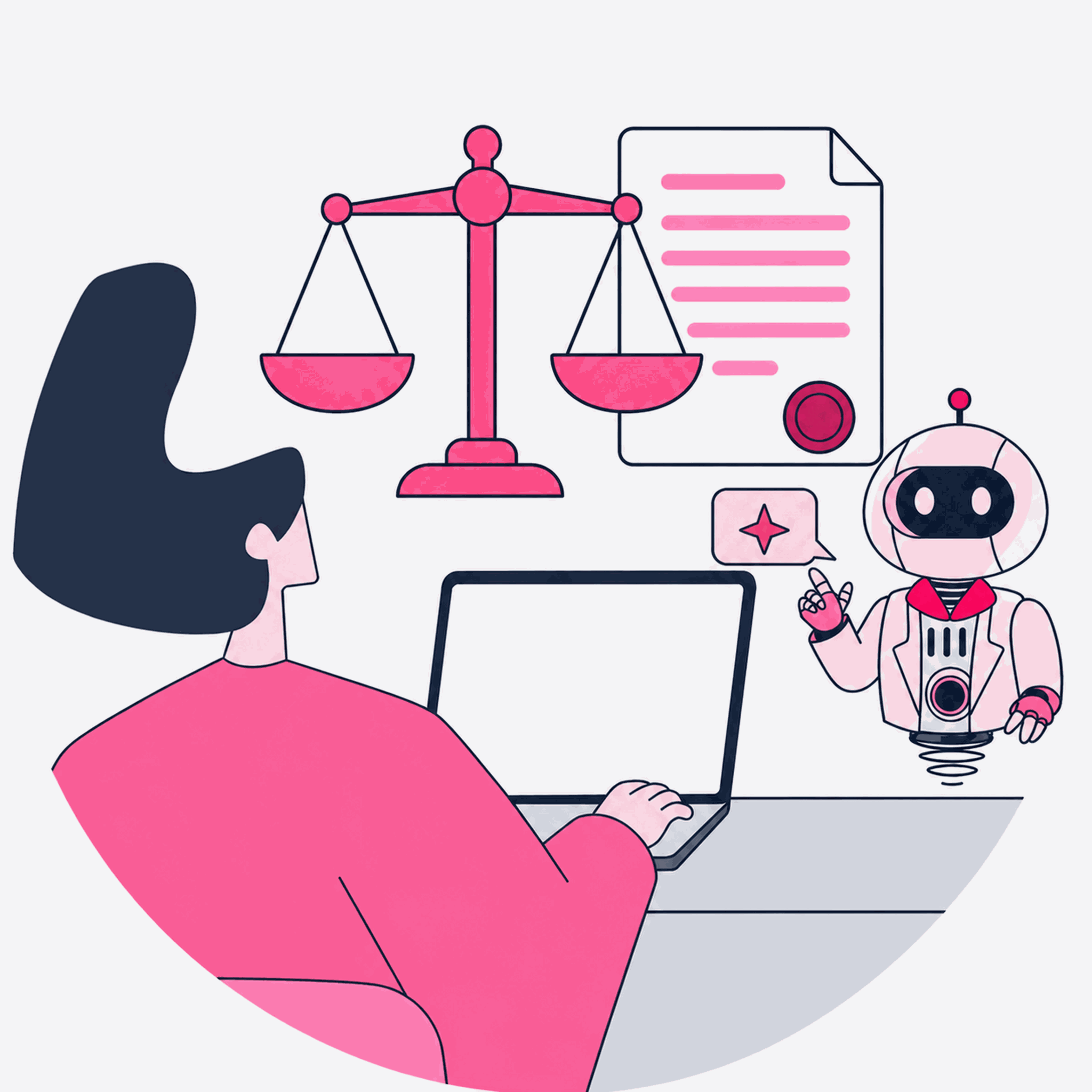
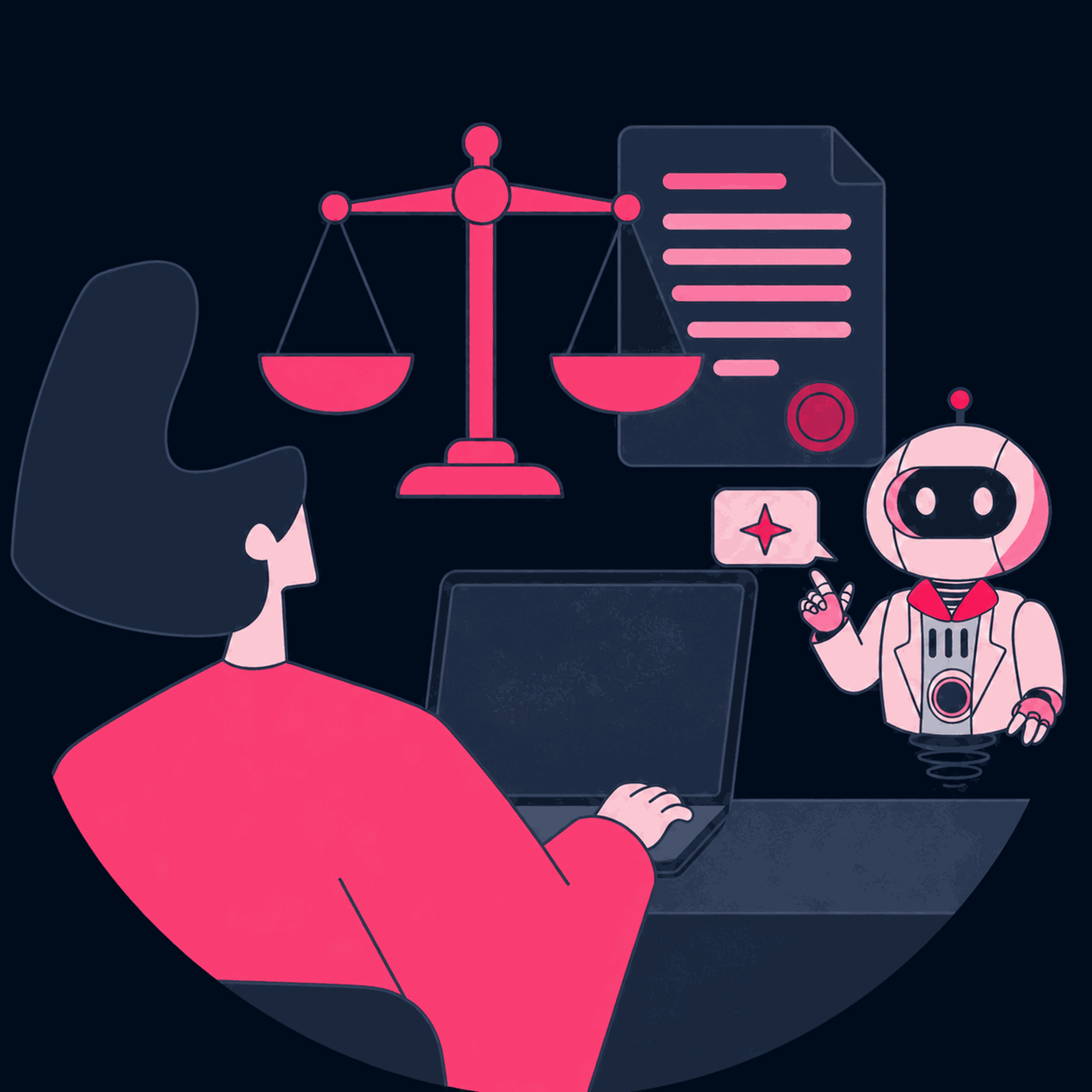
A fabricated case citation can end a career. Courts in more than one jurisdiction have already sanctioned lawyers for filing briefs built on cases an AI invented: confident, plausible, and never real. That risk sits right next to an obvious opportunity. Contracts, pleadings, engagement letters, demand letters, research memos, billing narratives: almost everything a firm or legal department produces is a document, and a language model drafts and summarizes documents well.
Client confidentiality raises what's at stake. A privileged fact pasted into a consumer chatbot has left the building in a way no engagement letter permits. The tools already sit inside Word and Outlook as well as the browser windows your team has open right now.
So the training gives that mix a method. Lawyers, in-house counsel, paralegals, and operations staff learn to draft and summarize with tools like ChatGPT, Microsoft Copilot, and Gemini, keep client identities and privileged facts out of every prompt, and treat citation verification as a taught skill. Every authority gets checked at the source before it enters work product.
AI output is never legal advice and never a substitute for a lawyer's judgment. A lawyer reviews everything before it leaves the firm. The syllabus adapts to your practice areas and precedents, and other sectors have their own programs in the AI training catalog.
The first draft is where the billable hours disappear
AI-assisted drafting gets recurring engagement and demand letters onto the screen alongside routine correspondence in minutes as a reviewable version for the lawyer to edit and sign.
Who has time to read a thousand-page file by Friday?
Contracts and case files sit inside the long document sets where legal time actually disappears. AI can pull clauses with their obligations and deadlines into a working summary, so review time goes to judgment instead of to finding the relevant page.
A citation that looks real and isn't
Courts in more than one jurisdiction have sanctioned lawyers for filing briefs that cited cases an AI invented: confident, plausible, and nonexistent. The risk goes away only when every citation is checked at the source. We teach that check as a working skill.
Staff already paste client facts into ChatGPT
A privileged fact pasted into a consumer chatbot has left the building, and there's no undo button once it's on someone else's servers. Structured training replaces that unguided, risky habit with a sanctioned, auditable workflow.
Nothing new to install
Word, Outlook, and the browser already have the tools built in, sitting there mostly unused. The difference between a practice that benefits and one that doesn't comes down to whether people know which task to hand off and which judgment to keep. They also need to know how to check the result.
Syllabus
Training syllabus
Generative AI foundations for legal teams
120 minBeginner
What large language models do well and where they fail in legal work. The cost of a mistake is higher here than in most fields. Lawyers and support staff leave this module with the same mental model and the same vocabulary, before anyone touches a client matter.
- What a language model is doing under the hood
- Why models invent facts, and what that looks like in legal text
- Where AI already sits in practice management as well as Word and Outlook
- Tasks to delegate, judgments that stay with the lawyer
- One safe place to start
Prompt craft with confidentiality discipline
120 minBeginner
A repeatable prompt structure for legal documents: role, context, task, format, and checks, practiced on the document types your practice produces every day. Client identities and privileged facts stay out of every prompt, by habit.
- A reusable prompt structure for legal documents
- Context without client names or privileged facts
- Sending the second draft
- Shifting register between a client email and formal correspondence
- Starting a shared prompt library for your practice
Reviewing and summarizing documents before drafting
180 minIntermediate
Contract review, case file summaries, and first drafts of letters and routine filings, rebuilt as AI-assisted workflows a lawyer still signs off on. Nothing here skips the review step. Every flow ends with an attorney's read before anything leaves the firm.
- Pulling obligations and deadlines from contract clauses
- Summarizing a case file into a working memo
- First drafts of letters and routine filings
- Comparing document versions, spotting what changed
- Billing narratives from notes and time entries
- One sign-off before anything leaves the firm
Research assistance and verification workflows
150 minIntermediate
Where AI genuinely helps legal research, and the verification habit that keeps a fabricated authority out of your work product. Citation-checking is a taught skill here, checked against primary sources every time.
- Strengths and blind spots of AI research help
- Why hallucinated citations happen, and how they slip through
- Verified at the source
- Using AI to map issues, not supply citations
- Summarizing legislation and case law with links to the text
- When a general chatbot is the wrong tool
Confidentiality and privilege under compliance rules
120 minIntermediate
Professional secrecy, privilege, and data protection translated into daily choices: what may go into an AI tool, what never does, and how to write a policy people follow.
- Professional secrecy and privilege once a prompt leaves the building
- GDPR obligations for client and case data
- KVKK, a separate regime
- Where a consumer AI tool's data goes, versus an enterprise one
- Anonymizing facts before they reach a prompt
- Writing a usage policy your firm will keep
Adoption plan for firms and legal departments
90 minAdvanced
From individually trained people to a practice that uses AI well, together. Pilots and champions need measurement habits that keep usage safe once the trainers are gone.
- Picking a pilot with hours to show for it
- Champions among staff plus associates and partners
- Beyond a login count
- Handling ethics questions and resistance when clients push back
- A 90-day plan, written down before you leave
Outcomes
Outcomes & audience
What you will learn
- Draft routine letters with AI, then have a lawyer sign off before anything leaves the firm
- Turn a long case file into a summary you can trust
- Verify every authority against a primary source, every time
- Keep client names and privileged facts out of every prompt
- Write once, reuse tomorrow
- A precedent-fed prompt library
- A path from pilot to firm-wide use, with numbers attached
Who should attend
- Managing partners setting the firm's AI policy
- Associates and staff attorneys drafting daily
- In-house counsel running a lean legal department
- Paralegals who do the heaviest document work
- Legal ops and knowledge management
- Compliance officers and contract managers
Format
Training format
This runs two days, usually split into half-day sessions scheduled around hearings and filing deadlines. Onsite and live online cover the same syllabus either way.
- Format
- Onsite or live online
- Duration
- 2 days (about 13 hours, can be split into half-day sessions)
- Group size
- Up to 20 participants per group
- Language
- English or Turkish
- Materials
- Prompt library, drafting templates, and a citation-verification checklist
- Certificate
- Certificate of completion
About Zeo
Why Zeo
Zeo started in 2011 and now works out of San Francisco, Istanbul, Ankara, and Lisbon. We run Copilot Academy and organize Digitalzone, an international digital marketing conference. This program draws on the 10+ years of consulting and training work behind that, applied to corporate AI adoption.
- 2011founded in Istanbul
- 10+years of consulting and training experience
- 3offices: San Francisco, Istanbul, Ankara, Lisbon
Keep exploring
Related programs

 AI for Professional Services6 modules · 13 hoursPractical AI training for consulting, advisory, engineering, accountancy, and business-service teams: sharper research, proposals, deliverables, and client communication, with expert review built in.View training
 AI in Accounting & Audit6 modules · 13 hoursAI training for accounting firms, audit teams, and in-house finance departments, built around working papers and reconciliations: faster drafts, every number checked against the ledger, and the reviewing professional still the one who signs.View training
 Preparing Teams for the EU AI Act6 modules · 12 hoursEU AI Act readiness training for compliance, legal, risk, HR, IT, procurement, and business teams: map AI use, build literacy, ask sharper vendor questions, and leave with an accountable action plan.View training
 AI in the Public Sector6 modules · 13 hoursFor public-sector teams: turning policy notes, correspondence, and citizen guidance into faster drafts, with named reviewers and firm limits around what AI may never decide.View training
Next step
Build this around your practice
Questions
Frequently asked questions
What kind of firm or department is this built for?
Law firms of any size and in-house legal departments, plus professional-services teams whose work runs on legal documents. Partners, associates, in-house counsel, paralegals, and legal-ops staff work through the same syllabus, grouped by role when it helps the examples land.
Does anyone need to know how to code first?
Nobody needs to code or read a dataset, only to know your own matters and documents well enough to judge whether an AI-assisted draft is genuinely usable.
Two days of what, and delivered how?
Onsite or live online, either way across a two-day program that adds up to about 13 hours of instruction. Most firms split it into half-day blocks so hearings and filings fit beside client meetings.
Can the syllabus flex around our practice areas?
It has to, or the exercises won't mean much to your practice. We look at your litigation, transactional, or advisory mix beforehand, collect anonymized sample documents, and adjust the cases and prompts to match. Exercises still run on ChatGPT, Microsoft Copilot, and Gemini, or on whatever enterprise tools your firm has already approved.
Is AI actually reliable for legal research?
Only with a verification habit attached to it. A general chatbot can produce a citation that looks genuine and does not exist, and courts in more than one jurisdiction have sanctioned lawyers who filed exactly that. The training treats citation-checking as a core skill: AI can help map issues and summarize sources, but every authority still gets verified against a primary source before it enters work product. None of this is legal advice, and none of it replaces a lawyer's judgment.
Does client or case data ever touch the training itself?
No. The matters worked in the room are invented, and where one is modelled on a reported case it is fully anonymized first. A full module covers professional secrecy and privilege while treating the GDPR and KVKK obligations as the two separate regimes they are. Protecting client confidentiality while using these tools is one of the outcomes this program is built to produce.
How do you land on a price for this?
Four things move the number: group size, delivery format, customization depth, and location. We price once we know your practice and what you're trying to fix, and every quote is built that way.
What survives after the two days end?
You keep the prompt library, drafting templates, a citation-verification checklist, and the 90-day adoption plan the sessions produce. We stay reachable for follow-up questions, and an optional refresher session can be scheduled once your usage matures.