













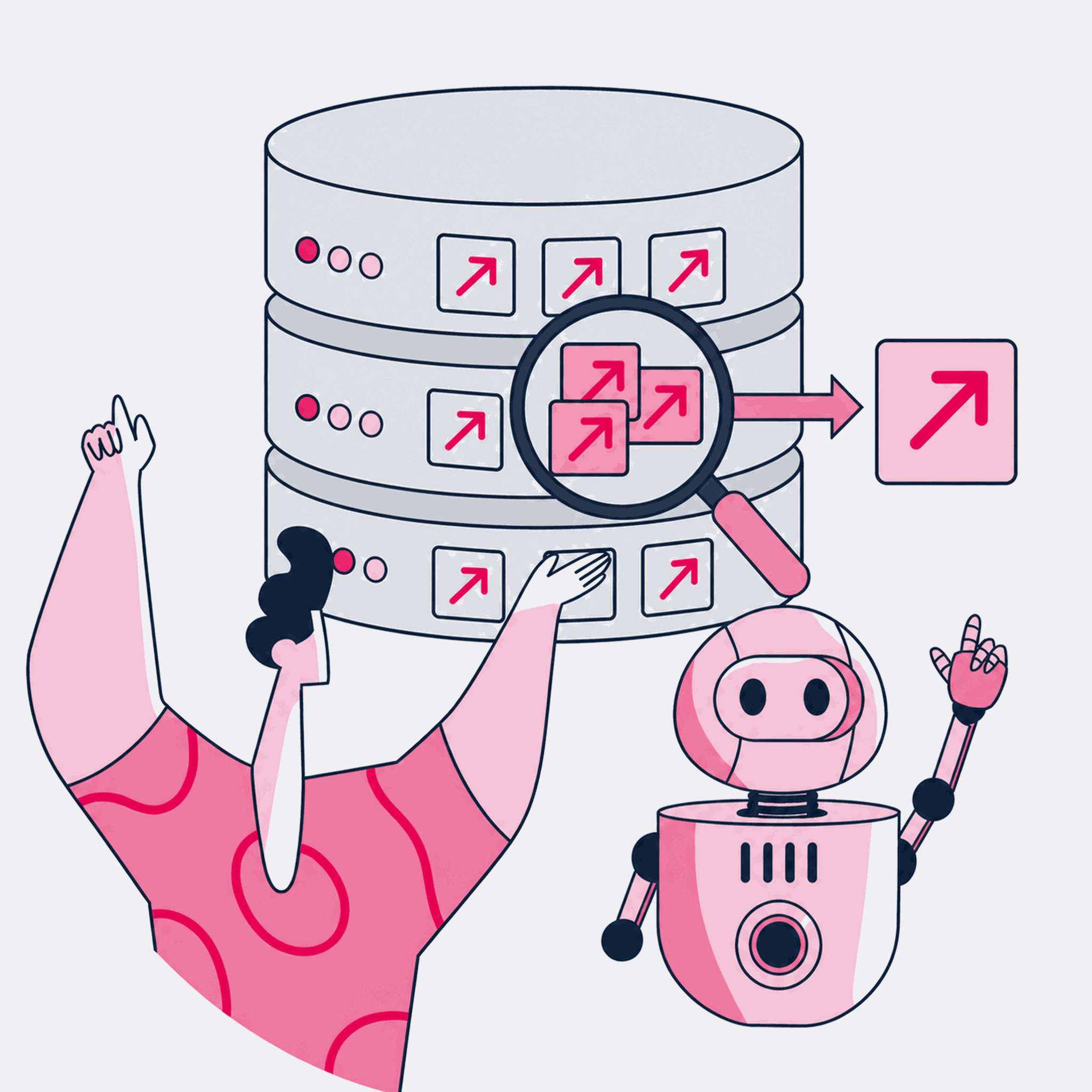
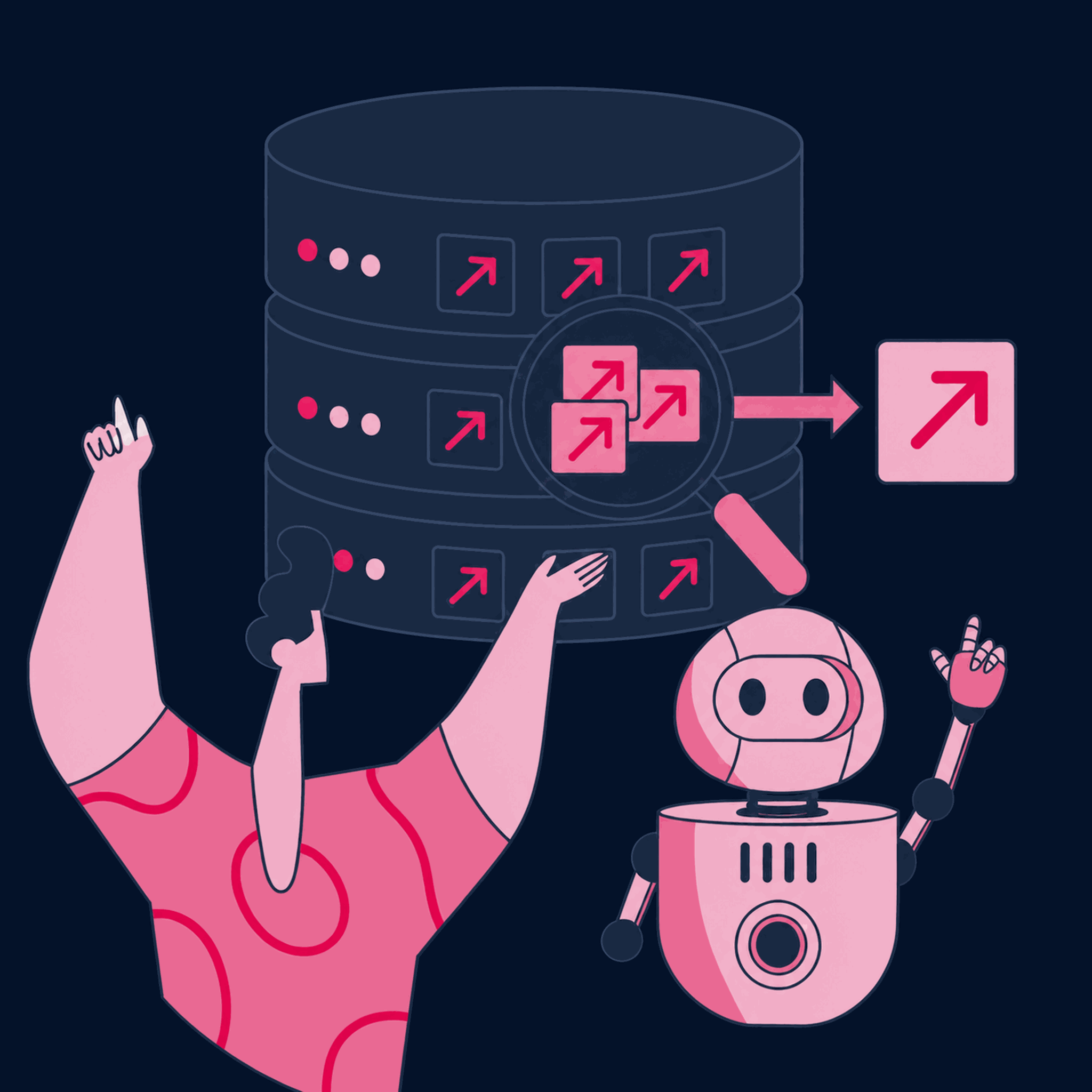
A vector store is a database built to hold embeddings and find the closest ones among them quickly. Where a conventional database answers exact-match or range queries, a vector store answers "which ten records sit nearest this vector".
Closeness is usually measured with cosine similarity or Euclidean distance. Comparing every record one by one across millions of vectors is impractical, so approximate nearest neighbour algorithms take over. Index structures such as HNSW and IVF give up a little accuracy and bring search down to milliseconds. Metadata is stored alongside each vector so filters on language, date or category can be applied during the search.
The most common use is in RAG pipelines. Documents are chunked, embedded and written to the store. When a question arrives it is embedded with the same model, the nearest chunks come back, and they go to the model as context. Semantic search, recommendation systems and duplicate content detection run on the same infrastructure.
A concrete case: 600 help centre articles are split at paragraph level, producing 4,800 vectors. When a user question arrives the store returns the five closest paragraphs in milliseconds, and the assistant writes its answer from them.
Maintenance is the part people skip. When a source document changes, its vectors have to be regenerated, otherwise the system keeps answering from the old text.