




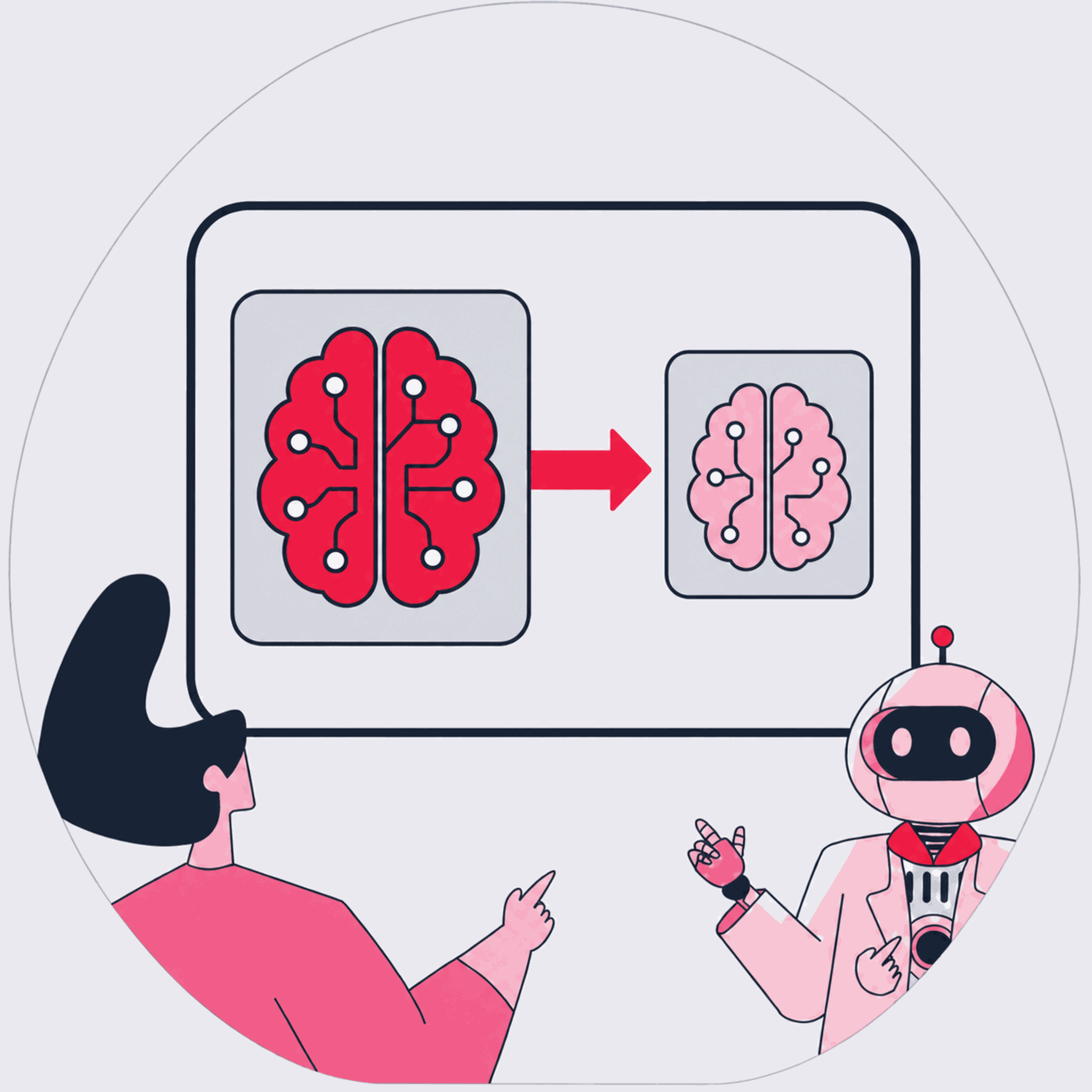
Transfer learning is carrying what a model learned on one task over to another. Instead of starting from scratch, you take the layers of an existing model and put them through a short round of training for the new task. Lower layers hold general patterns and upper layers hold task-specific distinctions, so usually only the upper ones get replaced.
Most current AI work rests on this idea. A language model goes through pre-training on an enormous body of text and is then adapted to a particular job. On the vision side, networks trained on ImageNet get transferred to everything from medical imaging to production line inspection.
The real gain is in resources. Training from scratch needs millions of examples and a serious compute budget, while transfer can work with a few thousand examples and a single GPU. For teams with small datasets that is the difference between a possible project and an impossible one.
A concrete case: a factory needs a model that spots scratches on product surfaces and has only 1,200 labelled photographs. Retraining the last layers of a general vision model on that data reaches usable accuracy. Training from scratch on the same data does not.
The limit is the distance between domains. When source and target tasks sit far apart, the transferred knowledge can get in the way rather than help.