













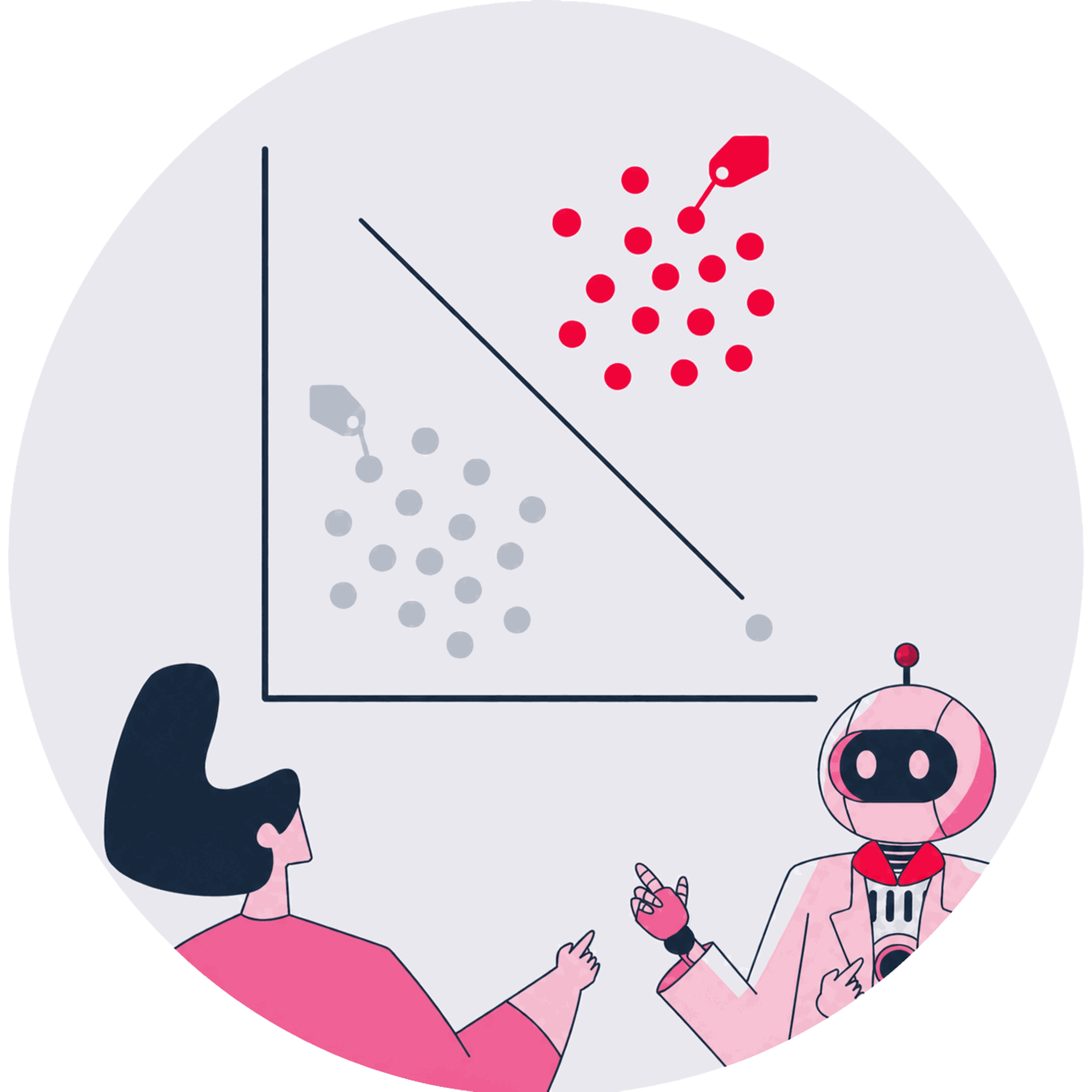
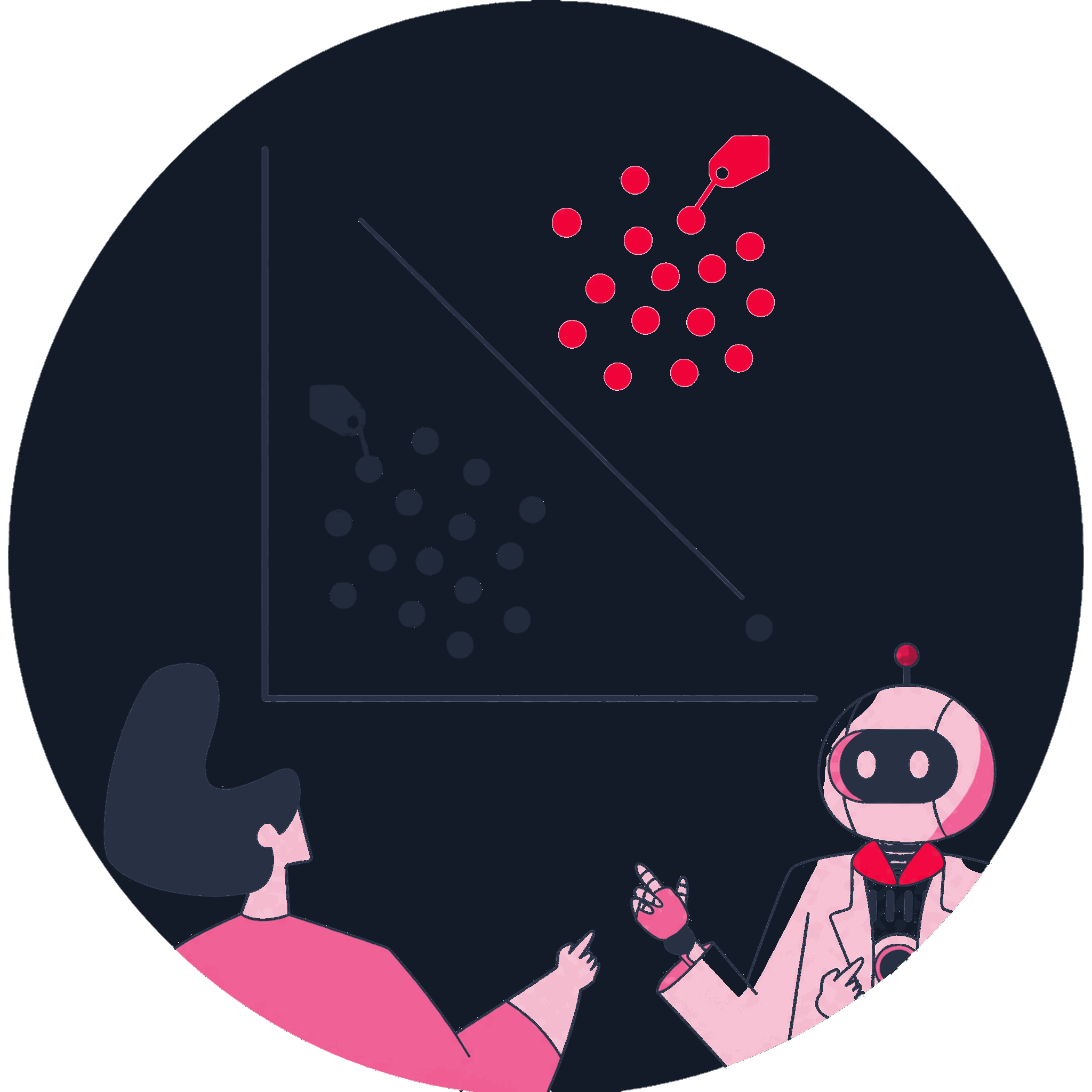
Supervised learning is the approach where a model learns from pairs of inputs and correct outputs. Every example carries its expected answer. The model predicts, compares that prediction against the label, measures the error and updates its weights to shrink it. Repeat the loop thousands of times and the model has learned the relationship from input to output.
There are two main task types. In classification the output is a category: is this email spam, is there a cat in the image, which department should this ticket go to. In regression the output is a number: the price of a flat, next month's sales, a delivery time.
The cost of the method is labels. The more correctly labelled examples you hold, the better the model works, but labelling is human effort. In fields like medical imaging or legal text that effort means specialist hours and can dominate the project budget.
A concrete case: a logistics company predicts which team an incoming complaint email should go to. Thirty thousand past emails plus a record of which team actually resolved each one become the training data. The model sorts new emails into the same categories and routing time falls.
Quality depends on the consistency of the labels. If two people assigned the same email to different teams, the model learns that ambiguity and behaves indecisively.