













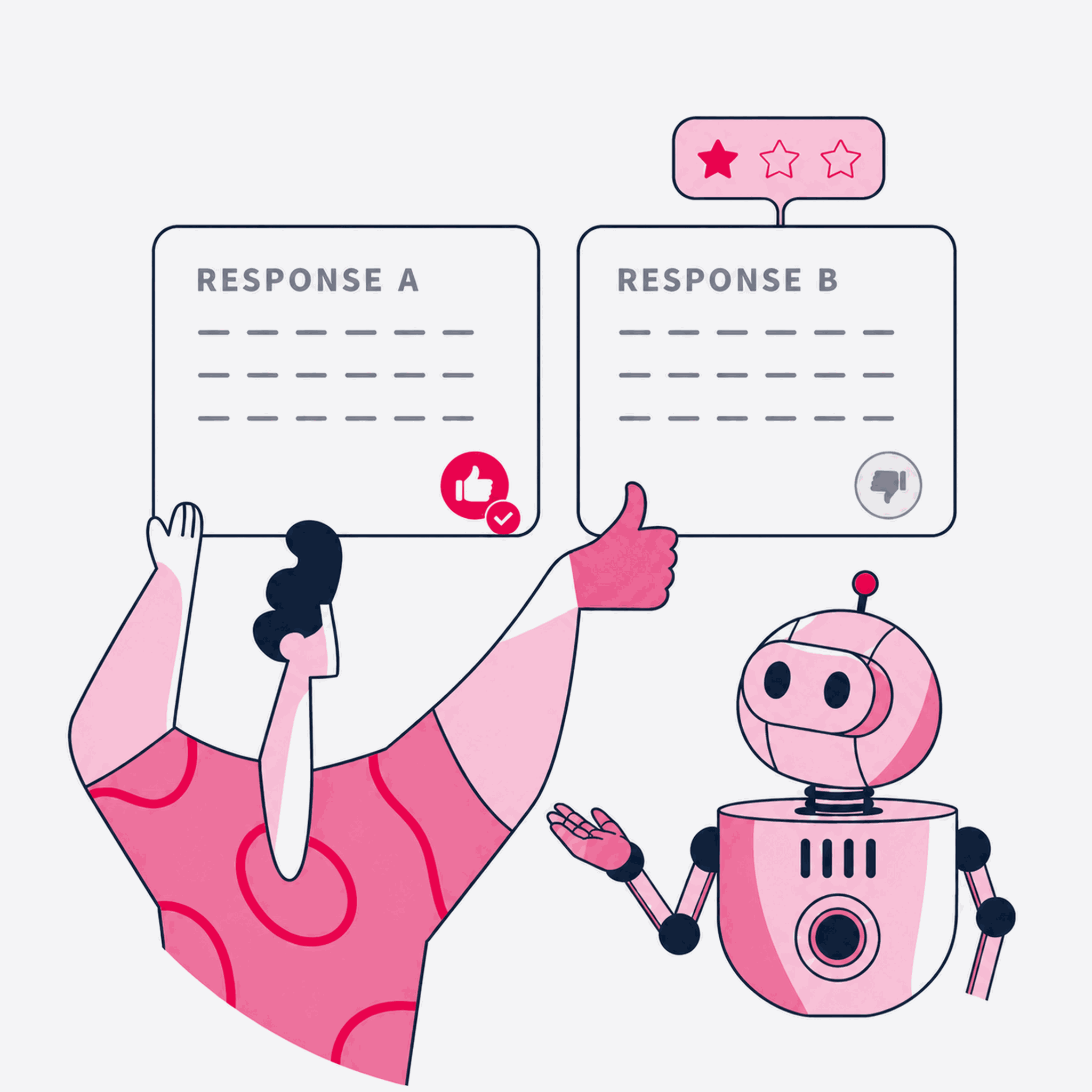
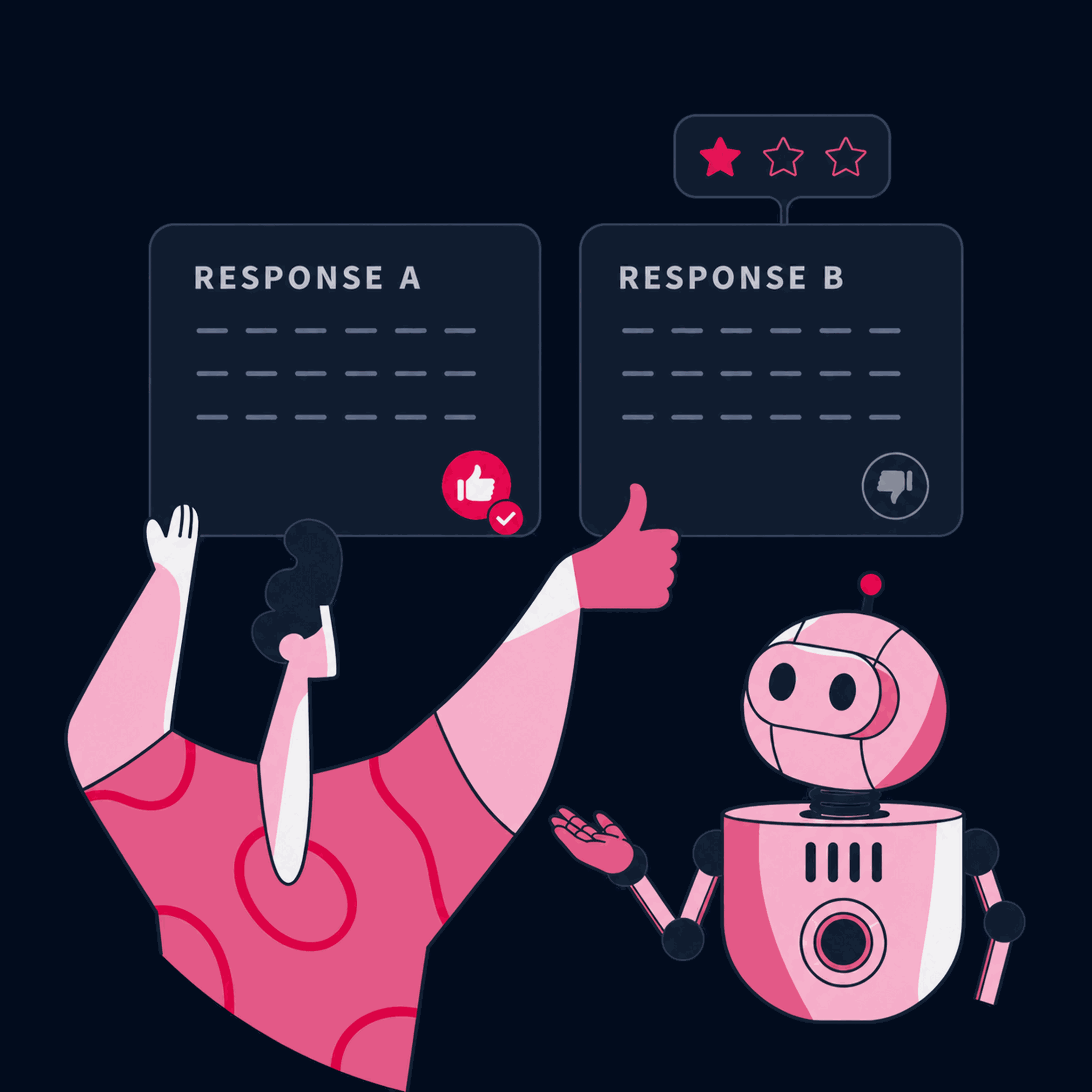
RLHF is the training approach that tunes a language model's behaviour against human preferences. A model coming out of pre-training knows the language well but has no idea how it should behave. RLHF closes that gap by teaching it which responses people prefer.
The pipeline has three stages. Supervised fine-tuning comes first, bringing the model toward the desired shape using example dialogues written by people. Then several responses are sampled for the same prompt, raters rank them from best to worst, and a reward model is trained on those rankings. In the final stage a reinforcement learning algorithm such as PPO updates the language model using the reward model's scores. A penalty on the distance from the reference model runs alongside, otherwise the model starts degrading its language to chase the score.
What the method solves is getting hard-to-measure qualities into training. Helpfulness, faithfulness to instructions, fewer unnecessary refusals and staying away from harmful content cannot be written as a single loss function, but they can be ranked by people.
A concrete case: a model straight out of pre-training responds to "summarise this text" by continuing the text instead, because continuation is what it learned. After RLHF the same request produces a summary, because raters consistently preferred that behaviour.
The limit is the rater pool itself. The model learns the preferences of whoever was asked, so tendencies in that pool pass straight into model behaviour.