













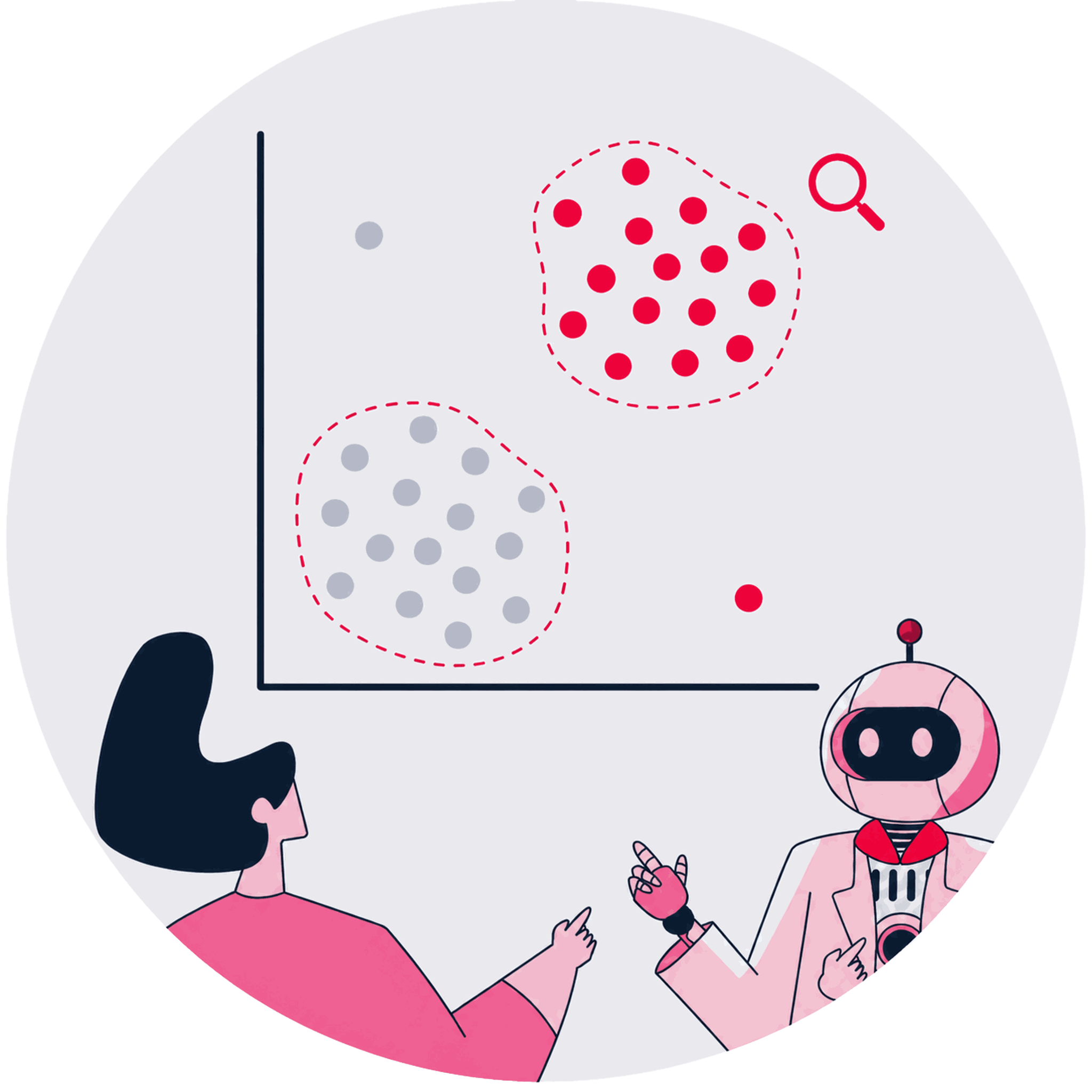

Pattern recognition is the field concerned with automatically finding regularities in data and classifying new observations against them. Its boundary with machine learning is blurry. Roughly speaking, machine learning focuses on the methods of learning while pattern recognition focuses on the structure being recognised.
The process usually runs in three steps. Discriminative features are extracted from raw data, those features are represented in a model, and a new observation is assigned to a class against that representation. In classical approaches a person designed the features. Deep learning handed that step to the model too, and the network now learns which features discriminate.
The applications are wide. Handwriting reading, face recognition, fingerprint matching, speech recognition, spotting abnormalities in medical images, unusual behaviour in card transactions and defect inspection on production lines all fall under this heading.
A concrete case: a bank learns the normal pattern of a customer's card activity. If someone usually spends in one city at similar amounts, a large transaction from another country at 3am falls outside that pattern and goes into a review queue.
The balance of errors matters as much as accuracy. Tighten the threshold and genuine transactions get blocked, loosen it and fraud passes through. That balance is set against the cost on the business side rather than against the model score.